
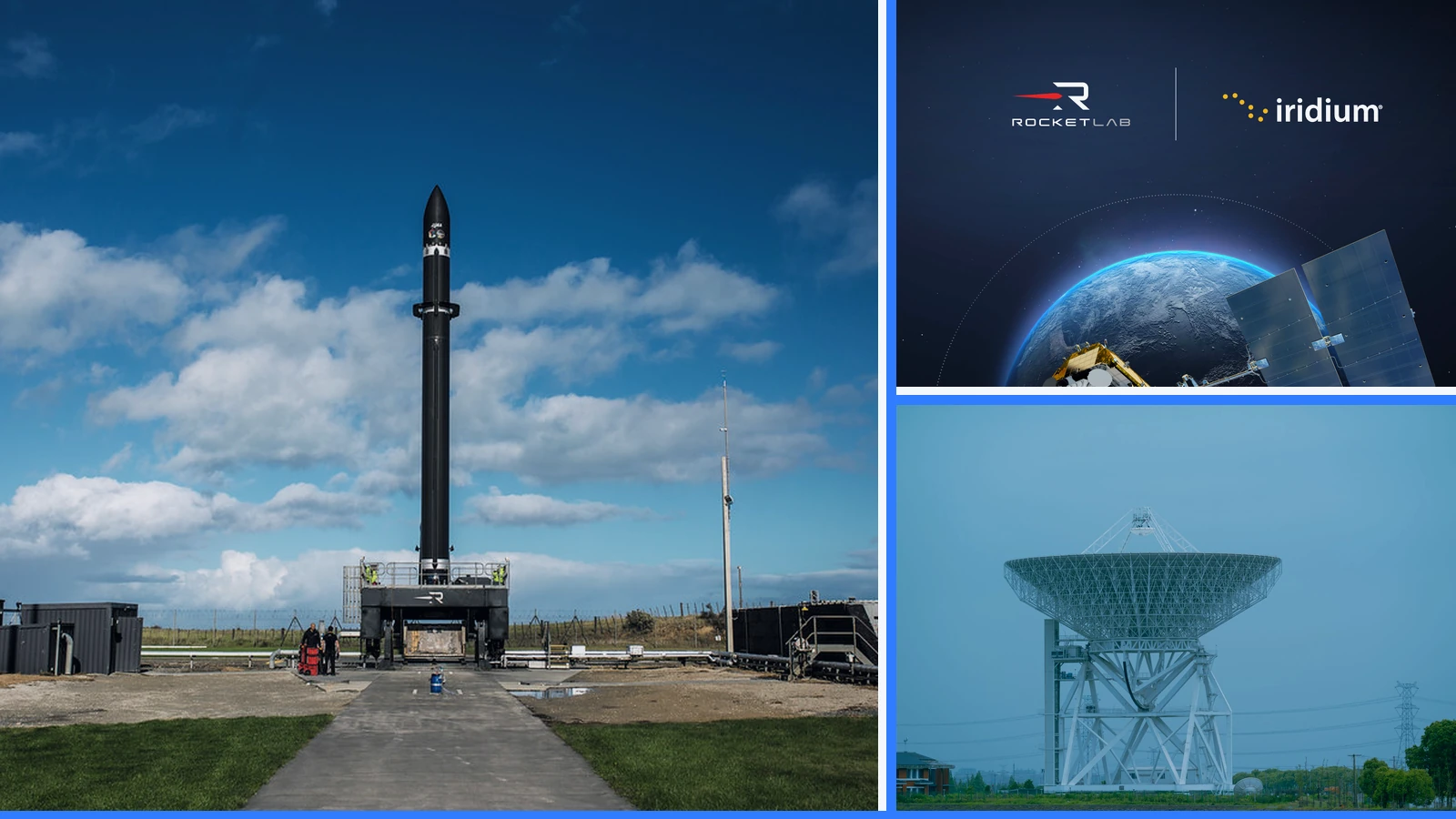
Iridium shareholders have approved Rocket Lab’s planned purchase of the satellite-communications company, removing one major hurdle from an 8 billion dollar deal. The vote does not complete the transaction. Regulatory reviews, financing and other closing conditions still stand between the companies and a combined business.
At a special meeting on 24 September, about 99.6% of votes cast supported the merger, representing about 81.0% of Iridium’s outstanding shares, according to the companies’ announcement. That gives Rocket Lab the shareholder approval it needed for the acquisition, which the companies still expect to close by mid-2027.
The proposal is unusual because it combines a launch and spacecraft maker with an operator of a global satellite network. Rocket Lab builds launch vehicles, spacecraft and components. Iridium sells voice, data and positioning services through its constellation, primarily to customers that need connectivity beyond terrestrial networks.
What shareholders approved
Under the merger agreement, Iridium shareholders would receive 27 dollars in cash plus Rocket Lab shares for each Iridium share they own. The total has a notional value of 54 dollars a share, with the share element calculated under an exchange ratio subject to a collar.
A collar is a price range designed to limit how much the number of shares delivered changes if the buyer’s share price moves before closing. In this deal, the announced collar runs from 67.50 dollars to 112.50 dollars for Rocket Lab shares. It does not mean every Iridium holder is guaranteed a fixed cash value regardless of Rocket Lab’s share price.
The companies put Iridium’s enterprise value at about 8 billion dollars. Enterprise value measures the value of a business including debt, so it is different from simply multiplying the 54 dollar figure by the number of shares.
Why Rocket Lab wants Iridium
Rocket Lab’s existing business includes launching payloads and making spacecraft hardware. Iridium brings a network that already earns recurring service revenue, along with L-band radio spectrum and customers in aviation, maritime, government, industrial and remote-monitoring markets.
The buyer says the combination could let one company design satellites, build them, launch them and operate communications services. That is called vertical integration: bringing several stages of a supply chain under one owner. The claimed benefits include closer control of launch schedules and avoiding some third-party launch costs when Iridium eventually needs to replenish its network.
Those benefits remain plans, rather than completed savings. Operating a network, launching replacement satellites and integrating two public companies will still require money, management time and regulatory clearance.
Iridium reported 871.7 million dollars of 2025 revenue and 495 million dollars of operational EBITDA in the original deal announcement. Operational EBITDA is a company-defined earnings measure that excludes interest, tax, depreciation, amortization and several other items. It is useful for showing the cash-generating potential of an operating business, but it is not the same as net profit or cash flow.
The vote is a milestone, not the closing
The shareholder vote solves the ownership question from Iridium investors. It does not transfer Iridium’s assets or make it a Rocket Lab subsidiary.
The companies still need the required regulatory approvals and must satisfy the other conditions in their agreement. Rocket Lab has also said it expects to fund the cash portion using cash on hand and other debt and equity financing, including commitments for a 3.6 billion dollar bridge loan facility. A bridge loan is short-term financing intended to support a transaction until longer-term funding is arranged.
For customers, the immediate service is expected to continue under Iridium while the transaction waits to close. The larger commercial question will come later: whether Rocket Lab can use Iridium’s established network, spectrum and customer base to build new services without disrupting the communications business that makes the acquisition valuable in the first place.
