
Higher purchase and installation costs are holding back the adoption of more efficient commercial heat pumps in California, research involving UC Davis has found. Equipment availability has improved, but existing incentives often fail to cover enough of the extra expense.
Researchers from Energy Solutions, UC Davis and TRC examined two CalNEXT incentive pilots that ran from October 2024 to October 2025. Their work covered heat pump rooftop units, packaged systems that provide heating and cooling for commercial buildings.
The findings were presented at the 2026 ACEEE Summer Study on Energy Efficiency in Buildings in August and summarised by UC Davis on 17 September. They concern California’s commercial rooftop market, rather than every business or heat pump installation.
What are heat pumps?
A heat pump transfers heat instead of producing it mainly by burning fuel. An air-source system uses electricity to move warmth from outside into a building. A reversible system can also move heat outdoors to provide cooling.
Because the machine moves heat, it can deliver several units of heating energy for each unit of electricity consumed. The US Department of Energy explains that this makes heat pumps more efficient than conventional electric resistance heating.
Lower energy consumption does not automatically mean lower bills than gas heating. The financial comparison depends on electricity and gas prices, the building and how its equipment operates.
Installation can add to the equipment bill
The California research found that variable-speed compressors, which adjust their output to heating or cooling demand, remained uncommon partly because of their cost.
They add an estimated $500 to $750 per US ton of cooling capacity to equipment prices. A ton here measures cooling output, not weight. Less expensive two-stage and multistage compressors, which offer fewer operating levels, have become more widely available.
Backup electric resistance heaters can create another expense. Their power requirements may trigger upgrades to a building’s electrical panel, adding installation costs beyond the price of the heat pump itself.
Controls also affect performance. Our earlier coverage of a Greek commercial-building energy pilot explains how sensors and controls can coordinate heating, cooling and ventilation. Its published description did not provide measured savings or a financial payback.
Researchers call for better incentives
One CalNEXT pilot simplified participation for equipment distributors. The other tested three incentive tiers, paying more for features including variable-speed compressors, energy recovery ventilation and advanced rooftop controls.
UC Davis said the pilots moved more equipment per year than California’s longer-running statewide programme. It attributed this to simpler arrangements and incentives that better reflected equipment costs.
Distributors also reported difficulty confirming what heating equipment a customer already had, information required when claiming support for replacing gas-fired rooftop units with heat pumps.
The conference paper recommends incentives covering at least 70% of incremental equipment costs. That means the extra cost of choosing the higher-efficiency option, not 70% of the complete installation. The figure is a recommendation, not an available subsidy rate.
It also proposes a dedicated incentive for variable-speed equipment and less onerous reporting requirements for distributors.
The International Energy Agency’s Heat Pump Monitor 2026 identifies equipment and installation costs, electricity prices and policy uncertainty as wider obstacles. It says governments can address operating costs through energy taxes, levies and electricity pricing, alongside targeted support for upfront investment.
For businesses, an equipment rebate addresses only part of the decision. Expected electricity bills, electrical work and the condition of the existing system still determine whether an upgrade can repay its additional cost.
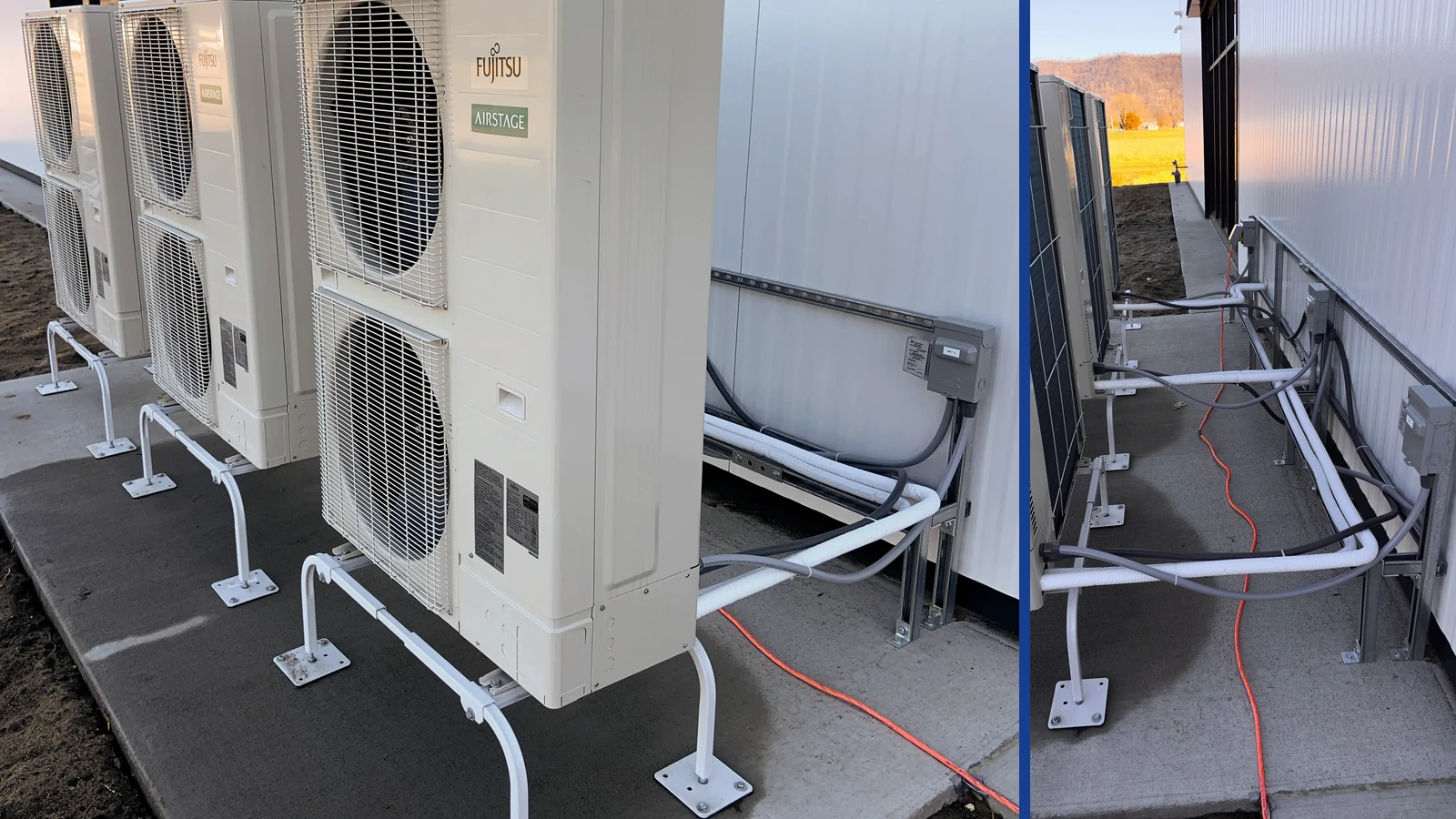
Cover: Editorial composite of commercial heat pump equipment and its exterior connections, photographed by Wikideas1 (front view and connections, CC0). Cropped and arranged by Market Business News. Representative photographs, not equipment from the California pilots. No manufacturer endorsement implied.
