
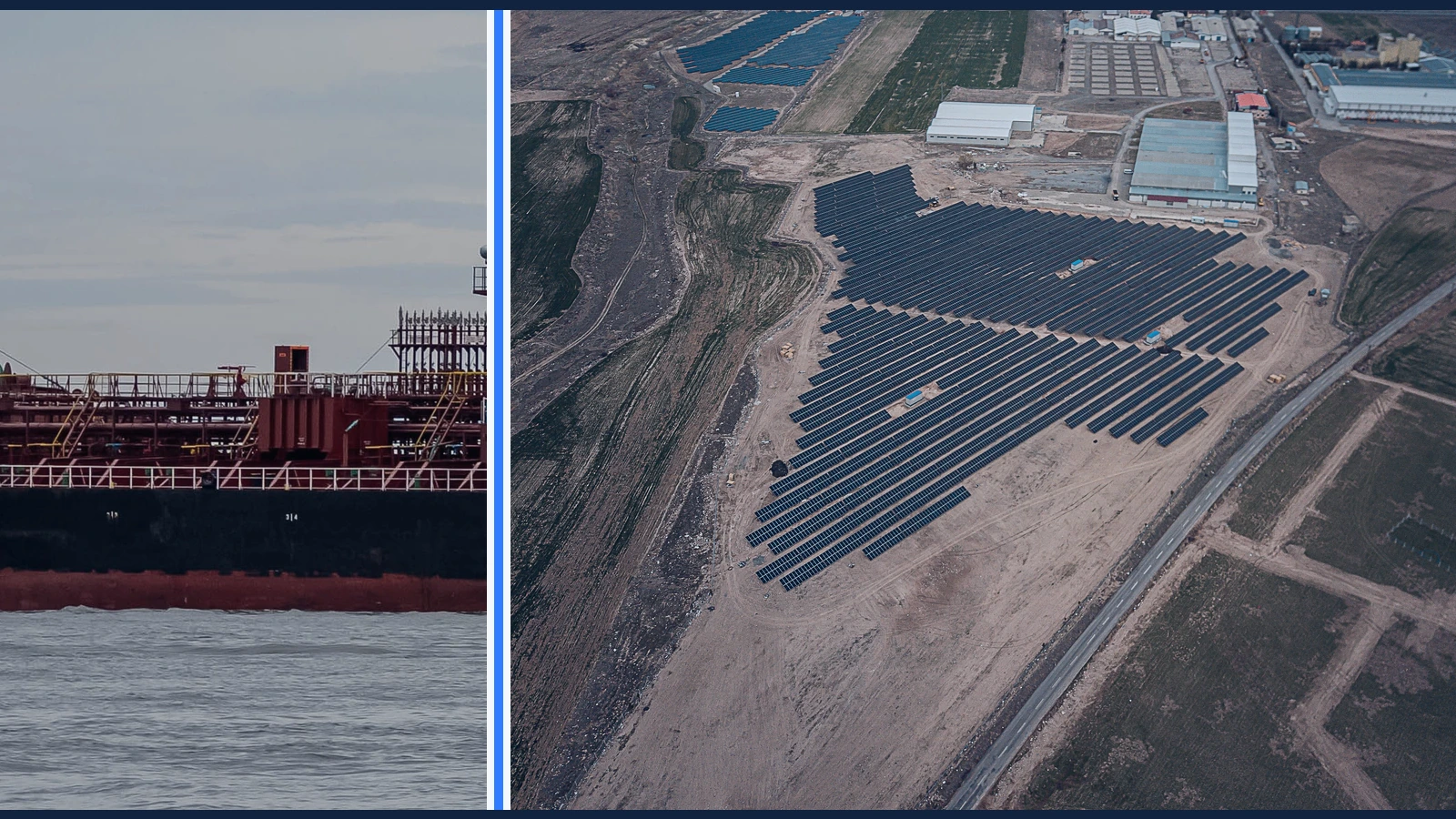
Renewable technologies may cost less than they once did, but low-income countries still need capital to build them. A new economic model finds that stable international climate finance can speed growth in fossil-fuel-importing economies, while a transition funded by diverting scarce domestic investment can bring a damaging short-term squeeze.
The study, by Amin Kassab and Thomas Gries of the University of Paderborn, examines a low-income economy that imports fossil energy but could eventually generate renewable power domestically. Its central point is practical: a solar farm, grid connection or wind project requires money upfront, even when the energy source itself is local.
In their Financial Innovation paper, the authors model the choice between attracting external climate finance and redirecting domestic capital from other productive investment to create renewable-energy capacity.
When energy investment competes with everything else
For an economy with limited savings and limited access to outside finance, money placed in power infrastructure cannot also finance factories, equipment, transport links or business expansion. Economists call this crowding out: an investment in one activity leaves less capital available for another.
Kassab and Gries built a theoretical growth model in which output depends on capital, labour and energy. Fossil energy is imported, while renewable energy can be produced locally once the country has built sufficient renewable-energy capital.
The model produces a clear split. With sufficient and stable climate finance from outside the country, the economy can expand renewable capacity without withdrawing as much capital from other productive uses. The authors find that this route accelerates long-run economic growth and welfare in their simulations.
When the transition is financed mainly by domestic capital, the model generates income losses of between 15% and 20% in the short to medium term. Those figures are simulated outcomes, not observed losses in any named country. They show the potential cost of forcing a capital-constrained economy to fund a new energy system while it is still trying to expand the rest of its productive base.
Imported fuel is an economic vulnerability
The eventual reward in the model is lower dependence on imported fossil energy. Once domestic renewable capacity is in place, less national income needs to leave the country to buy fuel from abroad. That can improve the long-run outlook for income and welfare while reducing carbon emissions.
The same logic applies, on a different scale, to wealthier fuel-importing economies. MBN recently examined how the Middle East energy shock strengthened the case for domestic renewable power, even while governments still had to safeguard conventional fuel supplies in the short term.
For poorer countries, the trade-off can be sharper because a high fuel bill competes with basic infrastructure, health, education and industrial investment. A rise in oil or gas prices can also strain foreign-exchange reserves, making imported energy more difficult to afford precisely when an economy needs power to grow.
Finance has to keep pace with demand
The paper also warns that too little climate finance can create a rebound effect. If an economy grows faster than renewable capacity, its energy demand can outpace the clean supply that has been built. Imported fossil energy can then return to fill the gap, increasing both fossil-fuel use and emissions.
That means the question is not only whether climate finance arrives. Its scale, timing and reliability matter. A one-off project can add useful capacity, but a growing economy needs generation and networks that expand with demand.
Private investors can play a role, particularly where projects have predictable revenue and manageable risks. But the model suggests that public or concessional climate finance can do something private capital may not always do on its own: reduce the immediate strain on domestic investment while the energy system is being rebuilt.
A framework, not a forecast
The paper is a theoretical model rather than an estimate for Ethiopia, Rwanda or another individual country. It simplifies issues that can be decisive in real projects, including political stability, public debt, currency risk, institutional capacity, interest-rate premiums and grid constraints.
Its 15% to 20% result should therefore not be treated as a prediction. The value of the research is in showing why the funding structure changes the economics of the transition. Cheaper renewable equipment can improve the long-run case for local energy production, but it does not remove the short-run financing gap.
For low-income countries that import fuel, climate finance is consequently more than an environmental policy tool. It can determine whether clean-energy investment crowds out economic development in the near term or helps support it.
