
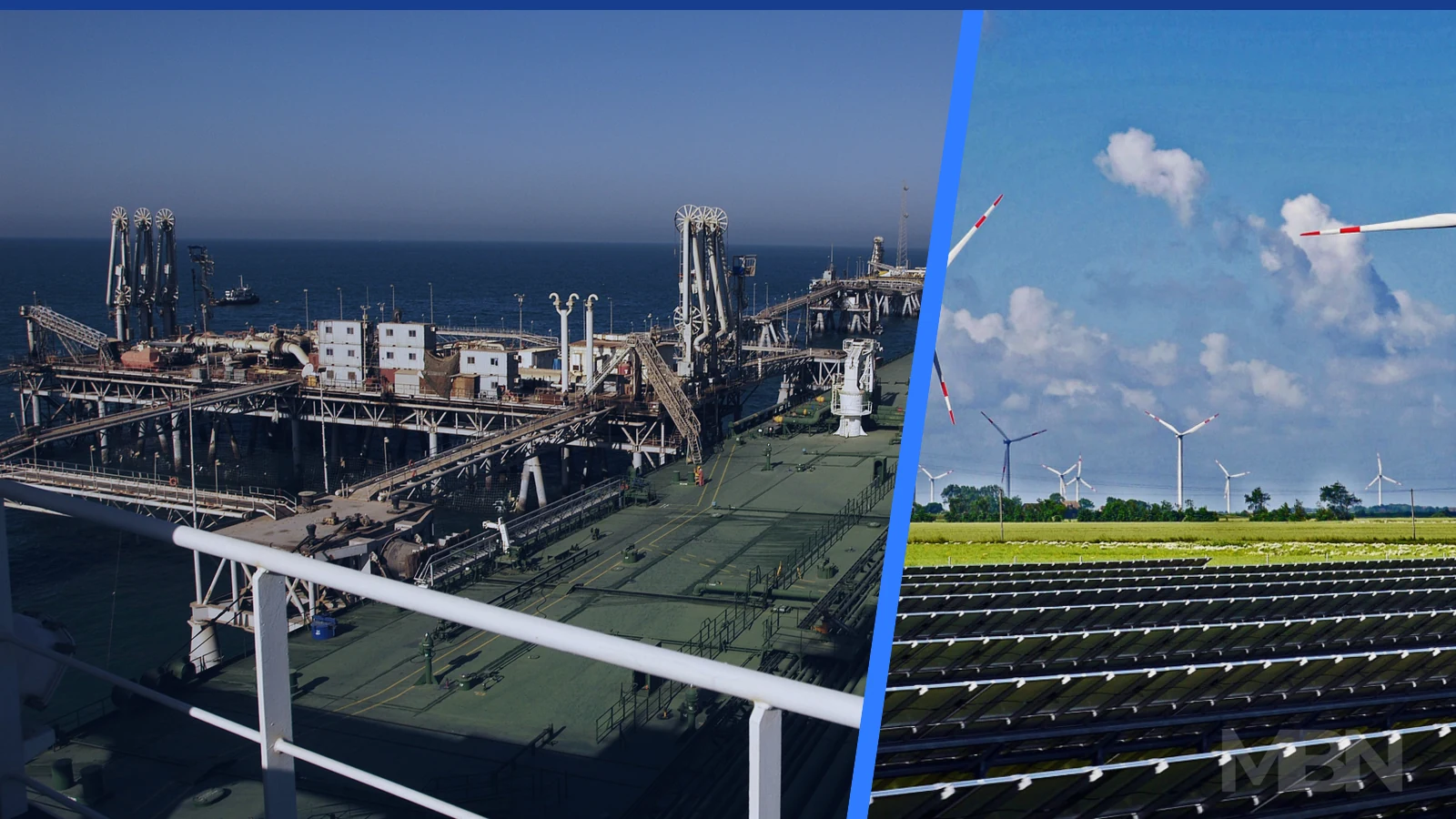
Disruption to oil and gas shipments through the Strait of Hormuz is pushing governments to expand domestic energy while also protecting the fossil-fuel supplies their economies still need.
The two responses operate on different timescales. Emergency stocks, replacement cargoes and temporary fuel switching can cover immediate shortages. Renewable generation, electrification and energy efficiency take longer to build, but can reduce exposure to imported fuels in future.
The conflict that began on 28 February has repeatedly impeded traffic through the Strait of Hormuz. The International Energy Agency (IEA) describes the resulting loss of supply as the largest disruption in the history of the global oil market.
An average of about 20 million barrels of crude oil and oil products passed through the strait each day in 2025, representing roughly a quarter of global seaborne oil trade. The route also carried 19% of the world’s liquefied natural gas (LNG), according to the IEA’s Strait of Hormuz factsheet.
LNG is natural gas cooled into a liquid so it can be transported by ship. Qatar and the United Arab Emirates sent almost all their LNG exports through Hormuz last year.
Alternative routes offer only limited relief. Saudi Arabia and the UAE have pipelines capable of diverting an estimated 3.5 million to 5.5 million barrels of crude per day, far below the normal oil flow through the strait.
IEA Executive Director Fatih Birol said: “We are in the midst of the largest energy security crisis the world has ever faced.”
Clean power gains a security argument
For fuel-importing economies, the disruption has strengthened the economic case for electricity produced closer to home.
The European Commission estimated on 13 July that higher prices linked to the conflict had added around €53 billion to the European Union’s fossil-fuel import bill since February. The bloc did not face an immediate supply shortage, but the additional import cost showed how events outside Europe can rapidly affect its energy bill.
Four days later, the Commission published an Electrification Action Plan. It set an indicative objective of increasing electricity’s share of final EU energy use from 23% to 46% by 2040. The Commission said reaching that level could reduce the bloc’s fossil-fuel import bill by €260 billion a year.
The plan was already being prepared in 2025, so it should not be presented as a policy created by the war. However, the Commission now places energy security alongside lower costs and decarbonisation in its case for electric vehicles, heat pumps and industrial electrification.
South Korea has made a similar connection. Its government says about 70% of the country’s imported crude normally passes through Hormuz. President Lee Jae Myung called in March for a faster transition to renewable energy, while his administration also sought emergency crude supplies and measures to reduce consumption.
The wider move towards clean power began well before the conflict. The IEA expects $2.2 trillion of the projected $3.4 trillion in global energy investment this year to go to renewable power, nuclear energy, grids, storage, efficiency, electrification and low-emissions fuels. It expects a further $1.2 trillion to be invested in oil, gas and coal.
Governments are also protecting fossil-fuel supplies
Long-term investment does not remove the need for oil and gas today. On 11 March, the 32 IEA member countries agreed to make a combined 400 million barrels of emergency oil available to the market, the largest stock release in the agency’s history. The oil was to be supplied over periods suited to each member country’s circumstances, rather than released all at once.
The agency has also recorded announcements of new or expanded emergency storage in Indonesia and Vietnam. Governments have used conservation campaigns, fuel rationing and work-from-home policies to restrain demand.
Higher LNG prices have created another short-term response. The IEA’s July electricity update said several Asian and European countries had switched some generation from gas to coal, although growing renewable output helped limit the effect.
Europe is also replacing unavailable gas rather than eliminating its use immediately. Italian utility Edison said on 28 August that 29 QatarEnergy LNG cargoes, representing about 3.8 billion cubic metres of gas, were subject to force majeure between April and early November. Force majeure is a contractual provision used when extraordinary events prevent a supplier from meeting its obligations.
Edison said it had replaced 21 of the affected cargoes, equal to about 2 billion cubic metres, and expected to meet its commitments to customers. That is supply diversification, but it does not reduce gas consumption.
In the United States, President Donald Trump said on 30 August that oil produced under a newly announced agreement with Venezuela would be used to replenish the Strategic Petroleum Reserve. The US Energy Information Administration recorded 289.7 million barrels in the reserve on 21 August.
The agreement’s detailed terms and delivery timetable have not been published, so the proposal remains an announced intention rather than an immediate addition to US emergency stocks.
One crisis, two investment horizons
The clean-energy and fossil-fuel measures are not necessarily conflicting policies. One protects supply over the next few months, while the other can reduce import dependence over years.
The dividing line will be whether emergency measures remain temporary. Releasing stored oil or running an existing coal plant harder is different from building infrastructure that could lock in fuel use for decades.
The IEA still expects renewable electricity generation to grow by more than 8% and overtake coal-fired output in 2026. Yet it also forecasts a 1% increase in power-sector carbon dioxide emissions this year, partly because expensive gas has pushed some countries towards coal.
