
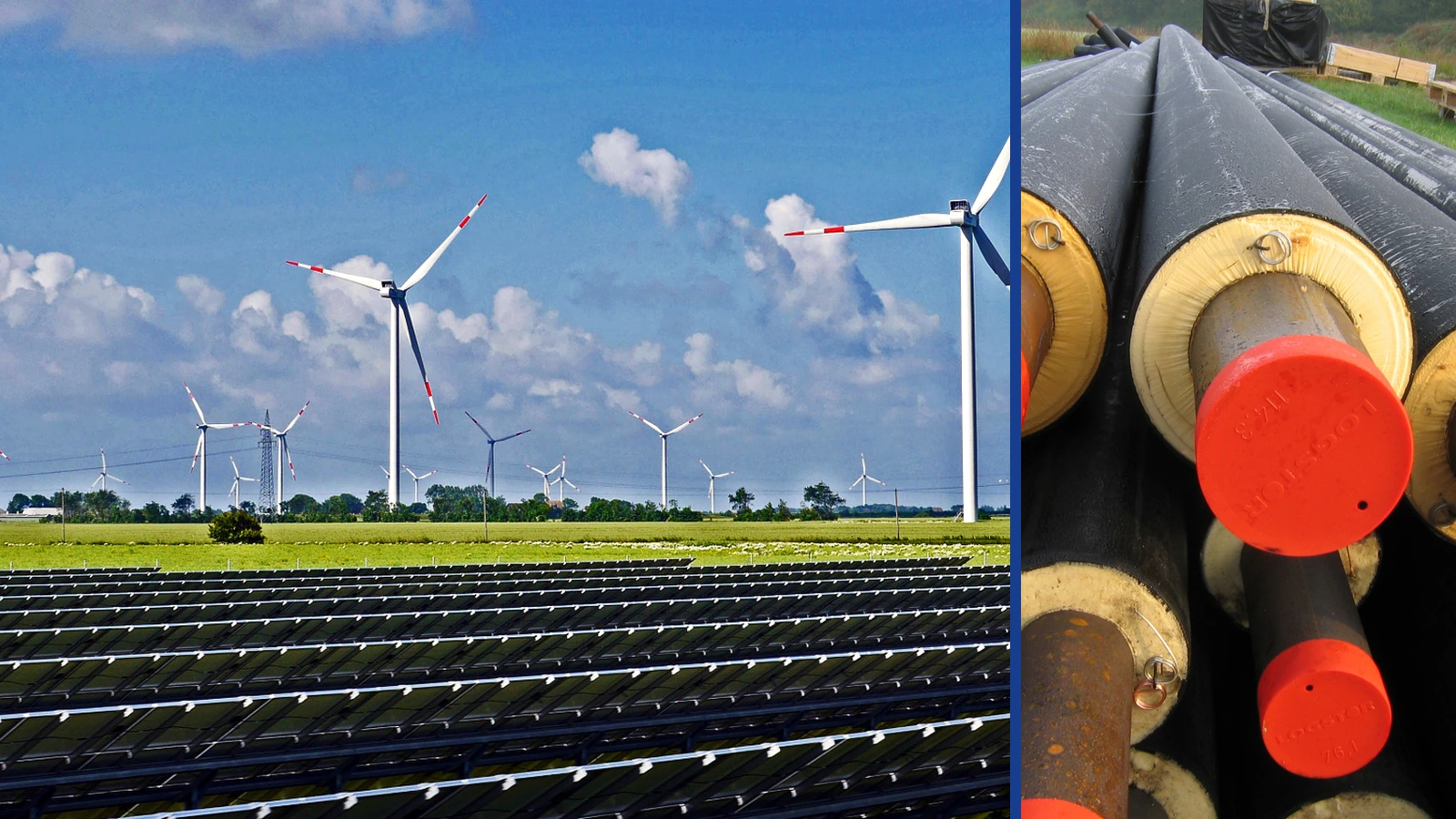
The European Commission has given three renewable-energy projects official cross-border status, making them eligible to seek EU support for studies and construction. The October 1 announcement covers wind power, combined wind and solar generation, and a shared heating network.
The projects are WIND, involving Ukraine and Romania; DEPLOY, involving Poland and Germany; and ZEGA-LINNK, involving Austria and Germany. The European Climate, Infrastructure and Environment Executive Agency, known as CINEA, announced their inclusion under the fifth selection round.
The decision concerns eligibility. It does not announce a grant amount for any of these three projects or establish that their planned facilities are operating.
What is cross-border renewable-energy status?
Cross-border renewable-energy status, shortened to CB RES, identifies projects organized through cooperation between countries. It is a requirement for applying to the renewable-energy funding window of the Connecting Europe Facility’s energy programme, which supports cross-border infrastructure.
Cross-border cooperation can take several forms. The Commission’s explanation of the cooperation rules says countries can jointly fund renewable electricity or heating projects and share the contribution towards their renewable-energy targets.
A joint project between EU countries does not always require energy to physically cross a border. Cooperation can concern how the costs and renewable-energy benefits are shared. Separate rules govern joint projects involving countries outside the EU.
The three additions bring the number of projects holding CB RES status to 15, after another project, PONTIS, withdrew from the list.
Three different ways to supply energy
WIND’s official project description sets out a planned 650-megawatt onshore wind development in Ukraine. The cooperation involves Romania. CINEA estimates annual generation of approximately 2 terawatt-hours.
Megawatts measure generating capacity, the facility’s rated maximum power output. Terawatt-hours measure the amount of electricity generated over time. Actual wind production depends on wind conditions and availability, so capacity and annual output are different measures.
DEPLOY plans a combined 180 megawatts of wind and solar capacity in the Polish-German border region around Gubin and Guben. Its design links electricity production with uses in industrial heat and district heating.
ZEGA-LINNK builds on an existing heating network serving Braunau in Austria and Simbach in Germany. District heating supplies buildings through pipes from shared heat sources, rather than requiring each building to generate all its own heat.
The project plans a 5-megawatt heat pump in Simbach and a new geothermal borehole in Braunau with planned thermal capacity of 12 to 15 megawatts. A heat pump uses electricity to transfer heat, while geothermal energy draws heat from underground. The intended changes would replace part of the network’s reliance on natural gas for periods of high demand.
Funding applications follow a separate process
CINEA distinguishes a call for status from a call for studies and works. Studies can assess feasibility and technical, environmental, economic or legal risks. Works can include equipment, construction and installation.
The sequence is visible in a separate funding decision announced on September 17. The Commission approved €125.81 million for three other projects. One, UNITED HEAT, had received cross-border status in 2022 and then progressed through studies and earlier construction actions.
Those September grants do not belong to WIND, DEPLOY or ZEGA-LINNK. They illustrate the separate decisions required to move from recognition to funded work.
Generation must connect to customers
The proposed developments also need ways to deliver their electricity or heat. As we explained in our earlier coverage of capacity on existing power grids, the network’s ability to carry energy is a separate issue from the amount a generator can produce.
A wind development needs usable electricity connections. A heating project needs pipes, heat sources and customers able to take the supply. Funding studies can help establish whether those pieces fit together before the full investment is committed.
The October decision gives the three developers an additional route to seek support. The announcement does not specify their eventual grants, final construction costs or completed output.
