
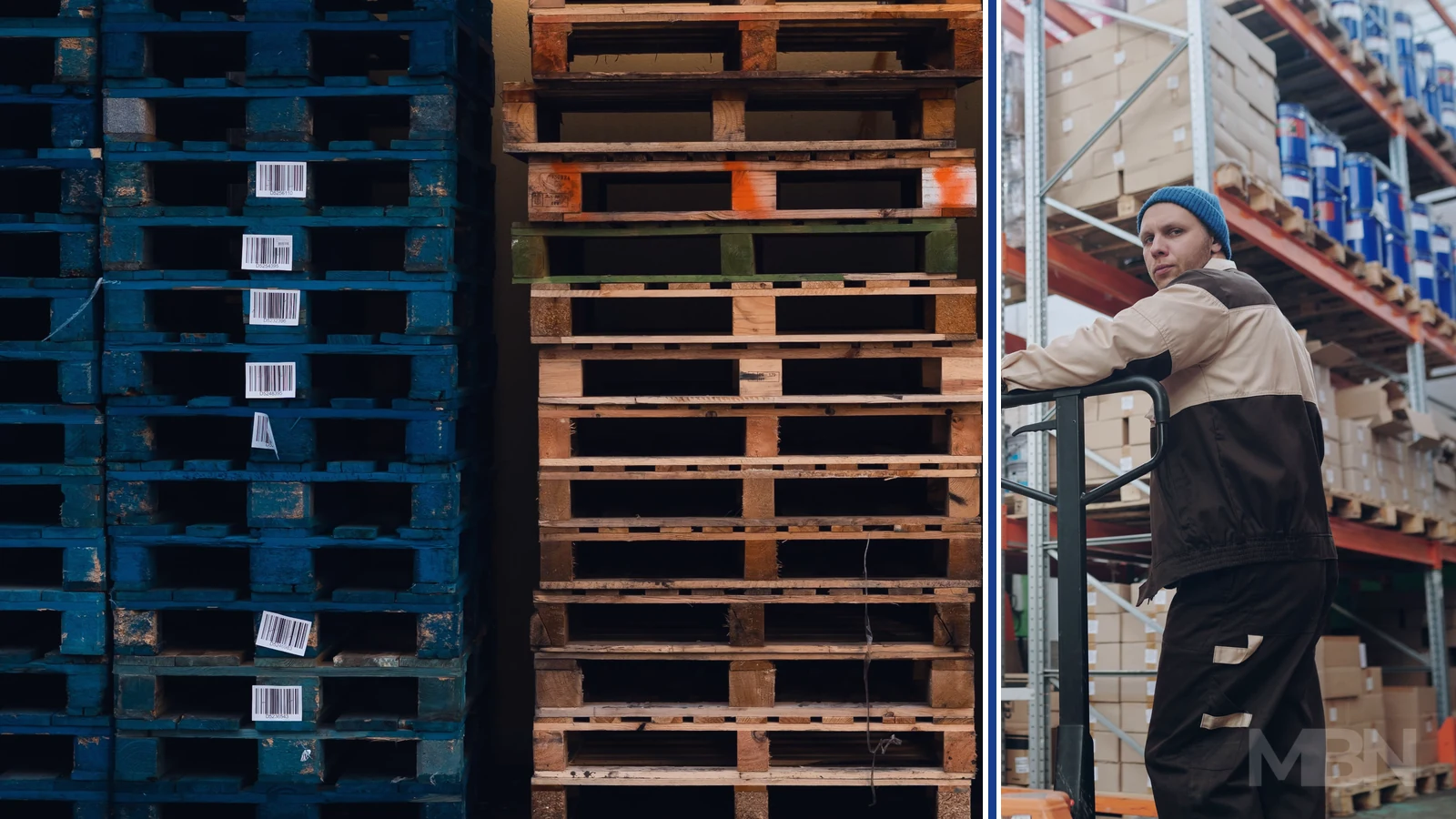
US producer prices for wood pallets and pallet containers were 5.7% higher in July 2026 than a year earlier, according to government data. For manufacturers and retailers, however, the purchase price is only part of the calculation. A damaged, incompatible or noncompliant pallet can also cause warehouse downtime, extra handling and border delays.
The Bureau of Labor Statistics price index, which measures prices received by domestic producers, rose from 337.348 in July 2025 to 356.731 in July 2026. The index increased by approximately 1.9% in April alone.
That April movement was also visible in specialist market data. Fastmarkets reported broad price increases for new and used 48-by-40-inch softwood pallets, the format widely used in US grocery and consumer-goods supply chains.
Fastmarkets attributed the increase mainly to higher prices for lower-grade lumber used in pallet production, alongside an apparent seasonal pickup in freight activity. It also cautioned that some reports of stronger freight demand were anecdotal and that public indicators were lagging.
A small input used on a very large scale
A pallet allows boxes or other goods to move as one load. Forklifts, pallet jacks, warehouse racks and conveyors can handle the platform without workers moving every package separately.
The individual cost can be modest, but high-volume manufacturers may require hundreds of thousands of pallet movements each year. A price increase can therefore add to packaging and distribution expenses even if its effect on the price of one product is very small.
Fastmarkets estimates that 3.7 billion pallets were in circulation in the United States during 2025. Its model also estimates that annual production rose from about 800 million pallets before the pandemic to nearly one billion afterward, while new production and repairs consumed approximately 9.9 billion board feet of lumber in 2025.
Those are proprietary model estimates, not an official census. Fastmarkets says it combined its own wood-products data with historical industry surveys conducted by Virginia Tech.
A separate peer-reviewed study published in 2025 estimated that the US industry produced 919 million new wooden pallets and 280 million repaired or remanufactured pallets in 2021.
The study was based on 98 responses from 2,320 eligible companies, a response rate of 4.2%. Researchers scaled the results using industry employment data, so the figures should be treated as survey-based estimates rather than exact totals.
The cheapest pallet may not have the lowest cost
The direct purchase price is only one part of pallet economics. Dimensions, strength and condition determine whether a pallet works reliably with the rest of a company’s distribution system.
The 48-by-40-inch format was the largest specific size in the Virginia Tech survey, accounting for 29% of new production in 2021. Custom sizes collectively represented 40%, reflecting the different requirements of industries and products.
Standardization matters because warehouses are built around specified tolerances. A pallet must fit racks, conveyors and handling equipment while carrying its load without excessive bending or damaged boards.
This becomes more demanding as warehouses automate. A worker may notice a damaged board and adjust the way a load is handled. Automated equipment has less room to compensate.
A Virginia Tech study of automated and semi-automated warehouses identified inconsistent dimensions, missing components and excessive pallet deflection among the causes of jams and positioning problems. Recycled wooden pallets with stringer construction, a common design supported by long boards beneath the deck, were the type most frequently associated with pallet-related downtime among respondents.
Standards can also affect international transport. A World Bank analysis of pallet dimensions explained that incompatible formats can require goods to be unloaded and placed on a different pallet. That adds labor and handling time while increasing the opportunity for product damage.
The practical lesson for purchasing managers is that saving money on the platform can increase costs elsewhere. A pallet that causes a conveyor stoppage or requires a load to be rebuilt may cost considerably more than the initial saving.
Repair and compliance affect the calculation
Wooden pallets also have a substantial secondhand market. In the 2021 Virginia Tech survey, an estimated 78% of recovered pallet cores were directly repaired. A further 11% were dismantled so that usable parts could go into remanufactured pallets, while 5% were ground or chipped for other uses.
Some companies rent pallets through pooling systems instead of buying them. The pool operator collects, inspects, repairs and returns the platforms to circulation. This moves part of the cost from purchasing pallets to managing their availability, condition and return.
Used supply does not fully insulate buyers from higher prices. Fastmarkets reported increases for both major grades of used softwood pallets in April, alongside new pallets.
International shipments add another requirement. The US Department of Agriculture’s Animal and Plant Health Inspection Service says regulated solid-wood packaging entering or transiting the United States must comply with ISPM 15, an international standard intended to prevent wood-boring pests from moving between countries.
Compliant pallets must be debarked, treated and marked with the official certification. If inspectors find noncompliant wood packaging, possible actions include treatment under supervision, destruction of the packaging or re-exporting the shipment.
This is where the cost of a pallet can become disproportionate to its purchase price. The platform itself may be inexpensive, but a failure involving automated equipment or an international shipment can delay goods worth much more.
For businesses that depend on regular pallet movements, the relevant question is therefore not simply how much one pallet costs. It is how reliably that pallet can move through the entire distribution system.
