
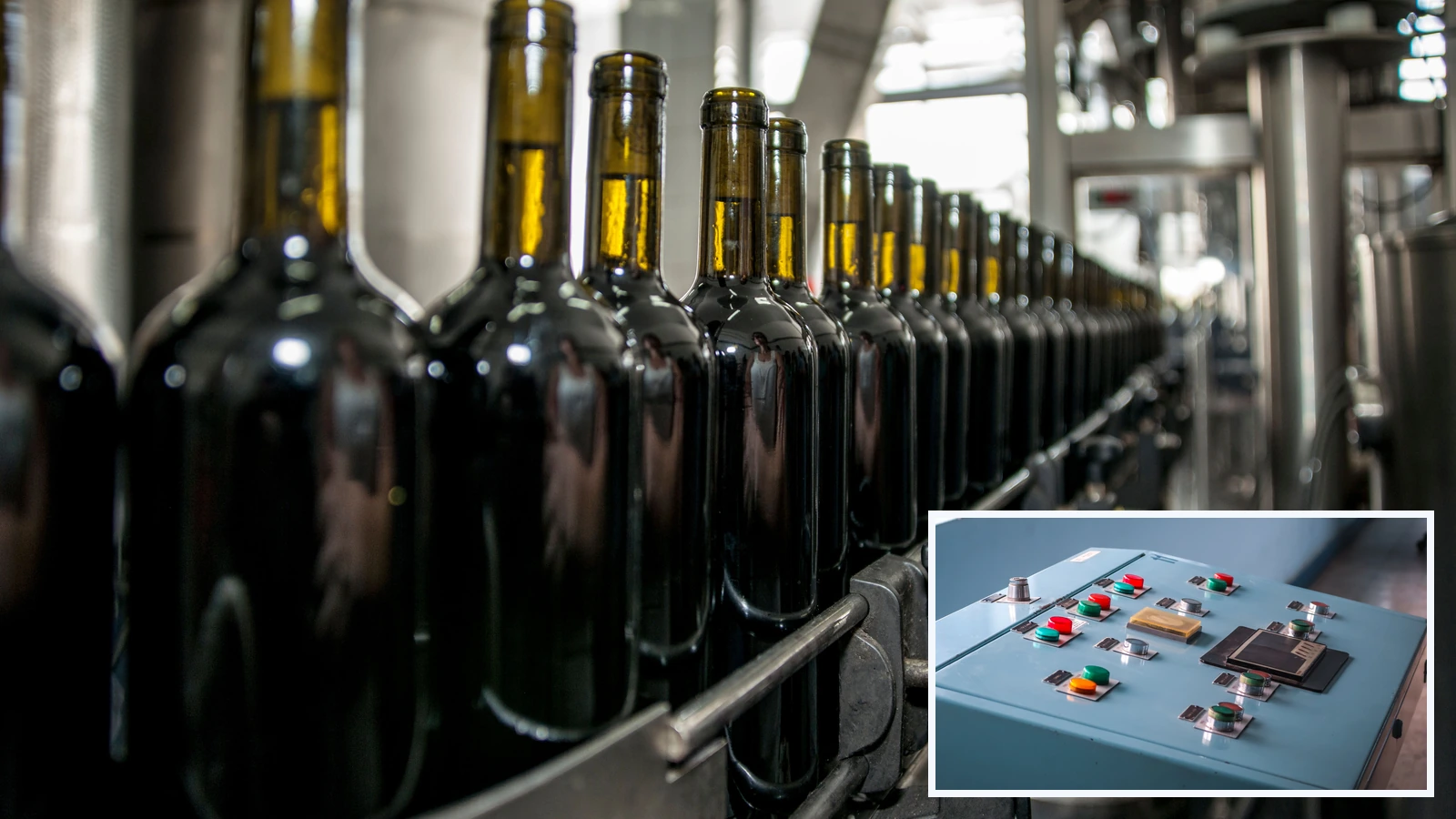
Researchers at two Ecuadorian universities connected a virtual bottling system to working equipment and completed 99 of 100 operator command cycles. The full exchange, from issuing a request to seeing the resulting machine state in the digital twin, averaged 302 milliseconds. The industrial controller retained authority over the machinery.
The study, published on September 26 in The International Journal of Advanced Manufacturing Technology, demonstrates supervisory interaction on a laboratory-scale filling module. It does not establish performance across a full factory.
A digital twin is a digital representation connected to a physical system through operating data. The Ecuadorian platform reproduced equipment states in a three-dimensional environment and allowed an operator to send requests back to the machine’s controller.
That makes the research relevant to manufacturers evaluating how virtual interfaces could fit into existing automation. The question is whether an additional interface helps people supervise equipment reliably, without disrupting the control system already running production.
The controller evaluates commands from the virtual environment
Jessica S. Ortiz, Víctor H. Andaluz and Marlon A. Llamuca of Universidad de las Fuerzas Armadas ESPE worked with Christian P. Carvajal of Universidad Tecnológica Indoamérica. Their physical module transported, detected, positioned and filled bottles.
A Siemens S7-1200 programmable logic controller, or PLC, executed the automation sequence. A PLC is an industrial computer that processes signals from sensors and controls equipment such as motors, pumps and actuators.
The researchers modeled the equipment in SolidWorks and built the interactive environment in Unity. Sensors and other process variables supplied the information needed to update the virtual conveyor, bottles and filling equipment.
Communication worked in both directions. An operator could request actions including starting, stopping or resetting the process and changing operating settings. Those requests passed to the PLC, which assessed them through its programmed logic before changing the physical system.
The resulting equipment state then returned to the digital twin. This created a complete request, response and update cycle, with the virtual interface providing supervision while the PLC executed the machinery’s control logic.
OPC UA, a standard for exchanging industrial data, provided access to controller variables. MQTT, a messaging protocol, carried information to and from Unity. Node-RED, software for connecting data flows, linked the two.
Two-way communication is already part of an established classification of digital twins. The study’s contribution is its implementation and evaluation of that supervisory cycle, rather than the invention of bidirectional connectivity.
Fast exchanges do not establish factory-wide reliability
Updates from the physical process to the virtual representation averaged 78 milliseconds. In the separate command evaluation, transmission to the PLC averaged 42 milliseconds and the controlled process’s response averaged 180 milliseconds.
The 180-millisecond measure covers the process response after the controller received a request. It is not the PLC’s internal instruction-execution time.
Tests also compared the immersive interface with Siemens WinCC, a conventional human-machine interface used to monitor equipment and issue commands. The 26 participants completed tasks in comparable times, but made fewer operational errors and reported lower workload using the digital twin.
The participants were undergraduate students familiar with industrial automation, not experienced factory operators. Everyone used WinCC first. Experience gained in that session could have affected performance with the digital twin, limiting conclusions about which interface was better.
The virtual model also reproduced equipment geometry and operating states without simulating the full physics of liquid entering a bottle. Its results concern supervision of this particular module.
AI research addresses models that need to change
A separate 2026 study in Digital Engineering examines how digital twins can adapt when production conditions change. Ding Gao and colleagues developed a framework using large language models, AI systems that interpret and generate language, with several software agents assigned different tasks.
The framework connects knowledge, behavior and geometry. A knowledge graph records relationships between information from different sources. Agents use it to coordinate tasks and reconstruct behavior models, with corresponding changes to the geometric representation.
In a parts-defect monitoring and sorting experiment, the authors reported a 47% reduction in changeover and recovery times compared with conventional methods. Changeover is the work needed to switch production tasks; recovery concerns restoring operation after a disruption. The reported reduction applies to their experimental comparison.
Another study in Production & Manufacturing Research combined language-based instructions, camera vision, a shared database and a digital twin with an ABB YuMi robot. Its architecture separates interpreting a request, defining the task, planning motion in simulation and communicating movements to the robot.
These approaches address different operating problems. The bottling experiment tests an operator’s supervisory connection; the AI frameworks investigate how tasks and models can respond to changing requirements. Their results should not be treated as one combined factory system.
For manufacturers, any proposed deployment still needs a defined job: supervising a process, revising a task or supporting maintenance. As our earlier coverage of predictive maintenance explained, operating data becomes useful when a company has the people and procedures to act on it.
The Ecuadorian team proposes testing multiple controllers, longer operating periods and disturbed network conditions, alongside trials with industrial operators. Those evaluations would address demands that its single-module demonstration has not yet measured.
