
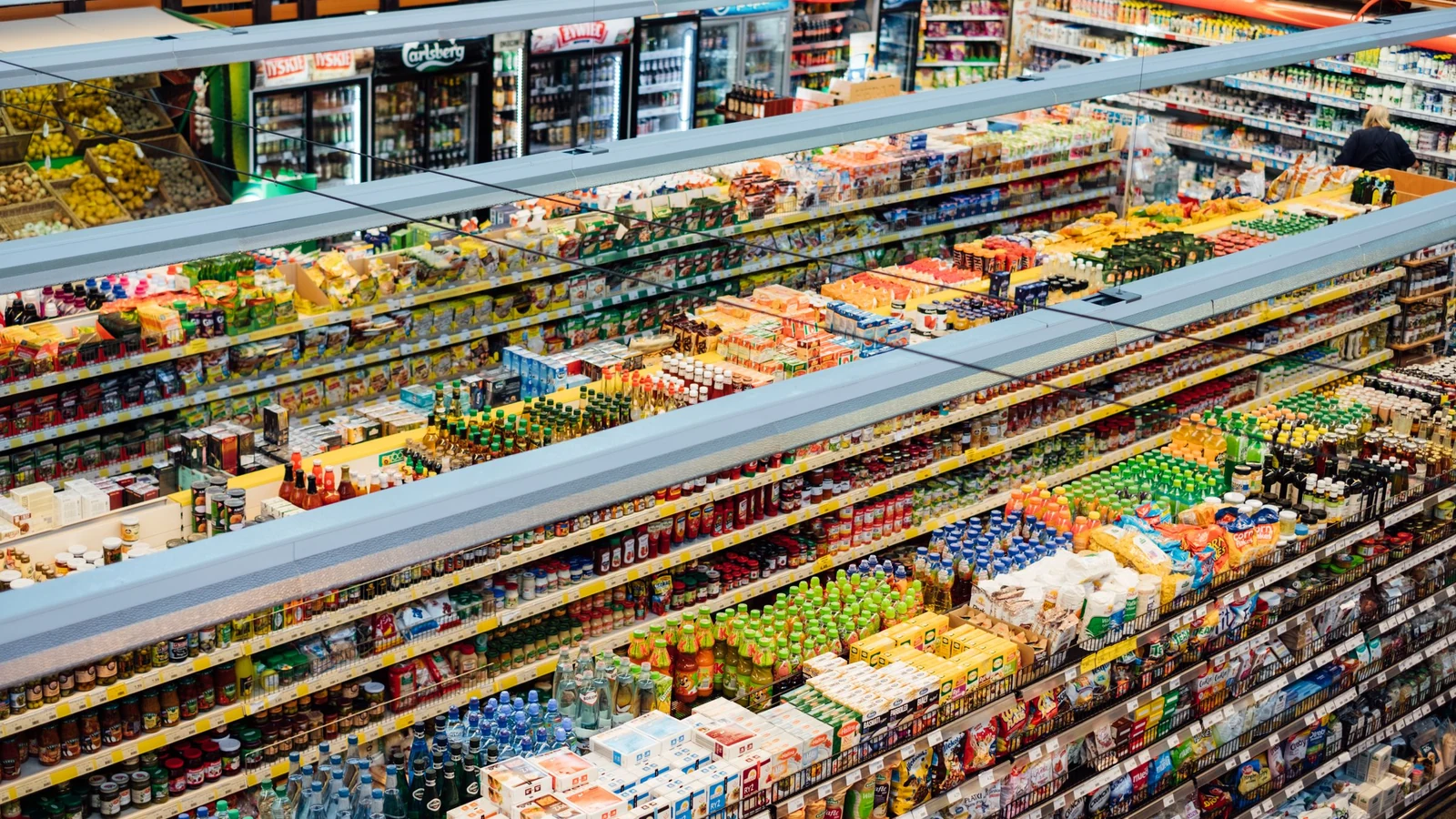
Shoppers bought more of some food products when retailers changed how their prices were displayed, even though the underlying price stayed the same, according to research in the Journal of Marketing Research.
The experiments compared prices displayed per item with prices displayed per pound. Smaller products tended to look like better deals when priced by the item, while larger products appeared more attractive when the prominent price was per pound.
The findings, discussed in an October 2026 American Marketing Association review, give retailers a reason to examine how customers read shelf labels. They also give shoppers a reason to calculate the full cost before deciding which product is cheaper.
One price, two ways to display it
Suppose an item weighs half a pound and costs $2 per pound. Its price is $1 for the individual item. Both labels describe the same transaction, but the most prominent number changes from two to one.
For an item weighing two pounds at the same rate, the comparison reverses: the displayed price is $2 per pound or $4 for the item. Taxes, package sizes and variable weights can complicate real purchases, but the example shows why the first number on a label may affect how expensive an item seems.
Sarah Whitley, Julio Sevilla and Mathew Isaac studied this effect in research published in 2025. The authors describe a form of anchoring, in which an initial number influences a judgment even when other information is available.
In field tests with a grocery retailer, prominently displaying per-item prices for smaller items was associated with sales increases of 12% to 24%, according to the marketing association’s account. In a separate test at a university student union, sales of small trail-mix bags were 90% higher with per-item pricing than with per-pound pricing.
Those figures describe particular products and settings, not a forecast for every store. A 90% increase in a small test also does not tell a reader the number of additional bags sold or the profit earned.
What retailers and customers can learn
Retailers already make decisions about shelf placement, signs and prices as part of their marketing mix. The research suggests that the format used to present an unchanged price can influence the outcome too.
Businesses considering a change should compare sales and margins across similar stores or periods, while keeping the actual price and product consistent. They should also check whether other promotions, supply problems or seasonal demand might explain the result.
Clear price information remains essential. The National Institute of Standards and Technology’s guide to US retail pricing rules explains that state requirements differ. Businesses need to check local rules before changing labels.
For shoppers, the most prominent price is a starting point. Comparing the cost of the quantity actually needed, and checking a common price per unit of weight where available, gives a clearer basis for deciding between products.
