
Ireland’s annual inflation rate rose to 4.1% in September, up from 3.7% in August, with housing-related expenses and transport recording some of the largest increases. The latest figures show the pressure on household budgets extending beyond the price of food.
The Central Statistics Office’s October 8 release put the monthly rise in consumer prices at 0.2%. The increase in the annual rate was 0.4 percentage points, not a 0.4% rise in prices during September.
The Consumer Price Index, or CPI, tracks changes in the prices of goods and services purchased by households. It describes an average basket; individual families can experience different increases depending on what they buy.
Housing and fuel bills carry more pressure
Housing, water, electricity, gas and other fuels cost 9.5% more than a year earlier. Transport prices rose 7.5%, while education services increased 8.9%. None of the broad spending divisions recorded an annual decline.
The CSO reported an average diesel price of €2.06 a liter, 37 cents above September 2025. Gasoline averaged €1.96, up 24 cents. These are national averages, rather than prices at every filling station.
For retailers and other consumer businesses, higher essential bills can leave customers with less money for discretionary purchases. The CPI itself does not establish that households have cut their spending; that requires evidence on purchases and incomes.
Two inflation measures give different readings
Ireland’s EU-comparable measure, the Harmonised Index of Consumer Prices, recorded annual inflation of 3.8% in September. It is designed to allow comparisons between member countries and should be compared with equivalent figures elsewhere.
The CSO’s methodology notes explain that the national CPI includes mortgage interest, which the harmonized measure excludes. Mixing the two would misstate Ireland’s position relative to other European economies.
Annual inflation also compares September with the same month last year, while monthly inflation compares it with August. A faster annual rate can coexist with a relatively modest monthly increase.
Imported energy remains a risk
The Central Bank of Ireland’s September economic assessment described an economy maintaining growth alongside higher energy costs and persistent domestic services inflation. It warned that prolonged Middle East tensions could push inflation above its central forecast.
The bank also argued that investment reducing dependence on imported fossil fuels would make energy costs more stable for households and businesses. Our earlier coverage of the energy shock and investment in domestic power explains why immediate fuel protection and longer-term alternatives operate on different timescales.
For households most exposed to energy costs, the bank favored temporary, targeted assistance. Its warning was that broad spending increases could add to inflationary pressure while leaving the underlying dependence on volatile imported fuel unresolved.
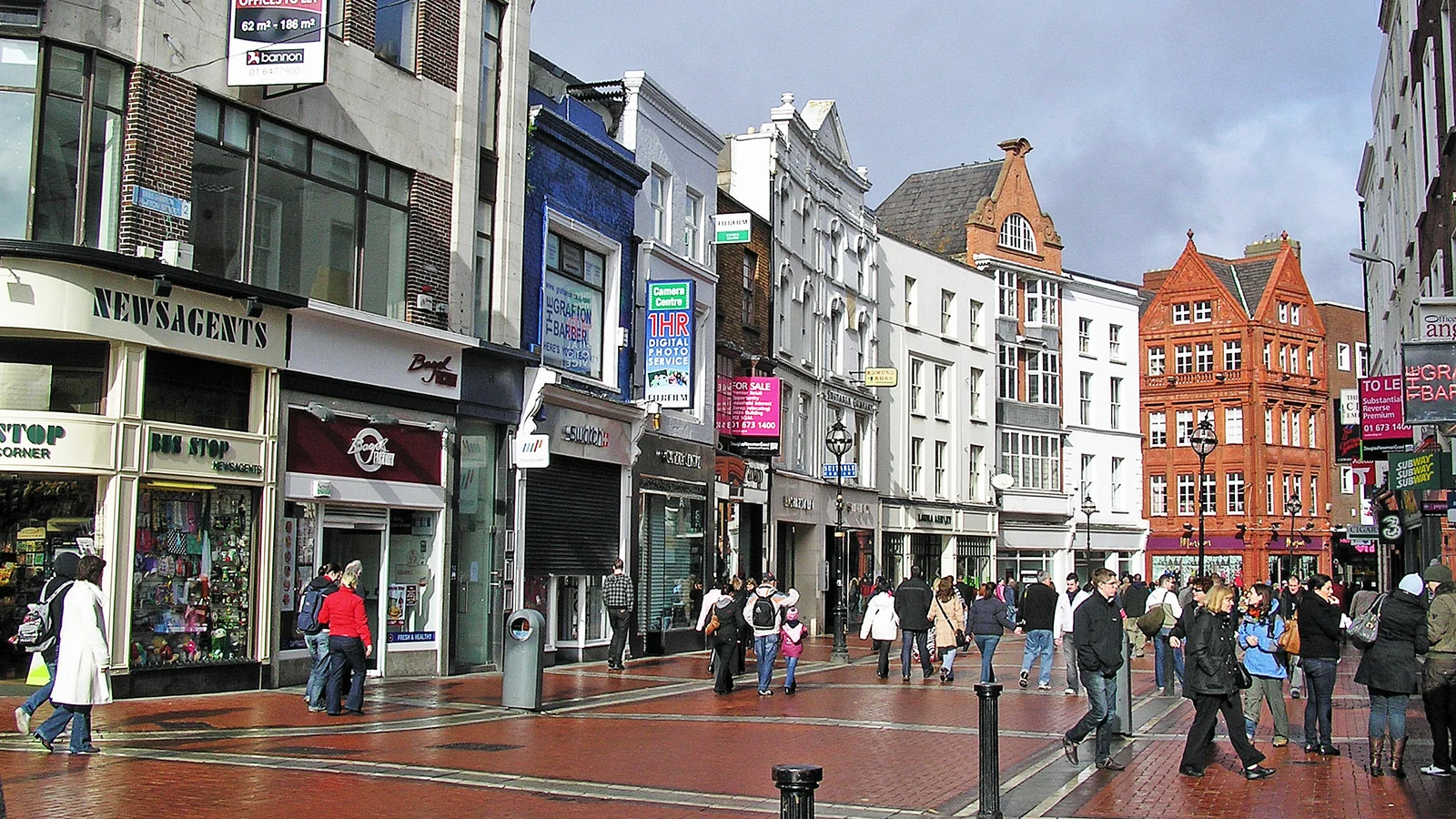
Cover: Grafton Street, Dublin, photographed in 2009. Representative archival photograph, not a record of September 2026 prices or the financial circumstances of anyone shown. Photograph: Donaldytong (CC BY-SA 3.0). Cropped and arranged by Market Business News. Adapted cover licensed CC BY-SA 3.0.
