
Airtel Money began conditional trading in London on October 9, bringing an African mobile-payments business to the stock market at an offer price implying a valuation of £5.3 billion.
The price of £1.96 per share was announced on October 1. PA reporting on the debut confirms conditional dealings began on Friday. Full admission and unconditional trading remain scheduled for October 14.
Conditional trading takes place before the shares are formally admitted. The company’s announcement says those transactions would have no effect if admission did not occur.
Behind the flotation is a business that converts cash into digital balances and enables customers to transfer money, pay bills and make purchases. Its commercial performance depends on how regularly people use those services.
The offer sells existing shares
Legal issuer Airtel Mobile Commerce N.V., which trades as Airtel Money, said in its final offer statement that minority shareholders were selling 270 million existing shares.
Up to another 27 million shares are available from Mastercard Asia/Pacific through an over-allotment option, an arrangement allowing additional shares to be sold. The stated maximum offer size of £582 million depends on that option being exercised in full.
This is a sale by existing owners, rather than an issue of new shares raising fresh capital for Airtel Money. The offer size is also different from the company’s market value, which prices its entire equity at the offer price.
Airtel Africa said it was not selling existing shares in the offer and expected to remain a long-term strategic shareholder. The International Finance Corporation was allocated shares worth £67.2 million.
Payment flows are much larger than revenue
Airtel Africa’s annual report for the year ended March 31, 2026 records 54.1 million mobile-money customers, up 21.3% from a year earlier.
The segment processed $195.9 billion, an increase of 43.5% in reported currency. That is the value moving through the service, not money the company earned.
Segment revenue was $1.355 billion before eliminating transactions with the group’s mobile-services business. After those inter-segment eliminations, mobile-money service revenue was $1.087 billion. Keeping the two figures separate avoids overstating its contribution to consolidated group sales.
The report shows revenue from cash deposits and withdrawals, transfers, payments and financial services. Its merchant-services account says the company is expanding tools that let businesses accept payments and track transactions.
For a merchant, a wallet is more useful when customers can pay suppliers, settle bills or move funds into a bank account without first withdrawing cash. For an operator, those additional uses create opportunities for more transactions.
A digital service still needs physical access
Mobile money relies partly on agents who exchange cash for electronic balances and handle withdrawals. The GSMA’s 2026 industry report estimates that agents globally accepted $430 billion in cash deposits during 2025, 20% more than a year earlier.
That global figure covers the industry, not Airtel alone. It illustrates why a mobile-payments service needs more than software. Customers must also be able to put money into the system and obtain cash when required.
Our coverage of digital skills and the gap between network coverage and use explains another adoption obstacle. Availability does not establish that customers can use a service confidently.
The flotation gives Airtel Money a public valuation. Sustaining the business will depend on whether its wallets remain useful after customers register, through reliable access and payments that fit their everyday needs.
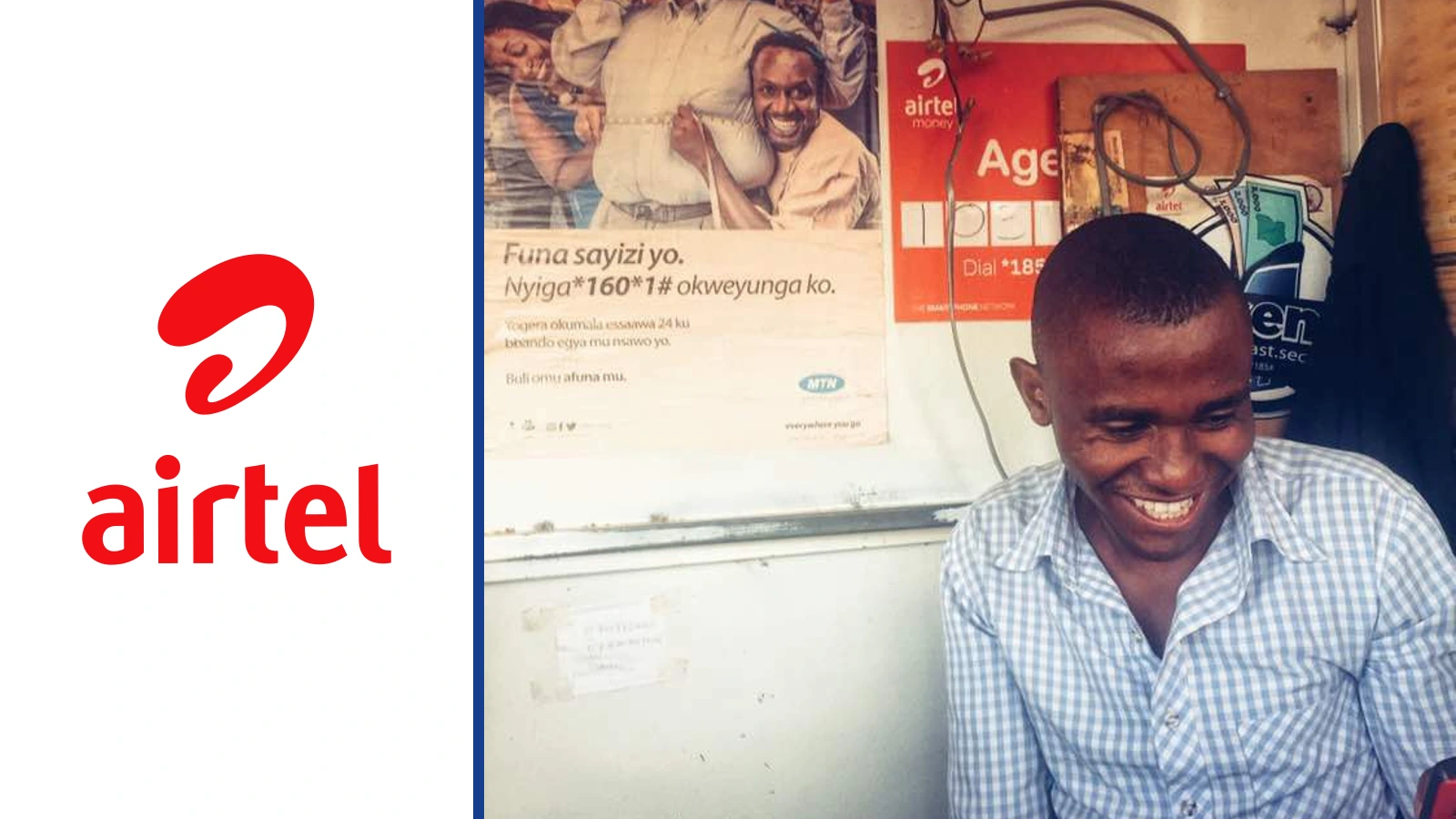
Cover image: Airtel mark beside a representative 2017 photograph of a mobile-money agent in Kampala. Photo by Emolot/Wikimedia Commons, cropped and resized. Editorial composite by Market Business News, licensed under CC BY-SA 4.0. Trademark rights remain with their owners. No endorsement is implied.
