
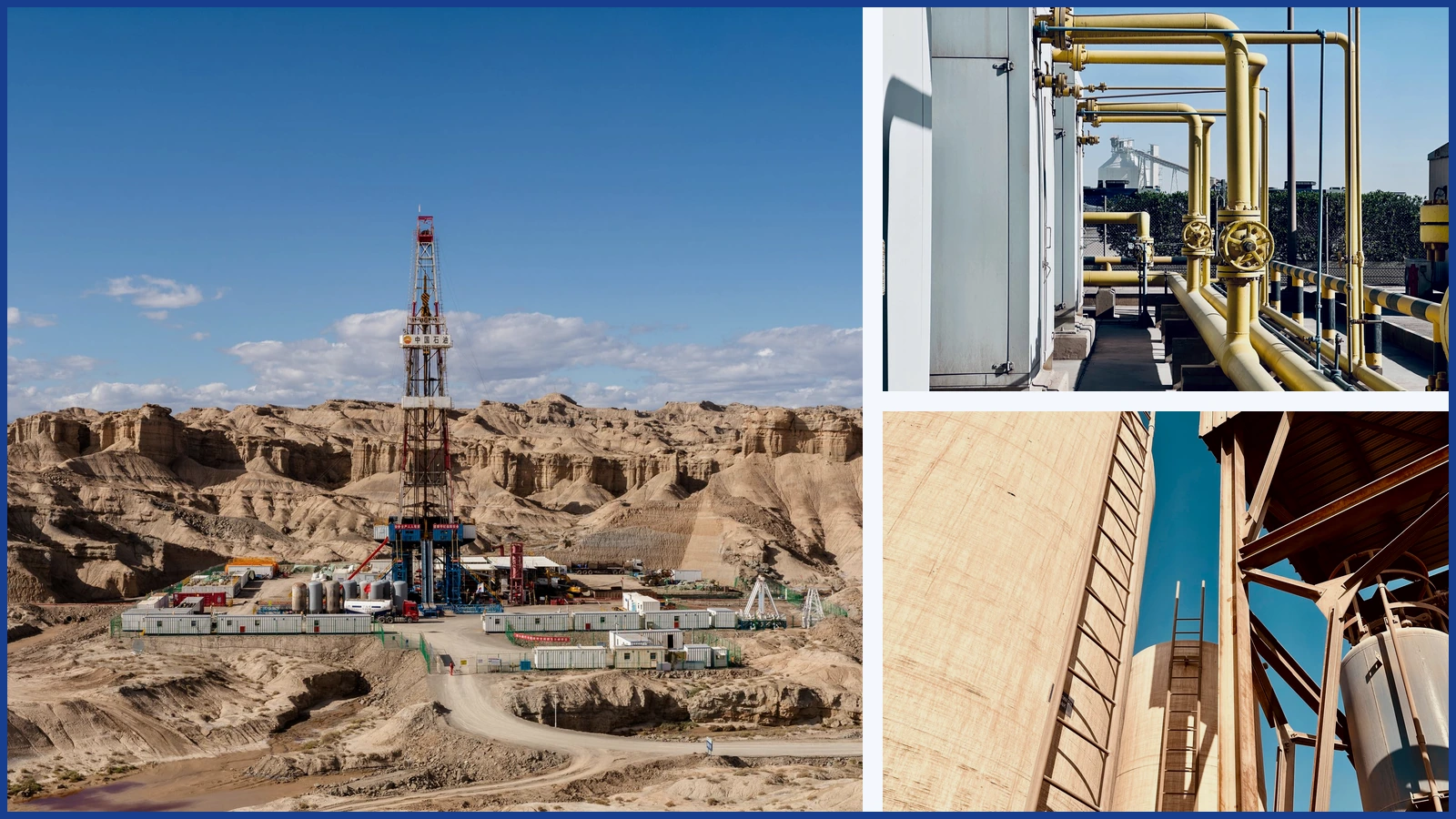
Select Water Solutions has agreed to acquire Pilot Water Solutions for $700 million in cash and shares, plus a possible $15 million contingent payment. The proposed deal would add pipelines, storage, recycling and disposal capacity for the water that comes up alongside oil and gas in the Delaware Basin.
The announcement on September 24 concerns a part of oil production that is easy to overlook. A producing well can bring large volumes of water to the surface along with hydrocarbons. That water has to be collected, moved, stored, treated or disposed of. Companies operating those systems are often described as water midstream businesses.
Select said it expects the transaction to close in the fourth quarter of 2026, subject to customary conditions and regulatory approvals. It is a signed agreement, not a completed acquisition.
What produced water is
Produced water is water brought to the surface during oil and gas production. It can include natural formation water, water previously injected into a reservoir, and substances picked up during extraction. The US Department of Energy says its content can include salts, dissolved gases, metals and other materials, so it is not ordinary freshwater.
Oil and gas producers need a way to manage that stream for as long as a well produces. Some water can be treated and reused in drilling or completion work. Other volumes may be injected into permitted disposal wells. The route depends on local rules, water chemistry, available infrastructure and customer demand.
That is where a water midstream operator fits in. It can build gathering pipelines from wells, hold water in storage, operate treatment or recycling systems, and move water to disposal sites. Producers pay for that service instead of building every part of the network themselves.
What Select is buying
Pilot Water operates mainly in the Delaware Basin, which spans parts of West Texas and southeastern New Mexico. Select says Pilot has more than 700 miles of pipelines, about 2.7 million barrels per day of active permitted disposal capacity and 0.9 million barrels per day of undeveloped permitted capacity.
A barrel is 42 US gallons. Permitted capacity is not the same as water moving through the system on a particular day. It describes the volume the company says its sites are authorized to handle, subject to operating conditions and demand.
The appeal of connecting two networks is operational. A larger pipeline and disposal system can give producers more routes when one location is busy, while a recycler may have more opportunities to receive water from nearby wells. Select says the combined platform would have 3.8 million barrels per day of recycling capacity and more than 1,600 miles of pipelines.
Those combined figures are company projections about the business after closing. They do not mean every asset is currently operating at full capacity.
How the payment and contracts work
Select has agreed to pay $600 million in cash and $100 million in its Class A common stock. The sellers may receive up to another $15 million if specified operational milestones are met in early 2027. Select said it has debt commitment letters from JPMorgan Chase and Bank of America to fund the cash portion, alongside cash on hand and other financing it may use.
Part of the transaction’s appeal is Pilot’s contract base. The company says more than 80% of Pilot’s annual revenue is backed by long-term agreements with an average remaining term of more than seven years.
Some of those agreements include minimum volume commitments, often shortened to MVCs. Under an MVC, a customer agrees to pay for a minimum amount of capacity or service. That can give a pipeline operator more predictable income, even if a customer’s actual daily use moves around.
Predictable contracts can make infrastructure easier to finance, but they do not remove every risk. Water volumes still depend on drilling activity and production, while permits, operating costs, customer concentration and a slower oil market can affect returns.
Why water infrastructure attracts investment
Managing water is an operating requirement for oil and gas producers, not an optional add-on. A well may be capable of producing oil, but it still needs somewhere for the associated water to go. If the local pipeline or disposal system is constrained, drilling and completion plans can be delayed or become more expensive.
Our earlier coverage of the business case for industrial water reuse describes a related point: treatment, transport and dependable customers determine whether water infrastructure pays for itself. Oilfield water has different chemistry and rules, but the need for pipes, treatment capacity and long-term users is similar.
Select estimates that Pilot will generate $100 million to $110 million of adjusted EBITDA in 2026 and $120 million to $130 million in 2027. EBITDA is a measure of earnings before interest, taxes, depreciation and amortization. These are company estimates, not reported results.
The next step is clearance and closing. If it goes through, Select will need to connect Pilot’s assets with its own systems and show that the larger network can deliver the cost savings and volume growth it expects.
Select set out the proposed transaction and its assumptions in its September 24 announcement. The Department of Energy explains how produced water is managed.
