
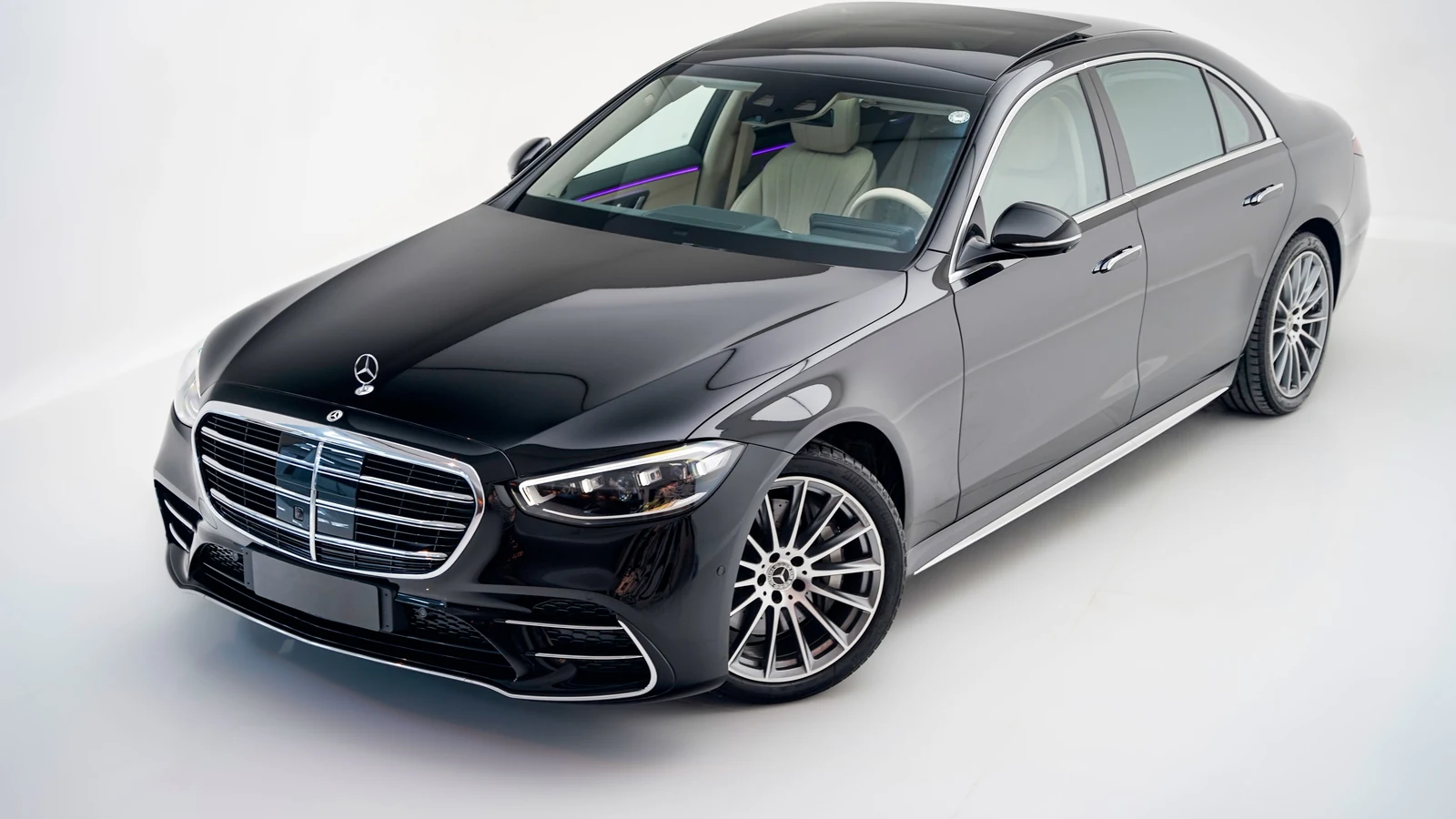
Mercedes-Benz and Nvidia are extending their partnership to develop more advanced driver assistance and automated driving systems, the companies announced on October 16.
The agreement links Mercedes-Benz’s vehicle engineering and MB.OS operating system with Nvidia’s computing, driving software and safety technology. The companies also identify future Level 4 applications, including automated luxury-car services, as a development objective.
The announcement does not give a launch date for those services, disclose financial terms or establish that a new driverless system has received regulatory approval.
Computing and vehicle software come together
Mercedes-Benz’s MB.OS software supports driving functions and updates delivered remotely to vehicles. Nvidia’s Hyperion provides an architecture for onboard computers and sensors.
The companies say Nvidia’s Alpamayo Stack driving software will support functions including urban driving assistance, active safety and automated parking. Its Halos safety system adds a parallel safety layer intended to provide redundancy and operating safeguards.
These are the partners’ descriptions of the technology. The release does not include independent safety results or evidence that every proposed function is available to customers.
Level 4 means automation within defined limits
Automated driving is divided into levels according to what the system can do and what responsibility remains with a human.
The US National Highway Traffic Safety Administration explains that Level 2 assistance can control steering and speed while the driver remains responsible for supervision. Under Level 3, a system handles driving but the person must be available to take over when requested.
Level 4 goes further: the system handles the driving task without needing a human driver within its permitted operating area and conditions. It does not mean the vehicle can drive everywhere in every circumstance.
For prospective commercial operators, the service area and operating restrictions are therefore as important as the automation label. A vehicle suitable for a defined route cannot automatically serve an unrestricted network.
The business case extends into factories
Mercedes-Benz also uses Nvidia technology for engineering simulations and within MO360, its digital production network. The companies say they will continue work on production efficiency, flexibility and quality.
That makes the relationship relevant to both the products Mercedes-Benz sells and the way it manufactures them. However, the announcement provides no quantified savings or production targets.
Our reporting on robot adoption and factory management examines why purchasing advanced equipment alone does not establish a productivity gain.
For this partnership, the next useful evidence will be specific vehicles, supported driving conditions, approvals and customer availability. Today’s extension sets out the technology the companies intend to combine, while leaving the timing and economics of future automated services open.
