
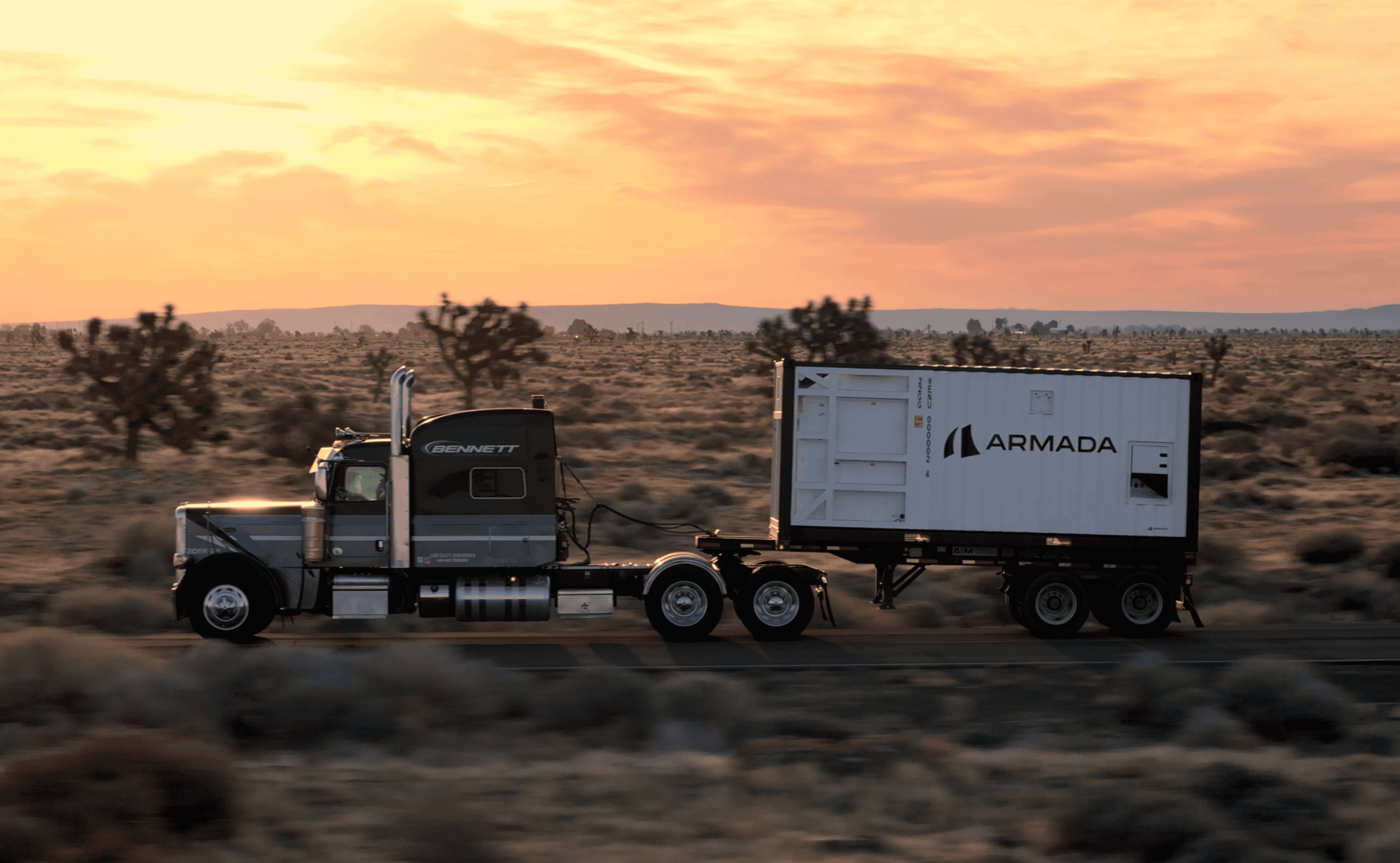
Armada has raised $131 million in a new round of funding. The startup builds portable AI data centers; basically shipping containers packed with servers.
Armada said in its Founders’ Blog that “the capital will accelerate the rollout of new product lines and strengthen our core platform.”
Big names joined this funding round. Pinegrove Capital Partners, Veriten, and Glade Brook Capital Partners came in as new investors. While previous backers like Founders Fund, Lux Capital, 8090 Industries, Overmatch, Silent Ventures, Felicis, Marlinspike, Shield Capital and Microsoft’s M12 venture fund invested even more.
Specifically, that $131 million will fund:
- Increased production of their new Leviathan units, which can deliver 1 megawatt of computing capacity.
- Global expansion beyond current markets
- Software improvements to their management platform
- Research into new form factors
The big idea
Traditional data centers take years to build. They need permits. They require construction crews. By the time they’re done, the technology inside might already be outdated.
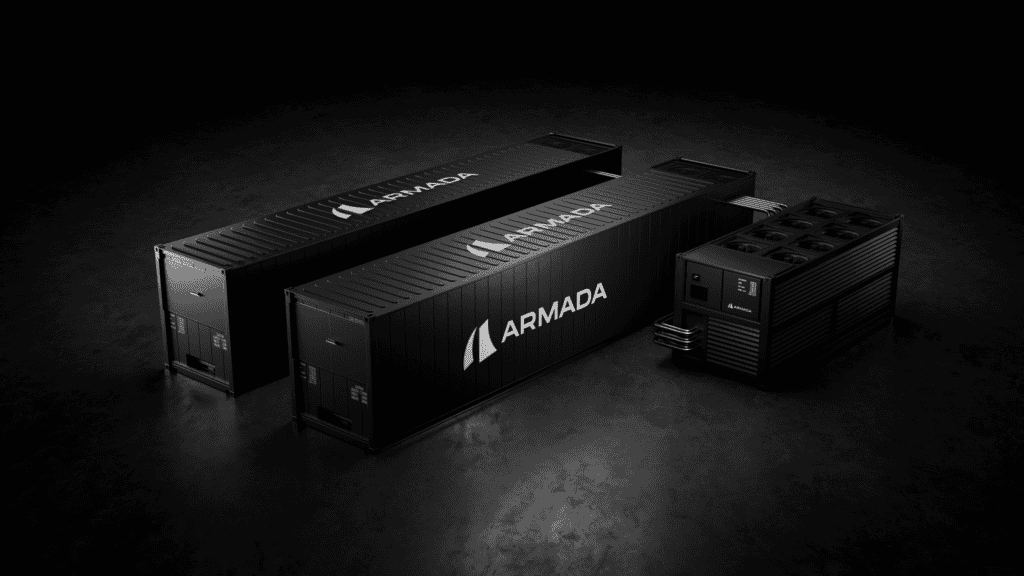
Armada flips this model. Their modular data centers, called Galleons, arrive ready to plug in. Setup only takes weeks, and the upfront cost is much less than conventional hyperscale data centers.
Armada builds different sizes for different needs:
- Cruiser: Compact with 3 racks of compute.
- Triton: Their mid-size option, with 5 racks of compute.
- Leviathan: The new megawatt option.
Why this matters
Dan Wright, Co-Founder and CEO of Armada, said:
“American energy and AI dominance hinges on one thing: moving massive compute to the edge—fast—where data and low-cost power live.”
He added:
“This latest product launch [Leviathan] and funding further accelerate our mission to bridge the digital divide and ensure that the world runs on the American AI stack.”
The company’s white paper claims that “a vast network of modular data centers could potentially leverage up to 6GW of incremental power capacity for AI workloads per year.”
Looking ahead
The startup has now pulled in over $200 million in venture funding altogether and it targets a specific problem: AI needs massive computing resources, but building permanent data centers everywhere doesn’t make sense.
Some locations have cheap energy but no permanent demand. Other locations need temporary computing boosts.
Mobile data centers solve both of these issues. You can park them where energy is cheap today, move them when conditions change, and upgrade components as technology improves.
