
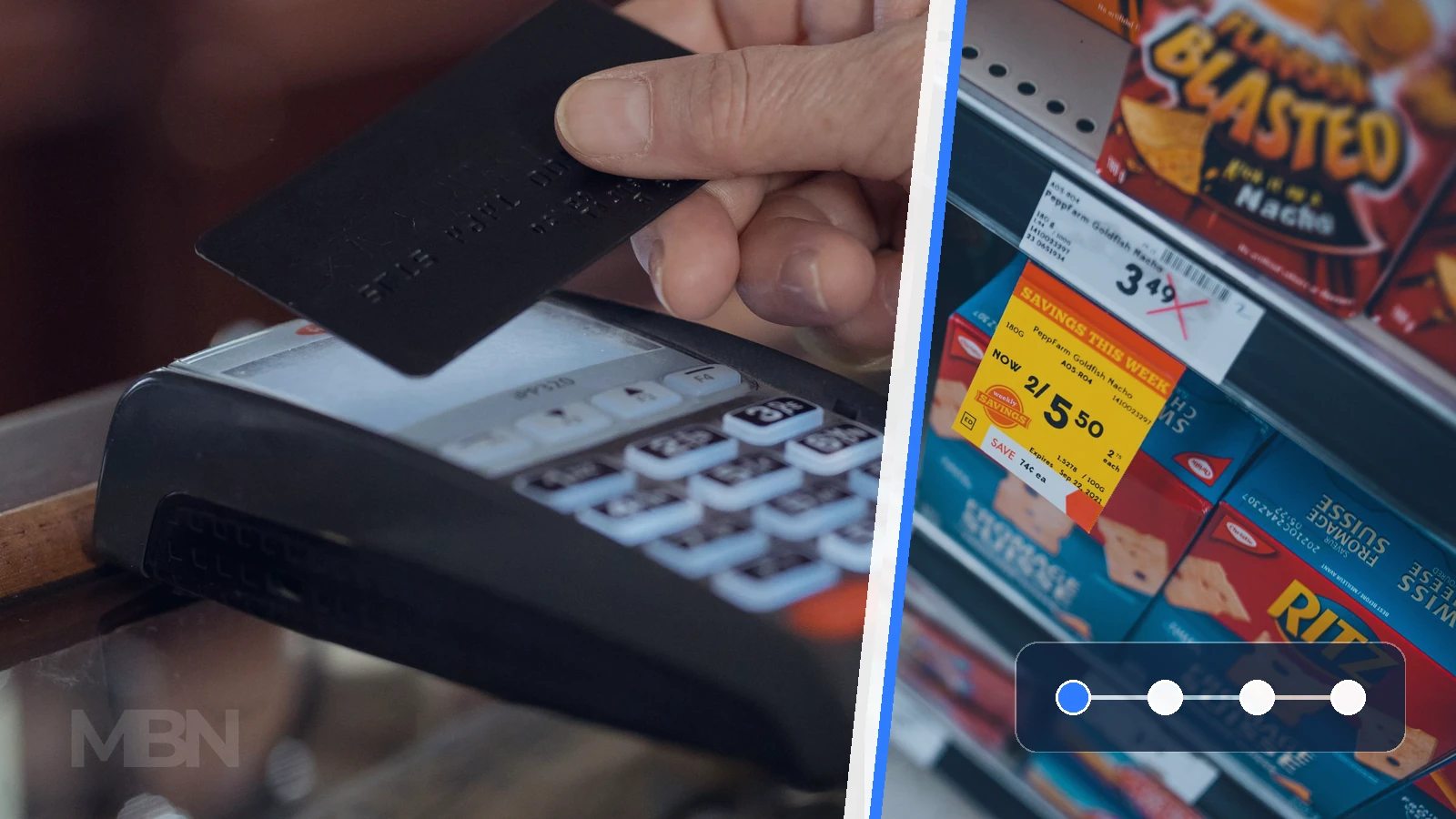
Buy now, pay later can raise a retailer’s common price, leaving shoppers who pay upfront with part of the bill, according to a new economic model.
The result comes from theoretical modelling and simulations. It is not evidence that BNPL has already raised prices across the retail market, nor does the study estimate an average increase for real-world purchases.
The paper, Buy Now, Pay Later: The Hidden Effects of Consumer Liquidity on Retail Prices and Inventories, is forthcoming in Management Science. It was written by Naveed Chehrazi and Panos Kouvelis of Washington University in St Louis, with Wenhui Zhao of Shanghai Jiao Tong University.
Buy now, pay later, or BNPL, allows a shopper to split a purchase into several instalments. The provider normally pays the retailer at the time of sale, less a fee or discount, and then collects the instalments from the customer.
The researchers separate two ideas that are often treated as the same: how much a consumer is willing to pay and how much cash that person has available now.
“The ‘buy now, pay later’ button does not target how much you are willing to pay for an item. It targets what you are able to pay right now,” Kouvelis said in a Washington University account of the research.
A common price can spread the financing cost
The model contains three parties: a retailer, consumers and a BNPL provider. The retailer chooses a price and how much stock to hold. The financing company offers instalments to customers who value the product but cannot pay the full amount immediately.
Accepting BNPL can bring additional buyers to the checkout. The retailer, however, receives less from a financed sale than the displayed price because the provider retains part of the transaction.
When the retailer sets one price for everyone, the model shows how some of that cost can be passed into the common sticker price. A customer who does not use BNPL could then face the same higher price without receiving the instalment service.
This does not mean every merchant will respond in the same way. Fees, margins, competition, customer demand and a retailer’s ability to change prices all influence what happens outside the model.
More sales need not mean more profit
The researchers also found that wider access to instalments could increase the number of products sold while reducing the retailer’s profit. The extra volume may not compensate for lower net revenue on financed purchases and a change in the price that customers face.
“More sales is not the same as more profit,” Chehrazi said.
Inventory can fall as well. Across millions of simulated scenarios, the researchers reported that accepting BNPL could lead a retailer to stock less. They also found no simulated case in which the service turned an unprofitable product into a profitable one.
The result challenges the idea that BNPL is automatically useful whenever it lifts sales. A retailer must compare the extra demand with the financing cost and any effect on pricing and stock decisions.
A large market, but an untested price effect
BNPL is already a sizeable part of US consumer finance. Six providers surveyed by the Consumer Financial Protection Bureau originated 335.8 million loans worth an inflation-adjusted $45.2 billion in 2023, according to the agency’s latest market report. The average loan was $135.
Those figures show the scale of the payment channel, but they do not demonstrate that shoppers paying upfront were charged more. The new paper identifies a mechanism through which this could happen under its assumptions.
Direct comparisons of prices at retailers before and after adopting BNPL would be needed to measure whether the effect appears in practice, how large it is and which products are most affected.
