
lithium-air--battery

Cambridge scientists make lithium-air battery breakthrough

Published: 00:13, November 1, 2015

Scientists at Cambridge University created a new design for lithium-air batteries which is reportedly 90 percent more efficient, has a higher energy density, and is capable of being recharged more than 2,000 times.

The battery has a spongy carbon electrode made from graphene and involves a chemical reaction to drive the cell, making it more stable and more efficient.

“What we’ve achieved is a significant advance for this technology and suggests whole new areas for research – we haven’t solved all the problems inherent to this chemistry, but our results do show routes forward towards a practical device”, said Professor Clare Grey of Cambridge’s Department of Chemistry, the paper’s senior author.

“We’re excited by the chemistry, but we’ve also got quite a lot of work to do in particular to understand the mechanisms of this chemistry and optimise it and to work on getting it closer to a higher rate system.”
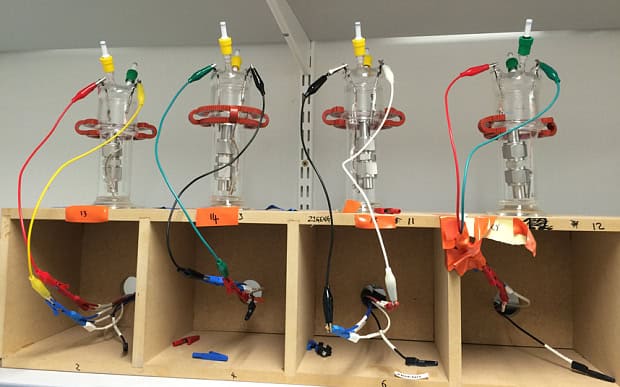
lithium-air--battery

The goal is for lithium-air batteries to eventually use regular-air to fuel the chemical reaction that releases electricity.

The technology is still in the lab phases and current test units have operated in pure oxygen – not regular air yet.

“What we really want is a [true] lithium-air battery – one that just takes in air, without having to remove CO2, nitrogen and water,” Prof Clare Grey told BBC News. “And now we have a system that at least tolerates a lot of water.”

The research is an important step towards taking lithium-air batteries out of the lab.

Veronica Salvador Avatar

Other News

Employer pay differences reach beyond wages into household spending

Oct 22, 2026

Late-payment problems rise among UK firms that offer customer credit

Oct 22, 2026

Repair firms trail recyclers on margins in South Korean study

Oct 22, 2026

Personalized grocery prices could help most shoppers while costing others more

Oct 22, 2026

Board diversity is linked to faster drug recalls, research finds

Oct 22, 2026

Young audiences favor new actors over influencers in UCLA survey

Oct 22, 2026

Added-sugar labels can change which foods shoppers buy

Oct 22, 2026

Stanford’s thermal-noise research advances low-power wireless sensing

Oct 21, 2026

Connected-car security risks increasingly sit in apps and cloud services

Oct 21, 2026

A freelancer’s financial guarantee can make a bid less attractive

Oct 21, 2026

A housing slump can change store shelves far beyond the downturn

Oct 21, 2026

Europe’s cheaper solar imports bring a manufacturing trade-off

Oct 20, 2026

Annual price reviews lose ground in regional Fed survey

Oct 20, 2026

Europe’s startup funding gap grows after the early rounds

Oct 20, 2026

Business data sharing has a funding problem beyond the technology

Oct 20, 2026

Why strong headline earnings growth needs a closer look

Oct 19, 2026

Why a supply-chain backup plan can fail when disruption strikes

Oct 19, 2026

Streaming customers are canceling and returning, changing the meaning of loyalty

Oct 19, 2026

Why falling consumer confidence is not a sales forecast

Oct 19, 2026

MidOcean and Idea Financial form venture for small-business loans up to $1 million

Oct 18, 2026