
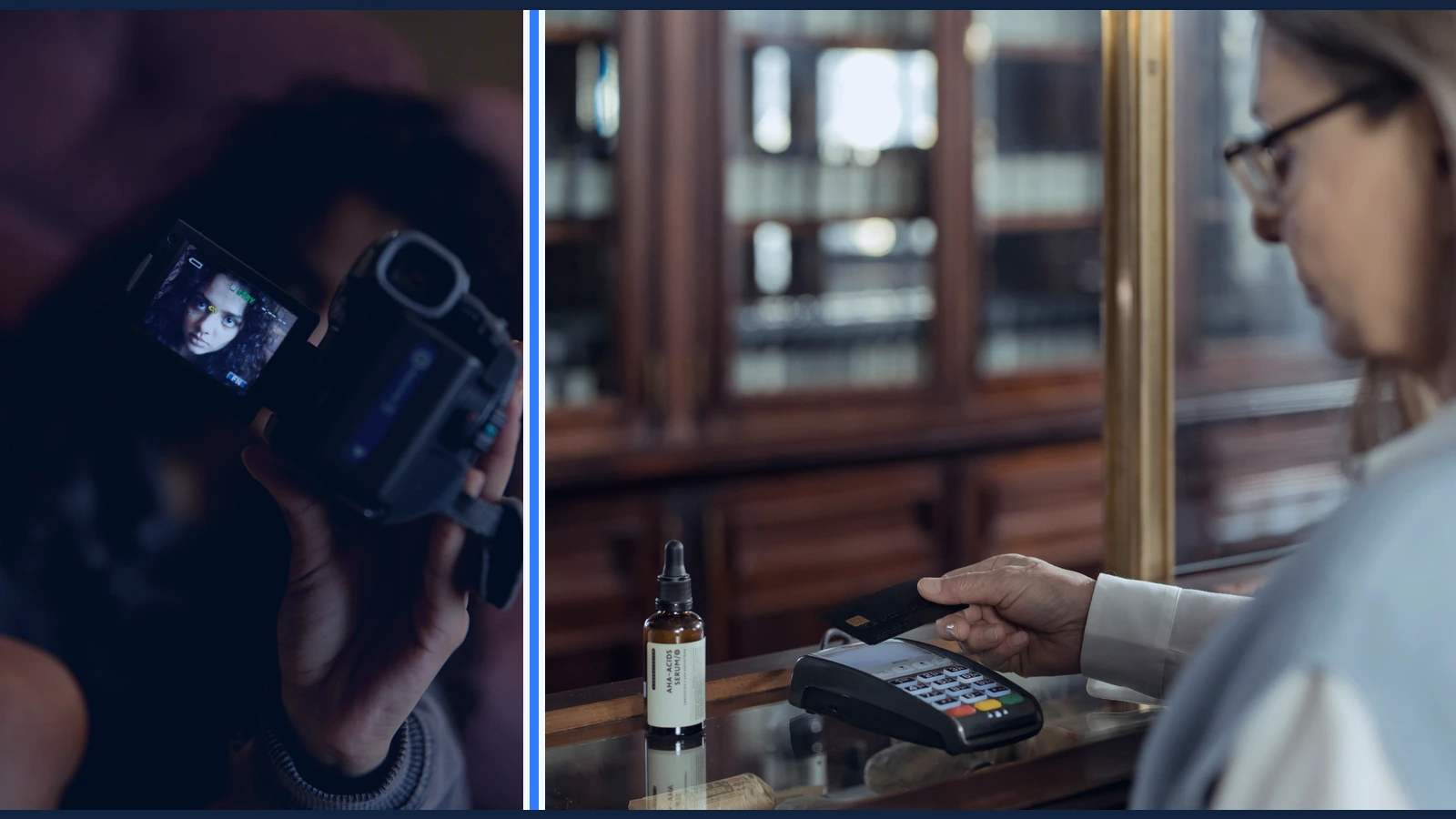
People who see facial-recognition payments as useful, original or socially distinctive may be more inclined to keep using them, according to a survey of 610 existing users in China. But concern about financial loss weakened that relationship, placing security and redress at the centre of the customer experience.
Facial-recognition payment links a person’s facial features to a payment account. At a checkout, a camera verifies the customer’s identity and the system processes the transaction without a card, wallet or phone being presented.
A 2025 Financial Innovation study examined why users in China might continue with the method after trying it. The result was not simply about speed or convenience. The researchers found that a service’s perceived “coolness” was associated with customers’ intention to continue using it.
What the researchers tested
Wei Gao, Ning Jiang and Qingqing Guo surveyed 610 people in China who had already used facial-recognition payment. Potential respondents were selected from users of Alipay and WeChat Pay and the study used an online survey rather than records of actual future transactions.
Participants rated facial payment on four qualities: whether it felt socially distinctive, attractive, useful and original. They also answered questions about financial and privacy risk, as well as their intention to keep using the service.
All four qualities were positively associated with an “inspired-by” response, the researchers’ term for feeling stimulated by the technology. Social distinctiveness and utility were also linked directly to the next stage, described as being motivated to act. That motivation was in turn associated with an intention to continue using facial payments.
The result helps explain why a payment method can draw attention even when other digital alternatives already exist. The appeal may partly come from the experience of using it, as well as from the task it completes.
Financial risk changed the calculation
The study found that perceived financial risk weakened the link between feeling motivated to use facial payment and intending to continue with it. In practical terms, novelty did less to support repeat use when participants were more concerned about possible monetary loss.
Privacy risk did not significantly moderate that particular relationship in the researchers’ model. That is a finding about this sample, not evidence that privacy is unimportant or that users elsewhere would weigh the issue in the same way.
In the UK, the Information Commissioner’s Office says biometric recognition used to uniquely identify a person involves special-category biometric data. The rules matter because a facial-payment service combines identity checks with financial activity, even if the payment itself takes only seconds.
Providers therefore need more than an elegant checkout. Clear account alerts, credible procedures for disputed transactions and robust protection of payment information may do more for confidence than the technology’s initial novelty. The study’s authors similarly point to security improvements, payment notifications and ways of compensating users for losses as possible ways to reduce financial-risk concerns.
Digital payment systems already rely on users being able to distinguish a genuine request from a fraudulent one. Our earlier coverage of invoice fraud in digital payments explains why a familiar-looking message alone is not proof that a payment instruction is legitimate.
A useful result, with limits
The survey cannot show that facial payment will produce the same response in every market. All participants lived in China and had experience with the technology, while people who have chosen not to use it were outside the sample. The research also measured stated intention, rather than observing whether respondents later completed more transactions by face.
Its central point is still useful for payment providers. A new way to pay may attract consumers because it feels different and effortless. Keeping them may depend on a more familiar test: whether they believe their money is safe when something goes wrong.
