
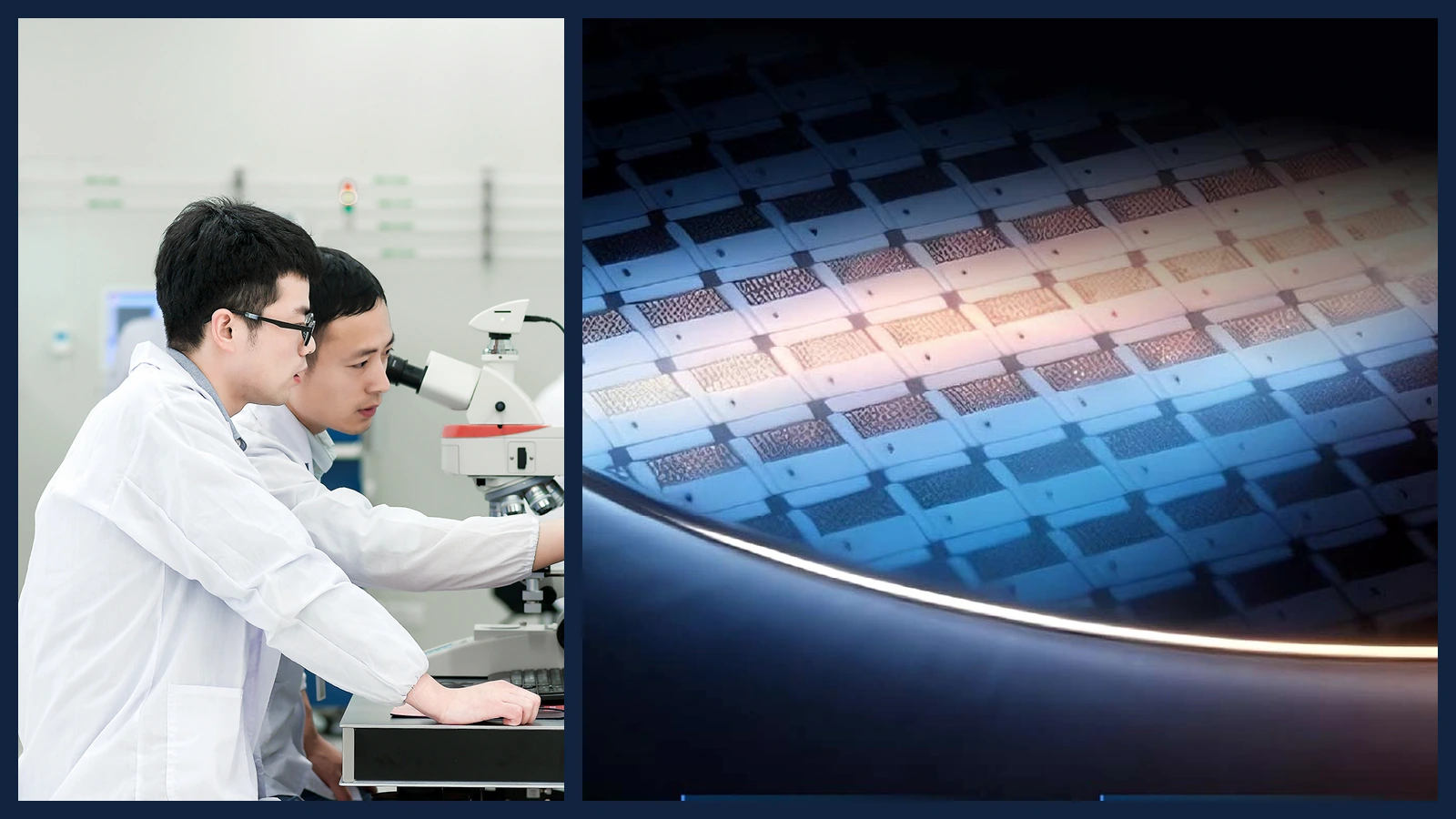
Chinese memory-chip maker CXMT says its fifth-generation DRAM platform has entered mass production and can produce at least 50% more gross dies per wafer than its previous platform, measured against an 8-gigabit baseline.
The company announced the G5 platform at the World Manufacturing Convention in Hefei on September 20, alongside two LPDDR5X memory products for smartphones and portable electronics. Both products use 24-gigabit dies, 50% more capacity than CXMT’s previous equivalent products, according to the company.
DRAM is working memory: it holds data that a phone, computer, or server needs to access quickly while it is running. LPDDR5X is a low-power version designed for portable devices. It is different from storage chips, which keep data after a device is switched off.
More gross dies is not the same as more usable chips
A wafer is a thin disk of silicon on which manufacturers make many individual chips. CXMT’s “dies per wafer” figure refers to the number of chip-sized pieces laid out on a wafer before testing. Some dies may fail testing, so the number of usable chips depends on yield.
CXMT did not disclose a yield figure, the cost per usable chip, customer orders, or production volume. Its 50% claim is therefore a manufacturing-density comparison, not evidence that its output of saleable memory has risen by the same amount.
The company said the platform uses a memory-array active-area half-pitch of 11.95 nanometers and a 45:1 capacitor aspect ratio. Those specifications describe the geometry of parts of the memory cell. They do not by themselves show how the resulting products compare in speed, reliability, or cost with every rival chip.
Memory manufacturing is becoming more commercially valuable
The announcement illustrates why memory technology matters beyond consumer devices. Data centers and AI systems need large amounts of fast memory, while phone makers seek higher capacity without sacrificing battery life. Our earlier coverage of Micron’s planned memory research network examined the wider race to develop new memory technologies and manufacturing methods.
CXMT says the G5 process is already in mass production. Independent comparisons of yield, cost, and customer adoption will be needed to judge whether the claimed density improvement changes its position in the global memory market.
