
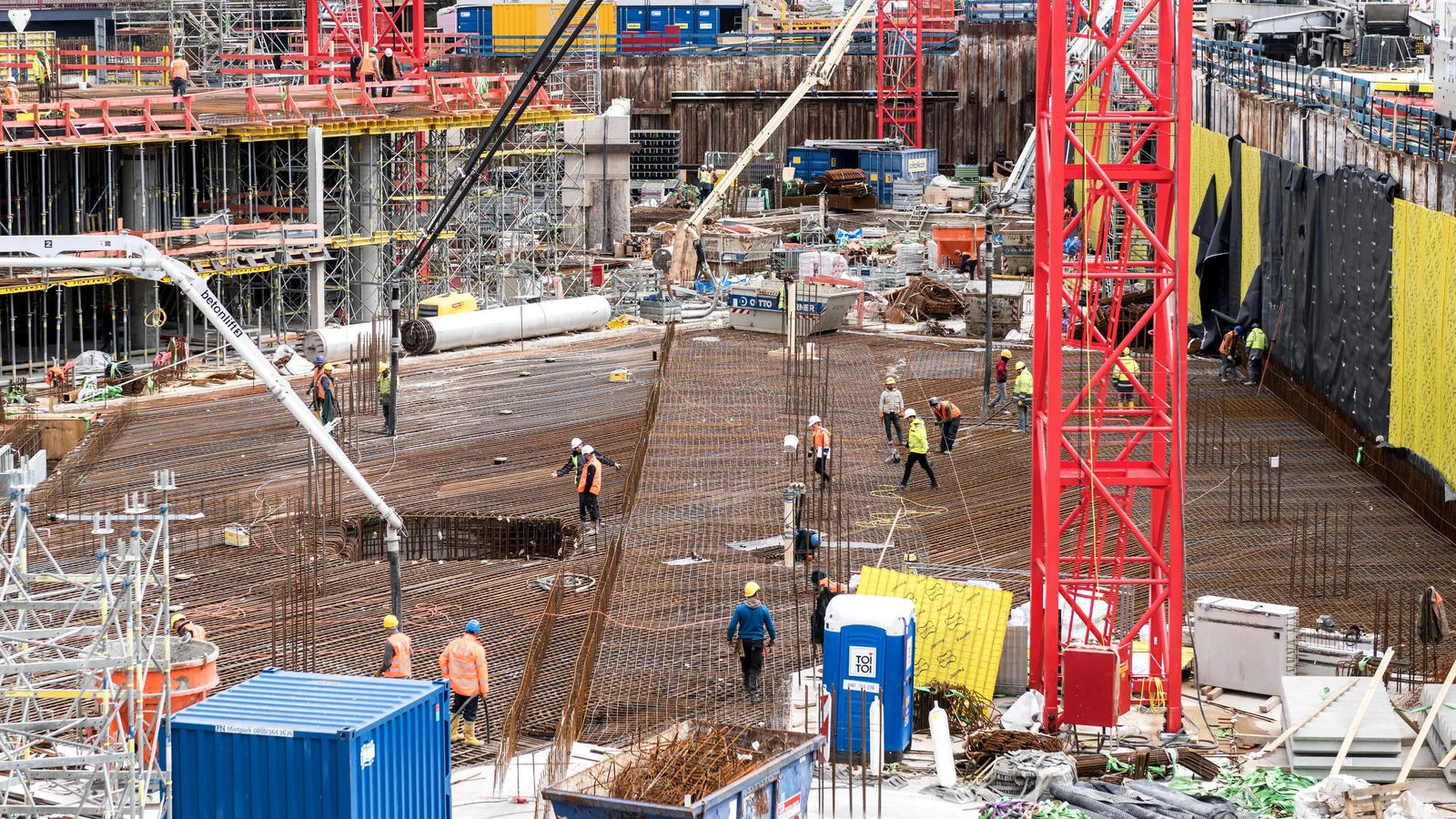
If you’ve tried to hire a plumber or an electrician in Germany lately, you may know how difficult it can be to find the right candidate. According to the Federal Employment Agency, registered skilled-trades vacancies remained unfilled for an average of 242 days in 2025; for vacancies across the labor market as a whole, the figure was 167 days.
That might surprise anyone who’s seen the headlines, because Germany’s shortage list has actually been getting shorter. The agency’s latest review, covering 2025, counted 157 occupational categories with shortages, down from 163 the year before and 183 in 2023. The catch is that one overall number can hide what’s happening in a single trade, and for construction and the skilled trades, the pressure hasn’t gone anywhere.
Two Labor Markets Under One Roof
Software development offers a telling contrast. The agency no longer classifies it as a nationwide shortage occupation, showing how quickly hiring pressures can shift between sectors. However, trades are heading in another direction with persistent gaps in electrical trades and mechatronics, in plumbing and heating and air-conditioning, and across building and finishing work. Shockingly, almost half of the skilled-worker occupations facing national shortages are in the trade sector.
What the Numbers Say About Supply
Take sanitation, plumbing, and heating and air-conditioning work as a snapshot. Registered job seekers and registered vacancies do not by themselves show whether candidates have the right credentials, work history, or specialist training. A headcount alone doesn’t reveal how many of them could step straight into a particular role.
Months, Not Weeks
With vacancies taking months to fill, this costs more than just a recruiters’ time. While key roles sit empty, workloads get harder to manage, project deadlines come under strain, and new opportunities can slip away. And those on construction or infrastructure projects can feel that pressure the most. It’s a strong argument for allowing extra time to recruit when projects are planned, especially when the work calls for specialist qualifications or experience that’s scarce locally.
Infrastructure Spending Adds a New Variable
Germany’s €500 billion Special Fund for Infrastructure and Climate Neutrality runs for 12 years. Its aims are to modernize infrastructure and advance climate-neutrality goals, and its scope takes in transport, digitalization, and state-level investment.
As projects move from funding to delivery, construction, engineering, and related businesses must ask whether the workforce will be there to meet demand, as that fund won’t automatically tighten hiring in every trade. Even so, companies bidding on contracts, scaling up, or taking on more work should weigh workforce availability in those decisions, especially when the skills a project needs are already scarce.
Three Questions Worth Asking Before You Hire
A clear understanding of the skills a role requires is more useful than broad assumptions about the German job market. Before recruiting, employers should consider three things:
Which specific skills does the role require, and how easy will it be to find them locally?
With trades vacancies taking an average of 242 days to fill, how far in advance should recruitment begin?
Is there a large enough pool of qualified workers to support planned contracts or business growth?
Widening the Search
Construction and engineering firms, along with related businesses, may find that hiring abroad opens an additional way to find qualified people. An Employer of Record provider in Germany may help a company employ international talent without establishing its own local entity, depending on the arrangement and applicable employment, licensing and immigration rules. German law generally restricts labor leasing to construction businesses for work ordinarily carried out by manual workers, with exceptions. Companies should obtain appropriate advice on whether the proposed arrangement and each worker’s eligibility comply with the law.
