
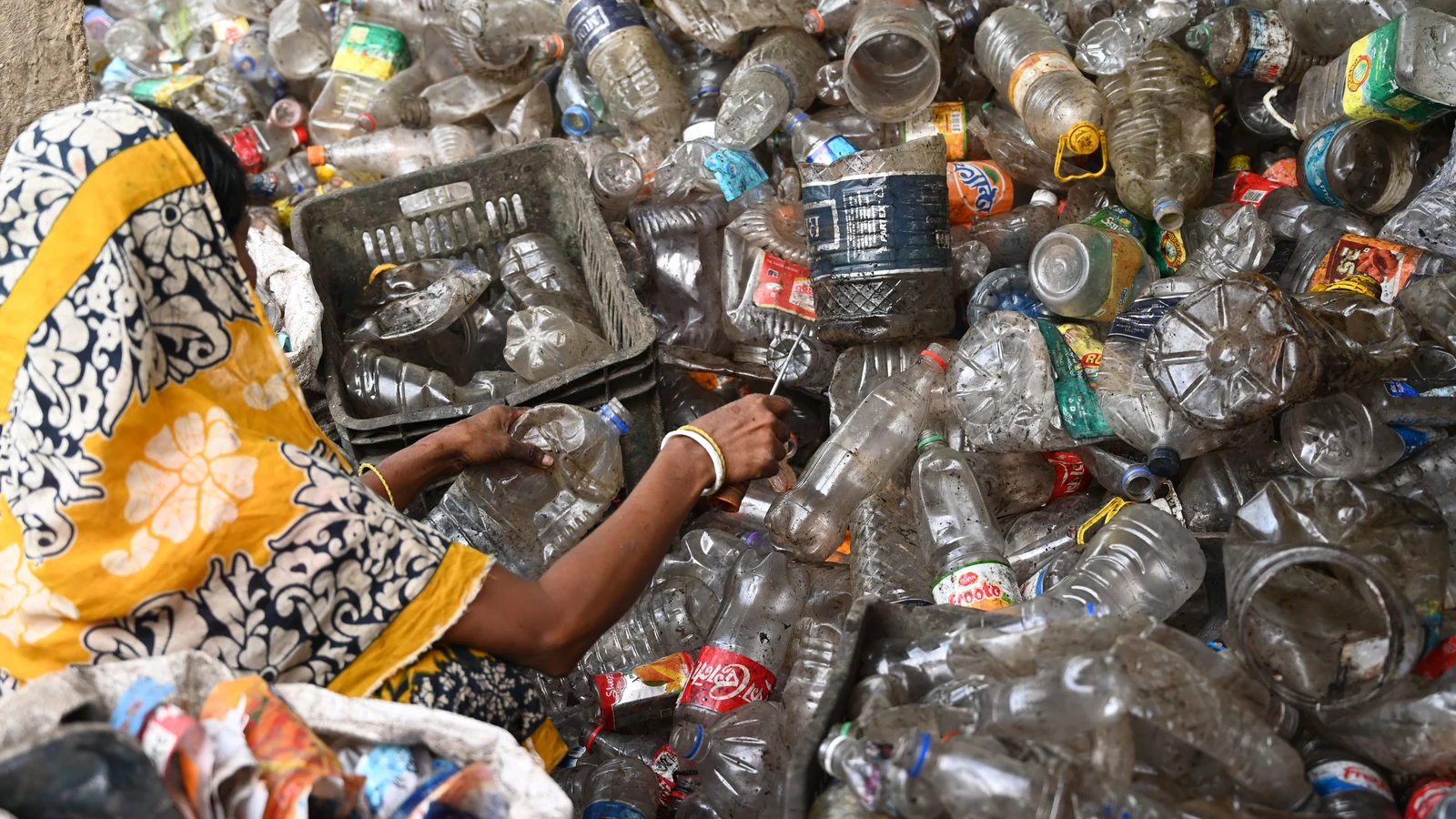
The European Union recycled 42.4% of the plastic packaging waste it generated in 2024, up from 41.6% a year earlier. The improvement in the rate accompanied an increase in the amount of plastic packaging waste produced per person.
EU packaging waste averaged 35.9 kilograms of plastic per resident, of which 15.3 kilograms was recycled, according to figures published by Eurostat on October 22. Both quantities increased by 0.6 kilograms from 2023.
The statistics cover waste from households, businesses and government. Dividing the total by the resident population provides a comparison across places and years; it does not mean each resident personally discarded that amount.
A better rate and more waste can coexist
The recycling rate compares plastic packaging recycled with plastic packaging waste generated under the applicable statistical rules. It increased by 0.8 percentage points between 2023 and 2024.
At the same time, the quantity generated grew. A higher share being recycled does not necessarily mean the total amount of waste is falling, or that all packaging collected for recycling becomes new material.
Across all packaging materials, the EU generated 81.5 million metric tons of waste in 2024, equivalent to 181.0 kilograms per resident. Paper and cardboard accounted for 40.8% of that total by weight, plastic 19.9%, glass 18.1% and wood 16.2%.
Weight is useful for measuring material flows, but it does not count individual packages or establish the climate impact of each material. A light plastic wrapper and a heavy glass container can perform different jobs.
National rates vary considerably
Latvia recorded the highest reported plastic packaging recycling rate at 71.0%, followed by Belgium at 58.2% and Poland at 56.0%. Denmark reported 22.5%, Finland 26.9% and France 27.4%.
Those differences warrant further investigation rather than a simple conclusion about a single policy. Packaging mixes, collection systems, sorting capacity and reporting arrangements can differ.
Eurostat notes that a 2020 change harmonized the calculation point for recycling and tightened accounting for material fractions in composite packaging. That change lowered the reported EU recycling figure in 2020, complicating direct comparisons across the break.
What the figures mean for packaging buyers
A package can be designed to be recyclable without being collected, sorted and recycled in the market where it is sold. Labels, adhesives, food contamination and combinations of materials can affect what a recovery system can process.
Businesses comparing packaging can ask suppliers for the full material composition and evidence about the collection and recycling infrastructure in their destination markets. They can also examine whether less material or a practical reuse system would perform the same protective function.
Waste is not the only environmental measure. Our earlier coverage of packaging life-cycle research showed that replacing plastic with a heavier material can sometimes increase estimated greenhouse gas emissions. That does not remove the need to address plastic pollution; it shows why a material change needs more than one environmental test.
New rules will not appear in the 2024 data
The EU’s Packaging and Packaging Waste Regulation generally began applying on August 12, 2026, with provisions taking effect at different times. The 2024 waste figures predate that application and cannot show whether the regulation has changed outcomes.
For manufacturers and retailers, compliance planning involves both the design of a package and the system that handles it after use. The latest data make the distinction clear: recycling can improve while the overall flow of packaging waste continues to grow.

