
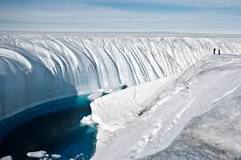
A new study indicates that the Greenland Ice Sheet could be losing ice more rapidly in the near future than previously thought.
The Greenland Ice Sheet is the second largest ice body in the world, after the Antarctic Ice Sheet. It covers approximately 1,710,000 square kilometres, which is nearly 80% of the surface of Greenland.
If the ice sheet were to completely melt, sea levels could rise by up to 20 feet and costal communities across the world would face extreme damage.
Geophysicist Beata Csatho, PhD, an associate professor of geology at the University at Buffalo, led the research on what is the first of its kind to shed light on how Greenland’s ice is disappearing.
“The great importance of our data is that for the first time, we have a comprehensive picture of how all of Greenland’s glaciers have changed over the past decade,” Csatho says.
Cornelis J. van der Veen, PhD, professor in the Department of Geography at the University of Kansas, said:
“This information is crucial for developing and validating numerical models that predict how the ice sheet may change and contribute to global sea level over the next few hundred years,”
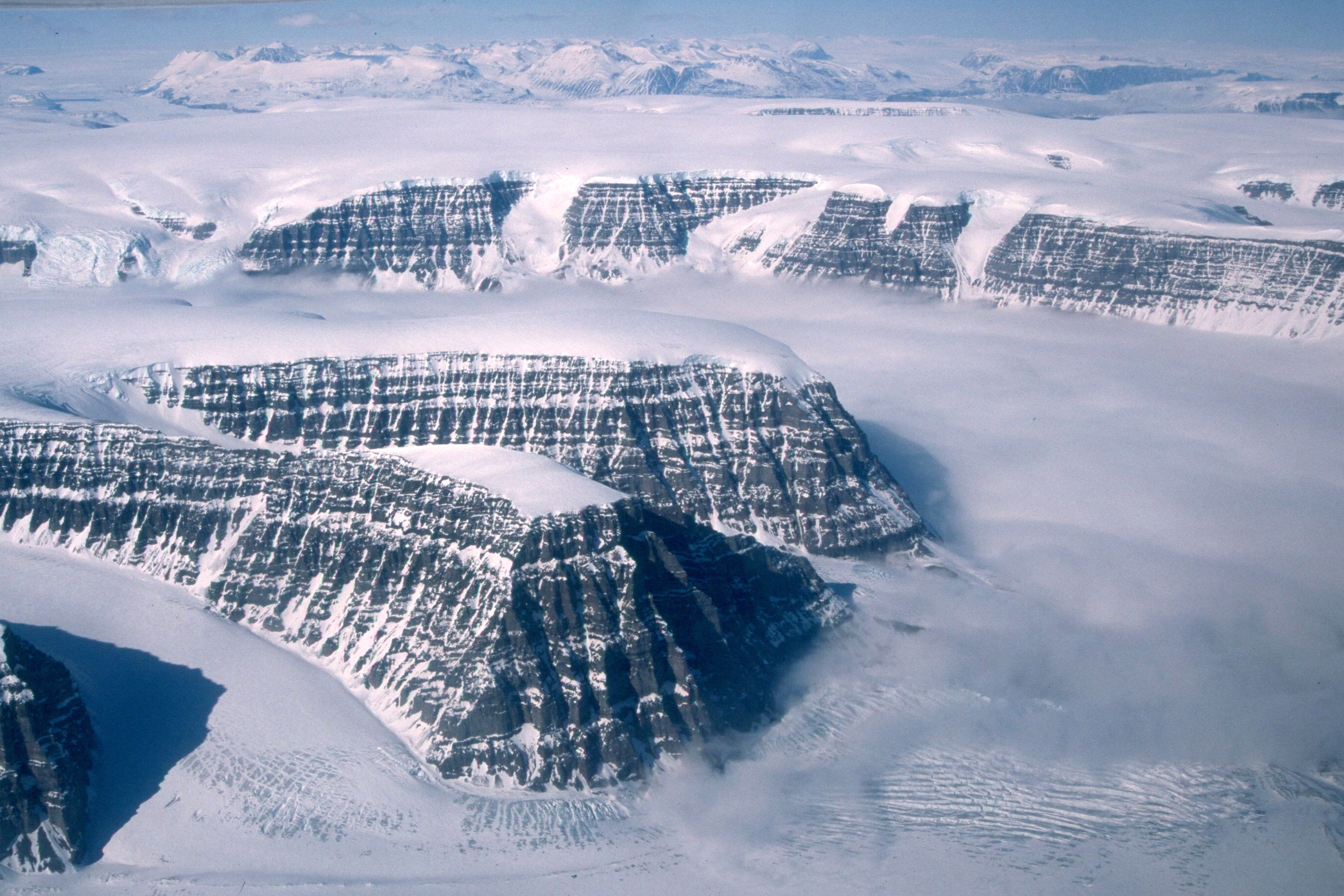
Glaciers in Western Greenland. Credit: Beata Csatho
The researchers gathered as much information as possibly by using satellite and aerial data from NASA’s ICESat spacecraft and Operation IceBridge field campaign. They were able to monitor and reveal how the height of the Greenland Ice Sheet changed at around 100,000 locations from 1993 to 2012.
There were two major findings. Firstly, the researchers provided new estimates of annual ice loss at high spatial resolution. Secondly, it indicates that current models are not accurately measuring how the Greenland Ice Sheet is transforming and affecting sea levels.
The research is going to be very useful to climate change modelers as simulations today use the activity of four well-studied glaciers – Jakobshavn, Helheim, Kangerlussuaq and Petermann – to predict how the entire ice sheet will melt into the oceans.
Prior computer modeling, such as estimates from the United Nations’ Intergovernmental Panel on Climate Change, could be too conservative.
“There are 242 outlet glaciers wider than 1.5 km on the Greenland Ice Sheet, and what we see is that their behavior is complex in space and time,” Csatho says. “The local climate and geological conditions, the local hydrology — all of these factors have an effect. The current models do not address this complexity.”
According to the results of the study, about 243 metric gigatons of ice was lost at the Greenland Ice Sheet annually from 2003 to 2009. This loss is believed to have added about 0.68 millimeters of water to the oceans on a yearly basis.
Chris Mooney, who reports on science and the environment at The Washington Post, commented on these alarming figures:
“That’s even more ice than West Antarctica is estimated to be currently losing — a recent study put the melting from this ice sheet at about .29 millimeters per year — and the research calls into question how computer models have, until now, attempted to understand the dynamics of Greenland’s ice.”
References:
- “Laser altimetry reveals complex pattern of Greenland Ice Sheet dynamics” – Beata M. Csathoa, Anton F. Schenk, Cornelis J. van der Veen, Gregory Babonis, Kyle Duncan, Soroush Rezvanbehbahani, Michiel R. van den Broeke, Sebastian B. Simonsen, Sudhagar Nagarajan, and Jan H. van Angelen – PNAS
- “Scientists are worried Greenland might melt even faster than expected” – Chris Mooney – December 15 – The Washington Post
