
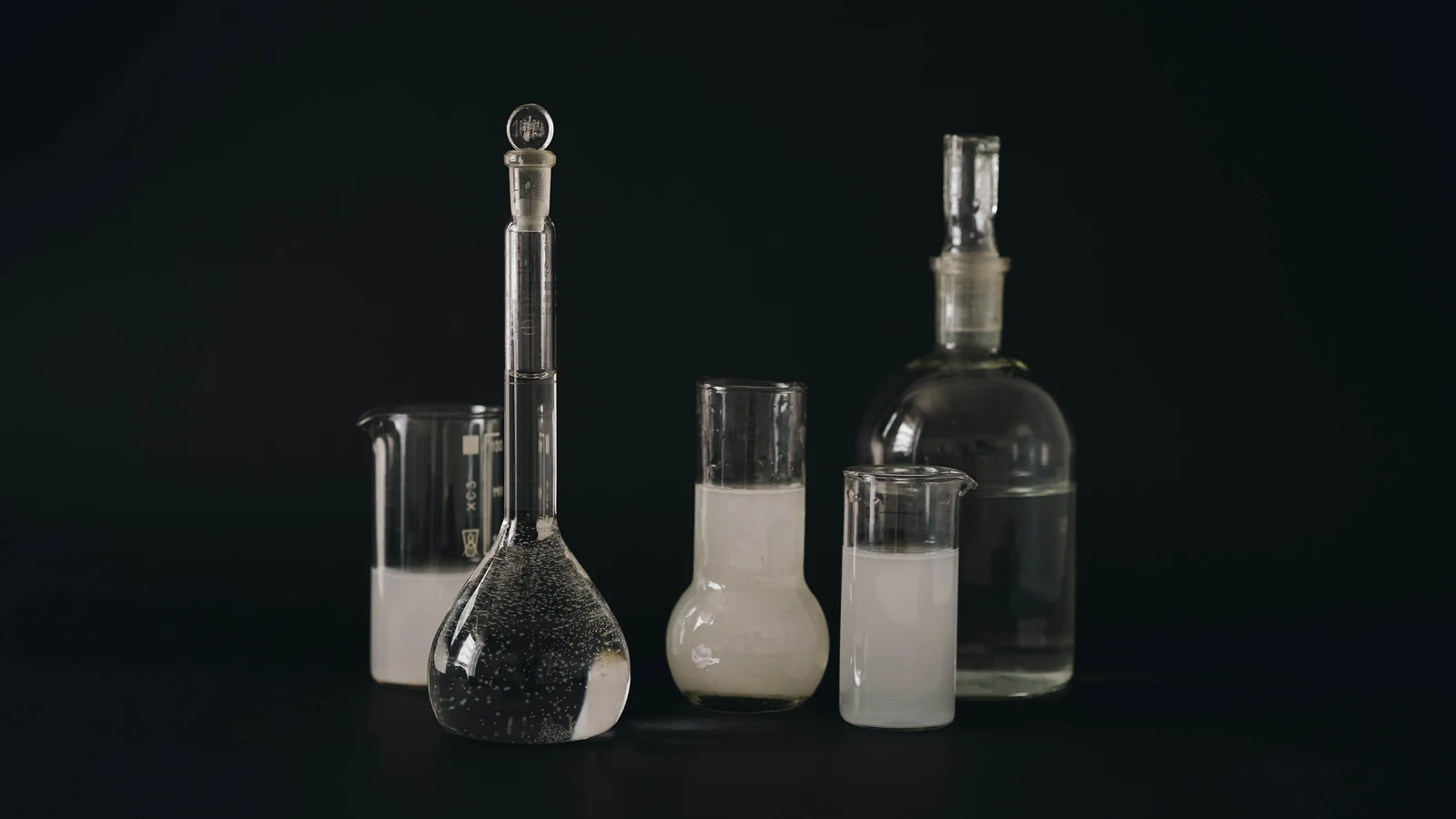
Researchers at Nottingham Trent University have developed liquids with distinctive light signatures that could help manufacturers check whether products and documents are genuine. Mixing a small set of ingredients produced more complex signatures without making a new compound for every security code.
The university announced the work on October 16. It is a laboratory demonstration, with further testing needed before the materials’ performance in commercial security markings can be established.
For packaging companies and brand owners, the potential attraction is a way to vary an authentication mark through formulation, rather than developing a different material each time.
Four liquids provide the starting ingredients
The materials combine ionic liquids, salts that remain liquid at relatively low temperatures, with light-emitting lanthanides. Lanthanides are a group of metallic elements whose optical properties can help distinguish one formulation from another.
The study in RSC Advances, led by Annie Prasad and senior author Anthony J. Fitzpatrick, describes four liquids based on europium, terbium, dysprosium and samarium. Researchers from the universities of Liverpool and Manchester also contributed.
Each component retains its characteristic light emissions when mixed with the others. The team produced combinations containing two, three or four lanthanides, creating increasingly complex patterns of emitted wavelengths.
A wavelength describes a light wave’s spacing. Looking at the pattern of wavelengths provides more information than simply checking whether a material appears to glow a particular color.
The researchers also demonstrated different optical responses on paper under ultraviolet light. That offers a possible route toward printed security features, rather than limiting the work to liquids in laboratory containers.
Mixing is easier than redesigning every material
Manufacturers using an optical tag need a recognizable response that an inspector can compare with an expected one. The proposed approach would allow that response to change when the proportions of the starting liquids change.
Fitzpatrick said the materials could potentially be incorporated into printed security features. The university describes compatibility with existing processing and printing methods as a potential advantage, rather than a commercially validated production result.
That distinction affects the business case. An ingredient may perform well in a laboratory but still require work before it can be applied consistently at the speed and cost of a packaging line.
A supplier would also need to control how accurately it mixes formulations and how reliably customers can read them. If the expected signature varies too much between batches, distinguishing genuine variation from a suspicious item becomes harder.
A complex signature is only part of an authentication system
The work does not establish that the markings are impossible to copy. A demonstrated optical response and a successful defense against counterfeiters are different tests.
Commercial evaluation would need to consider durability, suitable surfaces, storage conditions, reader requirements and cost. A mark on a document might face different handling conditions from one on a product transported through a warehouse network.
Businesses would also need procedures for recording the expected signature and deciding what to do when an item fails inspection. The material alone cannot establish where a product came from or how it moved through a supply chain.
The study offers a materials platform for further development. Its commercial value will depend on whether manufacturers can turn those adjustable light signatures into markings that remain dependable through production, distribution and inspection.
