
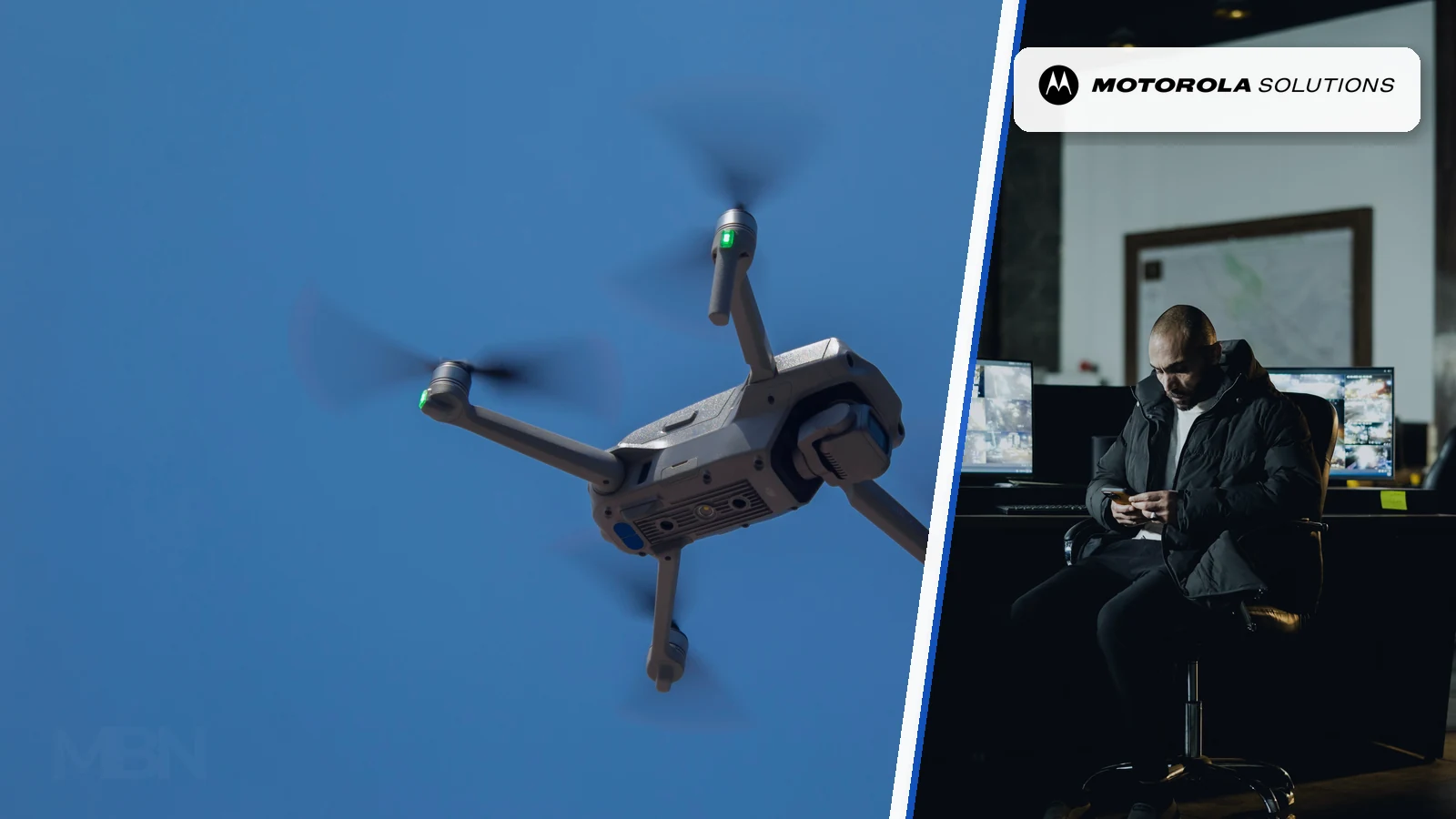
Motorola Solutions has completed its $1.5 billion acquisition of D-Fend Solutions, adding technology designed to detect and take control of unauthorized drones without jamming nearby communications.
The deal, which was completed on August 20, gives Motorola a specialist counter-unmanned aircraft systems business with deployments at airports, stadiums, critical infrastructure, military sites and borders in more than 30 countries.
Counter-UAS systems are used to identify and respond to drones that enter restricted or sensitive airspace. D-Fend’s chief executive, Zohar Halachmi, will remain in charge of the business and become Motorola Solutions’ senior vice president of counter-drone solutions.
How D-Fend’s system works
D-Fend’s EnforceAir platform analyzes the radio-frequency signals used to control a drone. The company calls its approach “RF cyber-takeover.” When legally authorized, the system is designed to assume control of a detected drone and guide it to a predefined landing area.
This is different from a kinetic response, which physically damages a drone, and from conventional jamming, which disrupts radio signals across a wider area. D-Fend says its non-jamming approach can leave authorized drones and local communications operating while the target is redirected.
Motorola is paying for growth and distribution
When Motorola announced the agreement in June, it projected that D-Fend would generate about $185 million in revenue during 2026. It also said the company’s annual revenue had grown by more than 50% in each of the previous three years.
Dividing the $1.5 billion purchase price by that revenue forecast gives a rough price-to-projected-revenue ratio of about 8.1 to one. This MBN calculation is not a formal enterprise-value multiple because the public announcements do not provide every adjustment for cash, debt and other closing items.
Even so, the figure shows that Motorola is paying for expected growth rather than current scale alone. The commercial case depends partly on whether D-Fend can reach more customers through Motorola’s established relationships with police departments, emergency services, transport operators and other public-safety organizations.
Motorola said it plans to integrate D-Fend’s technology into its broader public-safety platform, which already includes video security, command-center software and communications equipment. The closing announcement did not provide a timetable for that integration or quantify expected cost savings.
A wider market, but legal limits remain
The acquisition arrives as US authorities are widening access to counter-drone tools. The Federal Aviation Administration said the SAFER SKIES Act, enacted in December 2025, extended counter-drone mitigation authority to qualifying state, local, tribal and territorial law-enforcement agencies.
That does not mean any customer can take control of a drone. The FAA says the expanded US authority applies to law-enforcement agencies that meet training requirements. Motorola’s own announcement says D-Fend’s systems support mitigation “where permitted.” Rules also differ between countries.
The deal therefore gives Motorola a credible position in a growing security category, but execution will matter. It must integrate the technology, preserve D-Fend’s specialist expertise and turn a wider sales network into enough additional business to justify the acquisition price.
