

People prompted to think of purchases as additions to a collection found products more desirable in a series of consumer studies, according to research accepted by the Journal of Marketing.
The work looks at an activity retailers often try to make faster: searching for a product. For some shoppers, looking for a meaningful addition to a collection may be part of the appeal rather than a delay to eliminate.
Elena Bocchi, Adam Greenberg and Zachary Estes report seven preregistered studies and a supplemental study involving 3,306 participants in total. Their accepted manuscript examines product desirability and the experience of searching in several settings.
What the researchers tested
In one study, participants imagined owning either one T-shirt or several related shirts before considering another purchase. Other tests asked people to search for items they collected or had several of, using online shopping settings.
The collecting framing generally increased reported product desirability in the tested situations. The researchers also found that participants could enjoy the search more when they thought of it as building a collection.
Most outcomes involved stated willingness or ratings, rather than long-term sales records. A supplemental study used a choice with real incentives, but the results still do not establish the revenue effect of adding a collection feature to an actual store.
When searching may be rewarding
The benefit depended on what people were searching for and whether the process helped them build a collection that mattered to them. If a search yielded an item they already owned or the collection did not fit an identity they valued, the effect could weaken or reverse.
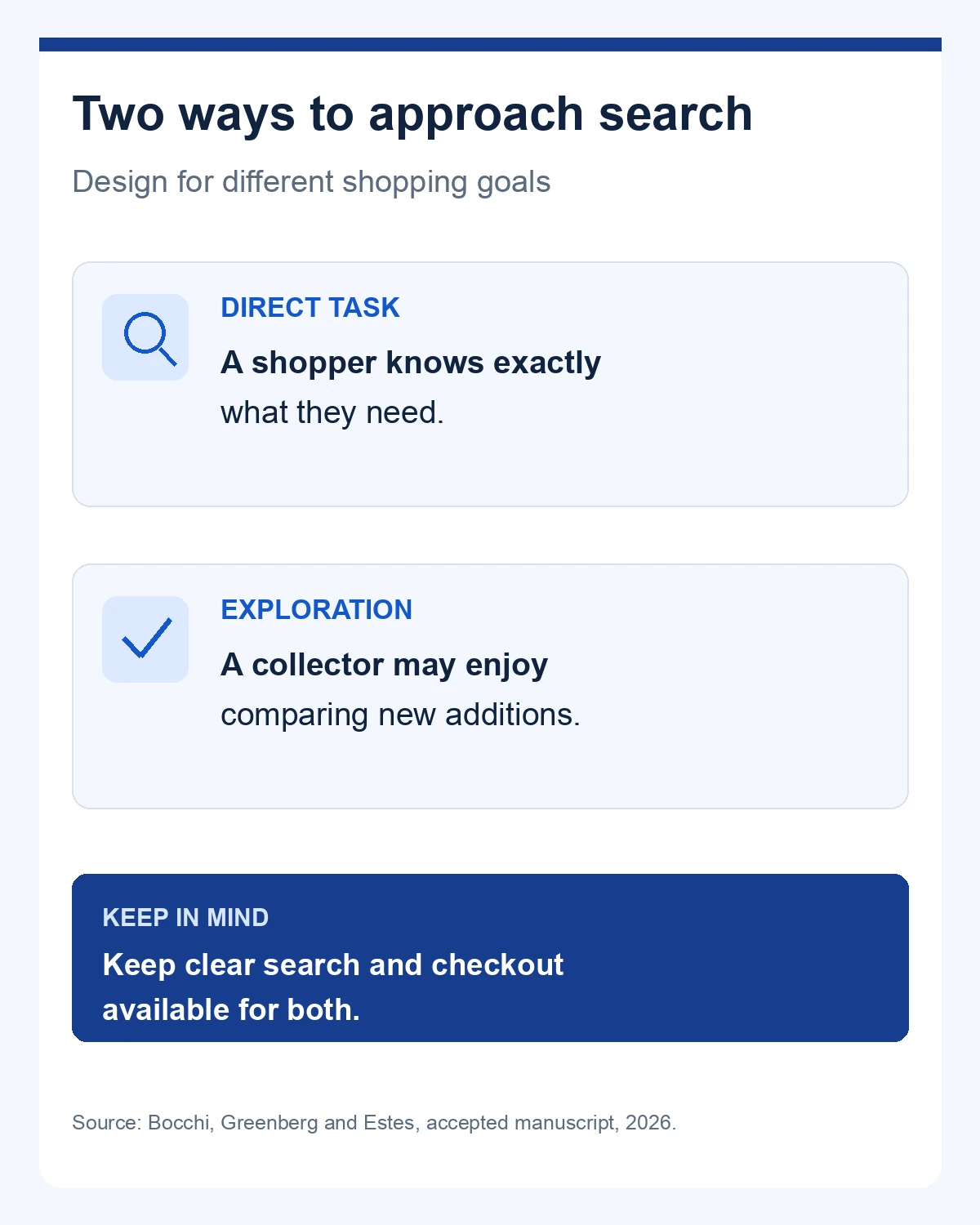
That distinction can help a retailer think about design. Someone seeking a specific replacement part may value a direct route to checkout. A collector browsing books, records or other items may appreciate useful filters, condition details and the ability to compare versions.
These are practical examples, not interventions tested as a package in the paper. The right experience depends on the shopper’s purpose.
Give customers a choice
Retailers can make browsing engaging without making ordinary tasks unnecessarily difficult. Clear search, accurate availability and an easy checkout remain important for people who already know what they want.
A business considering a collection feature could test whether it helps customers find relevant items, then examine purchases, returns and satisfaction as well as time spent browsing. More time on a site might reflect enjoyment, confusion or difficulty finding an item.
Product descriptions should be accurate, especially when discussing rarity or condition. Our reporting on ingredient descriptions shows how product descriptions can shape customer decisions.
The study adds nuance to a familiar design question. Speed matters, but a useful shopping experience can also allow people to explore when exploration is what they came to do.
