
An innovative plan to cut data centre running costs and domestic energy bills by using “server heat” to provide homes with hot water is about to launch in the Netherlands.
A server, in this context, is a device that provides functionality for other devices, such as computers.
The first 42 households to join the scheme – which starts in August – will have their installation costs paid for from the proceeds of a crowdfunding campaign, say Nerdalize, a young Dutch technology company.
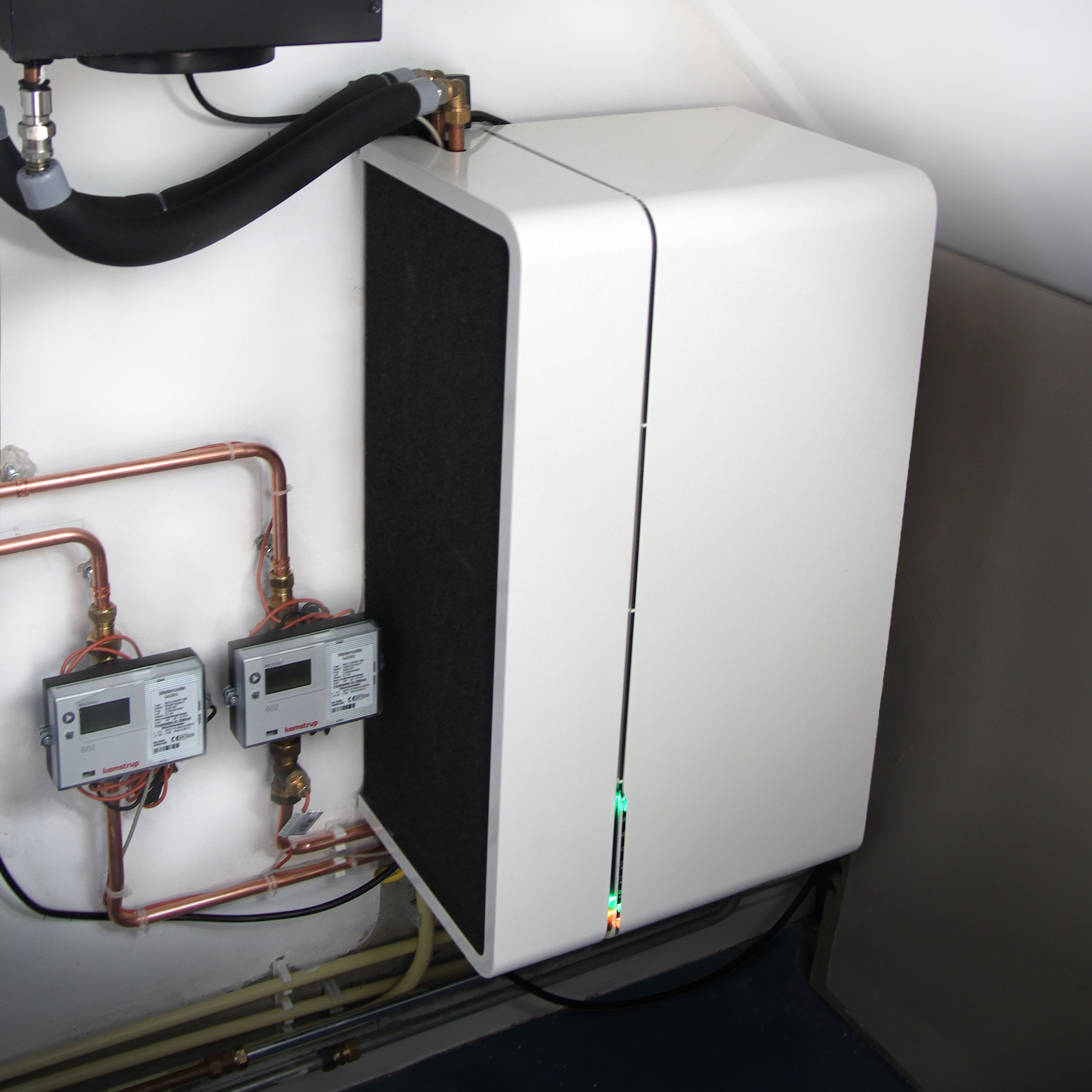
 A Nerdalize CloudBox containing powerful computer servers provides server heat to make hot water for the home. Image: Nerdalize
Energy savings
The company – which is on a mission to make “sustainable computing power an affordable commodity” – estimates that homes fitted with its server heat system can expect to save around 300 euros (£261, US$334) a year. The scheme will also help to cut CO2 emissions.
Around half the cost of running a data centre is the cost of preventing overheating in energy-hungry servers – computers that specialize in storing data.
The current method “wastes” energy twice: there is the heat energy generated by the servers (the “server-heat”), and there is the energy used in running the cooling system.
In the new plan, the idea is to site servers in people’s homes and use the server-heat to provide hot water for the household.
CloudBox
The installation consists of a “cloud box” that contains the energy-hungry servers. These are used by clients of Nerdalize – research centres and commercial firms – for their computing. The heat they generate is used to heat up hot water that is plumbed into the household’s hot water system.
Such a system could even remove the need for a central facility as the data housing is distributed among households and linked via fibre optics.
The new scheme follows a trial with 5 households that Nerdalize ran with the Dutch utility company Eneco in 2015.
In that trial, which ran for a few months, the company installed servers in people’s homes so that the server heat was directed to heat up a radiator.
Nerdalize say 3,500 households have already expressed an interest in joining the server heat scheme.
Sustainable computing
Nerdalize see schemes such as theirs as a way to make cloud computing and the data centre industry more sustainable. This is something that needs to happen, they say, as currently, data centres are “huge energy wasters.”
The data centre industry uses more electricity than the whole of India, and emits more CO2 than the airline industry.
A crowdfunding campaign – running on Symbid – is raising money for the initial investment and has already raised 250,000 euros (£217,350, US$281,550). The target is to raise double that amount by the end of June.
Nerdalize co-founder Boaz Leupe says if the crowdfunding reaches its target, they can start fitting the first homes with server heat systems in August.
