
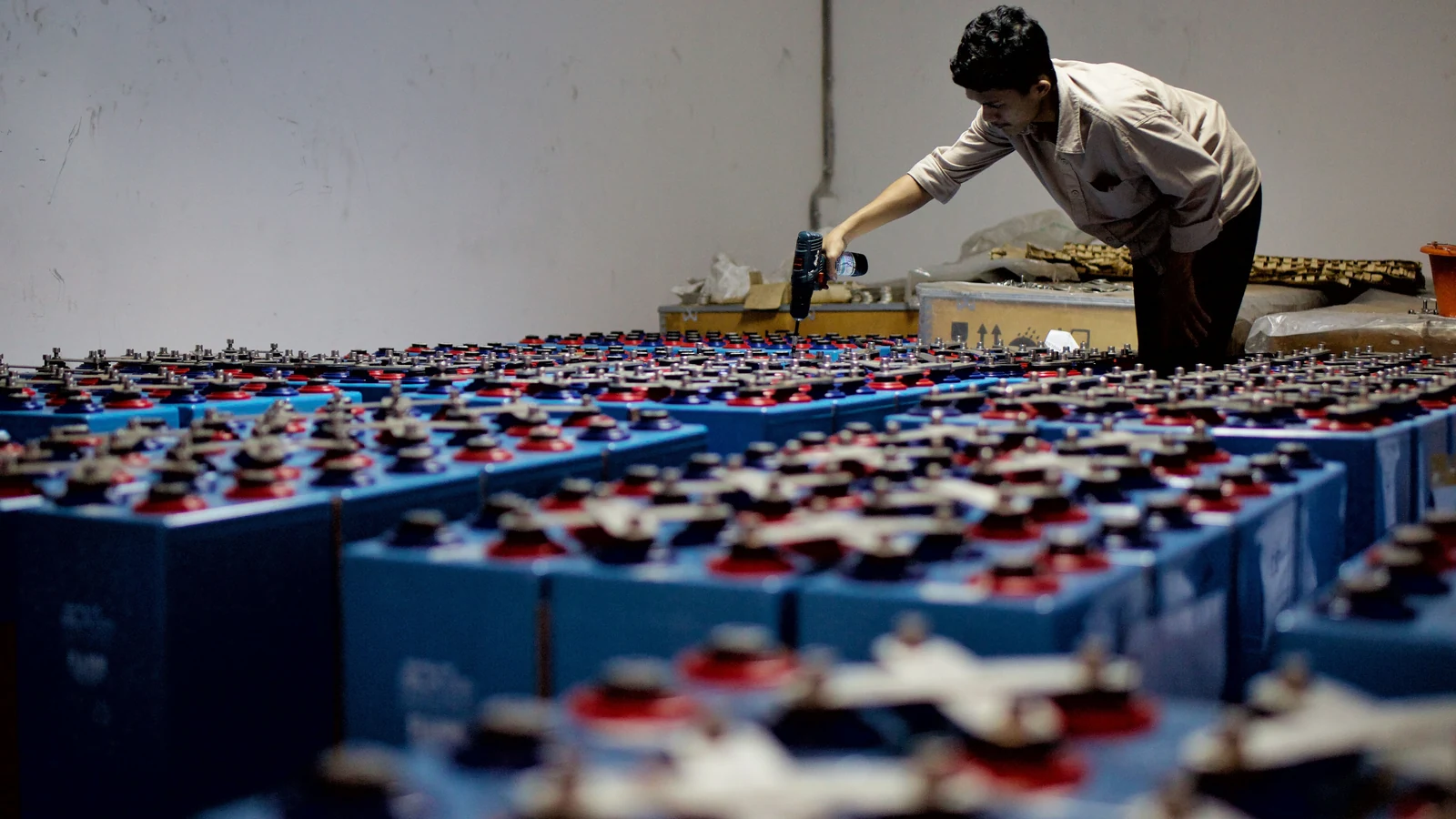
Battery storage additions reached 108 gigawatts worldwide in 2025, about 40% above the previous year’s additions, as electricity systems invested in equipment that can store power for use later, according to the International Energy Agency.
The IEA’s 2026 energy review says about 80% of new capacity was utility scale. China accounted for around 60% of global additions, followed by the United States and Europe.
A gigawatt measures the rate at which equipment can deliver power. It does not say how much electricity a battery can store or how long it can deliver that power. A battery’s energy capacity, typically measured in megawatt-hours, is needed to answer the second question.
From rapid response to moving power across the day
Batteries can charge when generation is plentiful and discharge when electricity is needed. Their quick response can also help operators manage frequency and other short-term requirements.
In a separate May analysis, the IEA says energy shifting was the primary application for more than 90% of new projects in 2025, compared with about 40% in 2015. The share primarily targeting grid-support services fell, although the agency says the absolute volume of those projects continued to grow.
A single project can provide several services. Shifting electricity from midday to evening may earn revenue from price differences, while a battery may also be paid to respond rapidly to a grid operator. Actual earnings depend on market rules, operating costs, competition and the battery’s contracts.
Our reporting on using existing power grids more efficiently explains why controls and transmission capacity matter alongside new generation and storage.
Duration changes the business case
The IEA says most projects still cluster around two hours of storage, although more systems can operate for four hours or longer. Its separate project analysis puts the average duration of utility-scale batteries commissioned in 2025 at three hours, up from around two in 2023.
A longer duration can make more stored energy available later, but it requires additional equipment and investment. Batteries also lose energy when charging and discharging, and repeated use affects their condition over time.
That makes the spread between charging and selling prices only part of an owner’s calculation. Grid connection costs, maintenance, financing, insurance and expected revenue from other services also matter.
Connections remain a constraint
Large batteries accounted for roughly 87 GW of the 2025 additions, according to the IEA. A further portion was installed behind the meter, meaning on the customer side of the electricity meter, including at businesses and homes.
The agency says permitting and grid connections can take longer than construction. Batteries can reduce some local constraints, but their location and operating arrangements determine whether they help a particular network.
Storage can shift energy across hours, but it does not create electricity. Its contribution to reliability depends on having power available to charge it and enough stored energy when the system calls on it.
