
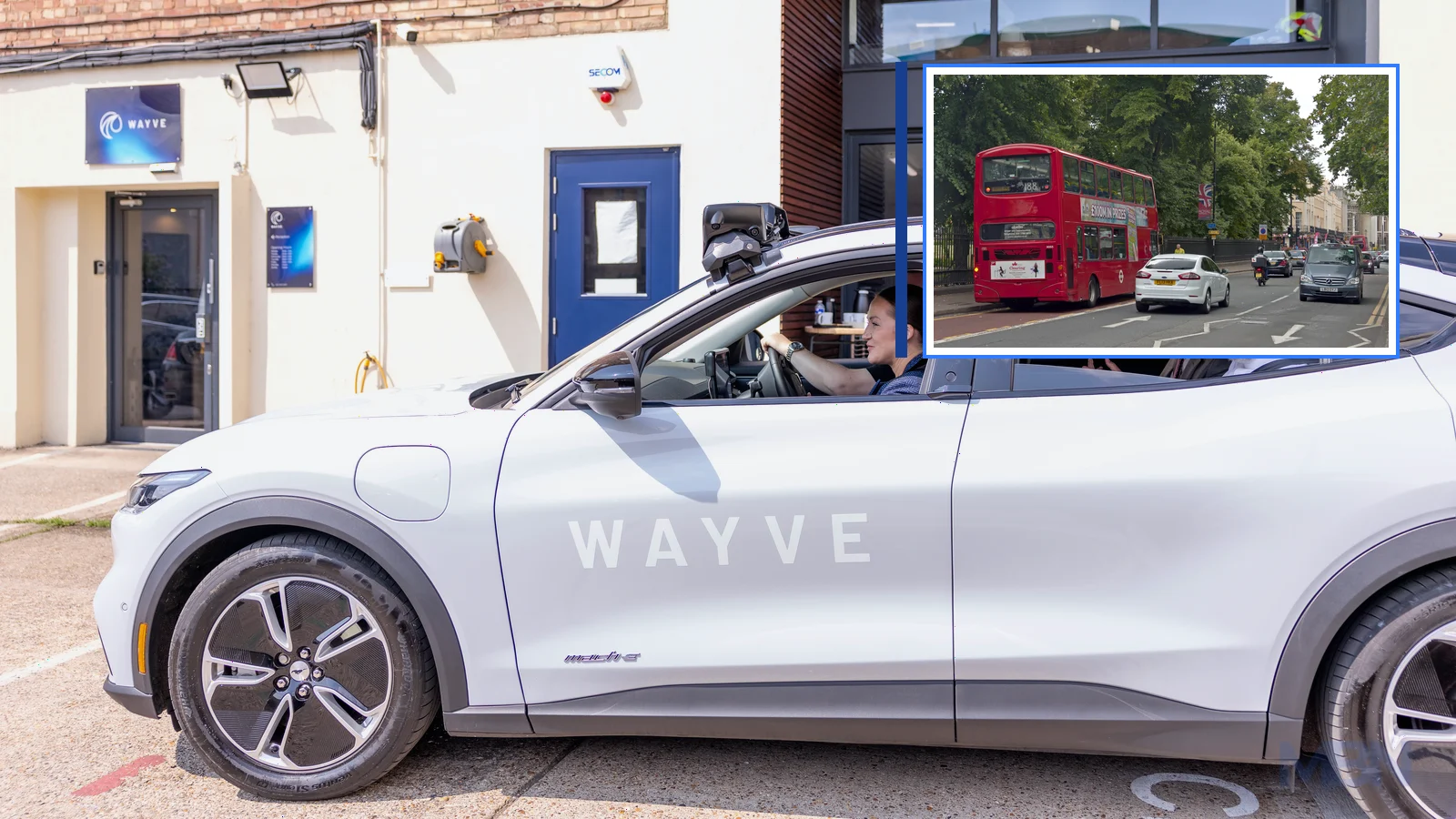
Uber and British autonomous-driving company Wayve have begun offering rides in London using cars controlled by Wayve’s driving system, although a licensed driver remains behind the wheel and ready to intervene.
The service launched on September 3 with a small fleet of electric Ford Mustang Mach-E vehicles. Transport for London approved up to 15 vehicles for a one-year supervised trial, according to the London Assembly Transport Committee.
Customers requesting UberX, Uber Electric or Uber Comfort can be matched with one of the cars at no extra cost. They can accept the vehicle or switch to a conventional ride before it arrives.
The cars can travel within London apart from its airports, Uber and Wayve said. An in-car screen lets passengers start the trip and see the vehicle’s planned path, with the interface available in 64 languages.
More than 140,000 Londoners had selected a preference in the Uber app intended to increase their chances of receiving a Wayve vehicle before the launch, according to the companies.
A human driver still oversees every trip
Uber calls the service “supervised autonomous.” Wayve’s AI Driver and surrounding sensors operate the vehicle, but a trained, TfL-licensed private-hire driver remains onboard to monitor the journey.
The driver can take control if the system encounters a situation it cannot handle safely. The service is consequently different from the driverless robotaxis operating in some US and Chinese cities, where paying passengers can travel without a safety driver in the vehicle.
The London Assembly Transport Committee said in August that the initial approval covered up to 15 vehicles for one year. Its chair, Caroline Russell, said the committee still had “many questions about the safeguarding of passengers.”
Operating without a safety driver would require further authorization. Companies seeking to run such a service in England must apply to the Driver and Vehicle Standards Agency for an Automated Passenger Service permit. For a London taxi-like service, TfL must give its consent before the permit can be issued.
The permit system covers passenger protection, accessibility, operating plans, incident management and other responsibilities. The government plans to implement the wider Automated Vehicles Act framework in the second half of 2027.
London gives Wayve its first public deployment
Wayve was founded in 2017 and has tested its technology on London roads since 2018. The company says its software learns general driving behavior instead of depending on a separate set of detailed rules for every road and situation.
London provides a demanding operating setting. The vehicles must deal with narrow streets, cyclists, buses, road construction, pedestrians and frequent changes in traffic flow. Supervised passenger trips will expose the system to everyday service conditions while retaining a human fallback.
“We’re proud to introduce the Wayve AI Driver to the public for the first time right here in London, our home city and one of the most complex driving environments in the world,” Wayve co-founder and CEO Alex Kendall said.
The launch also gives both companies information that ordinary road testing cannot provide. They can see whether customers accept an autonomous match, how passengers use the in-car controls and whether the vehicles can complete enough reliable trips to fit into Uber’s existing network.
Uber is spreading its bets across autonomous-driving suppliers
Uber supplies the app, customers, payments and ride-matching system, while Wayve supplies the automated driver. Ford supplies the underlying vehicle. The arrangement lets Uber offer autonomous rides without developing the complete driving system itself.
Uber says it works with more than 30 autonomous-vehicle partners across passenger transport, delivery and freight. It expects autonomous trips to be available through its platform in as many as 15 cities by the end of 2026, although that figure is a company target and the services will differ in scale and level of automation.
The London service is one of several European projects. As we reported in August, Pony.ai and Uber plan to deploy more than 2,000 robotaxis across five European cities. The companies did not provide a timetable for reaching that fleet size.
Public acceptance remains uncertain. A YouGov survey of 1,053 London adults, conducted for the London Assembly in June, found that 42% opposed autonomous passenger vehicles and 29% supported them. The most frequently cited concern was how the vehicles would respond to unexpected situations or emergencies.
London passengers can now experience Wayve’s technology in a paid, mainstream ride-hailing service. Removing the supervising driver will require another regulatory decision and evidence that the system can operate safely without somebody ready to take the controls.
