
After the Malaysia Airlines flight MH17 was shot down over Eastern Ukraine, the EU is expected to take a tougher position, like the USA has. But will sanctions stop Russia from helping the separatists in Eastern Ukraine?
According to an CESifo analysis of past experiences, the prospects of achieving a long-term solution to the Eastern Ukrainian situation by ramping up sanctions are pretty slim.
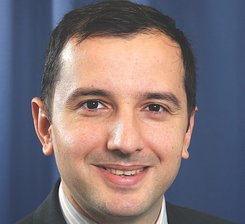
Dr. Erdal Yalcin, an international economics expert at The CESifo Group in Munich, Germany, explains:
“The success rate of economic sanctions is basically fairly sobering, especially when they are targeted against non-friendly nations.”
Threat is more effective
According to research studies, more is achieved when sanctions are threatened than actually implementing them.
If President Putin and his administration were to estimate that the losses from potential sanctions were greater than those sustained by submitting to Western demands, then the risk of sanctions would definitely be more effective than their implementation, Dr. Yalcin believes.
Russia has decided not to meet the West’s demands, therefore its leaders are signaling their willingness to face the consequences of tougher sanctions.
Even though sanctions in themselves have a low success rate, they do send an important political signal in light of recent events.
In his research paper- Ökonomische Aspekte des Russlandkonfliktes: Ursachen, Kosten, Optionen (Economic aspects of Russian conflict: Causes, Costs, Options) – Dr. Yalcin pointed out that “After the annexation of Crimea and the shooting down of a passenger aircraft, the EU and the USA cannot simply adopt a ‘business-as-usual’ approach.”
Integrate Russia more into Europe
He also calls for a critical assessment of Europe’s trade policy in recent years.
Association agreements were signed in June between the EU and Ukraine, Moldavia and Georgia, making it impossible for Russia to implement its only noteworthy trade policy project – developing a regional customs union to cover the territory once occupied by the former Soviet Union.
The agreement represents a further isolation of Russia, whose share of global GDP (gross domestic product) is forecast to decline anyway in the decades to come.
Dr. Yalcin said:
“In addition to a short-term crisis policy, the EU also needs to finally reveal a long-term strategy for integrating Russia, which is losing economic importance, more deeply into the international community, and especially into the European Economic Area.”
Russia raises benchmark interest rate
Russia’s central bank raised its benchmark interest rate on Friday, for the third time since the beginning of March. The Bank of Russia warned that if inflation is not reined in, rates could go up even further.
The central bank had expected rates to remain steady after raising them twice following Russia’s annexation of Crimea, which triggered a massive increase in capital flight and a plunging ruble. The weaker ruble pushed up import prices, which in turn fueled inflation.
On Friday, the bank raised its main rate by half a percentage point to 8 percent.
With jittery investors moving their money out of the country in an uncertain political and economic environment, there is now serious concern about the risk of runaway inflation.
