
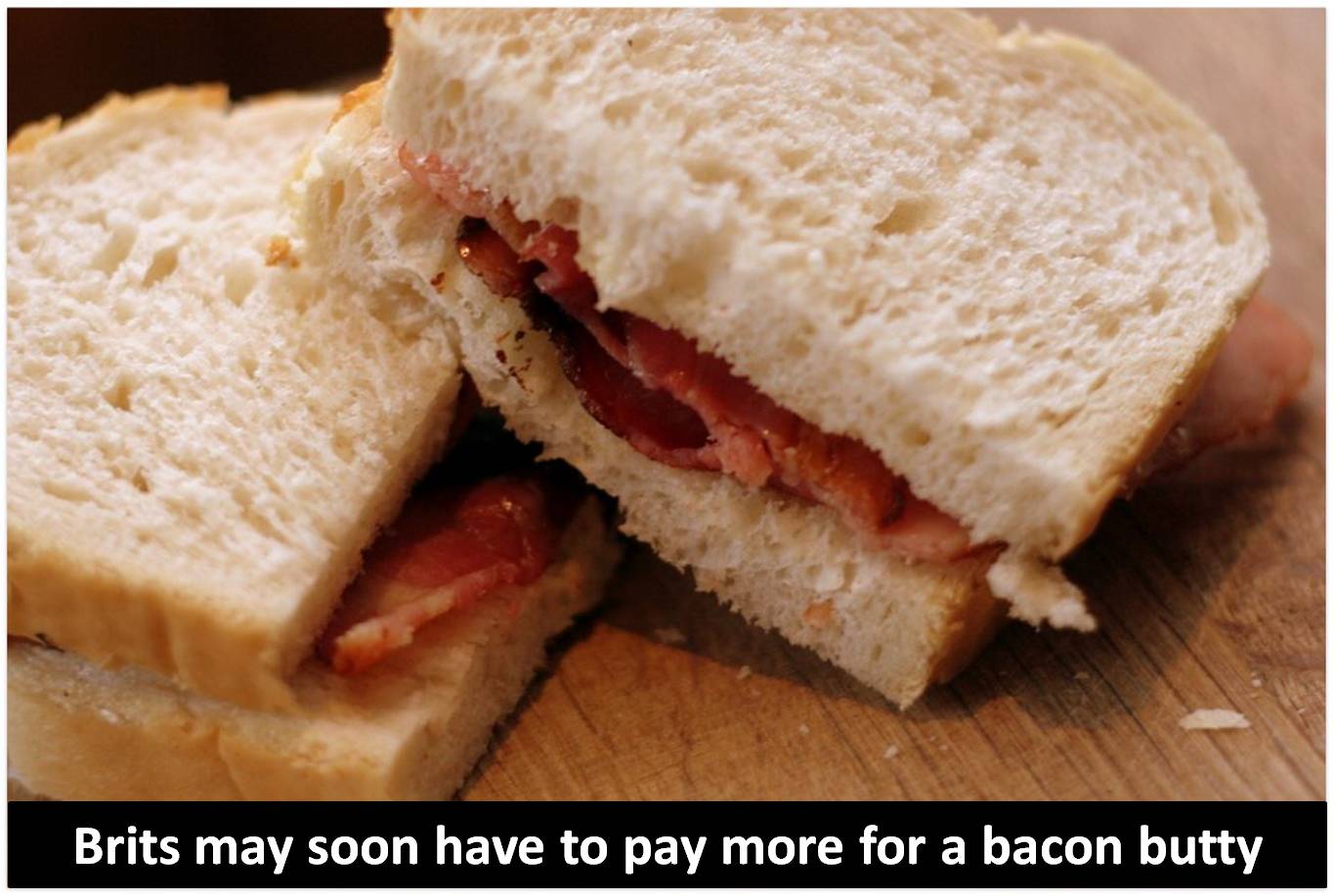
British bacon prices are rising due to a big surge in demand from China and the effect of Brexit, say a UK purchasing consortium.
Floods in China, which have devastated local pork production, have fuelled a surge in demand for pork imports, causing UK prices to rise, say Beacon, a purchasing company that represents 2,000 independent UK hospitality and leisure businesses.
The company, which manages over £100m in purchasing spend for its customers and works with a range of butchery suppliers, report bacon products have risen by up to 19 percent per pound and predict the increase is likely to remain for the foreseeable future.
 A rise in British bacon prices due to demand from China and the effect of Brexit could mean Brits will soon have to pay more for a bacon butty, reportedly Britain’s favourite sandwich.
In fact, Beacon say some suppliers have increased the price of British smoked bacon by as much as 38 percent, while the devaluing of sterling following Brexit has also affected prices, by making British bacon more affordable for overseas markets.
They note that compared with the same period last year, exports of British pig meat have risen by 40,000 tonnes during the first half of 2016.
In addition, more than 50 percent of EU pork exports – some 1.2m tonnes – have gone to China.
This is 60 percent more than it was for the first half of 2015, according to figures from the Agriculture and Horticulture Development Board (AHDB) Export Bulletin for August 2016.
Emma Warrington, Senior Food Buyer at Beacon, says:
“All of this means we might be paying a higher price for a bacon sandwich for the foreseeable future.”
Beacon also predict that prices of other British food staples – such as chips – are also likely to rise due to continued flooding in Europe, plus currency issues.
Brexit ‘will have far-reaching consequences for the British pork sector’
As well as affecting British bacon prices, the Brexit referendum vote to leave the EU will have far-reaching consequences for the British pork sector as a whole, say the AHDB.
One of the most important factors will be the UK’s future trading relationship with the EU, notes the executive non-departmental public body.
Pig meat imported from outside the EU (apart from offal) is subject to considerable tariffs, ranging from 39p per kg for bellies and cuts, to 131.5p per kg for processed ham.
These stiff tariffs effectively make imported pig products uncompetitive on the EU market.
However, should the UK leave the EU without a trade agreement, then it will be subject to these same import tariffs, until such a deal is in place.
Given that 74 percent of British pork exports are to the EU (or at least are routed through
it), this could have a dramatic impact on the UK pig industry.
Trade negotiations will be crucial
It is not yet clear which way the negotiations will go.
If the UK ends up with having to pay stiff tariffs to sell to the EU, then one option could be to impose similar tariffs on imports from the EU.
This could result in less – but more expensive – pork imported into the UK and likely lead to higher pig prices.
This would mean higher prices for consumers – “which may be politically unacceptable,” note AHDB.
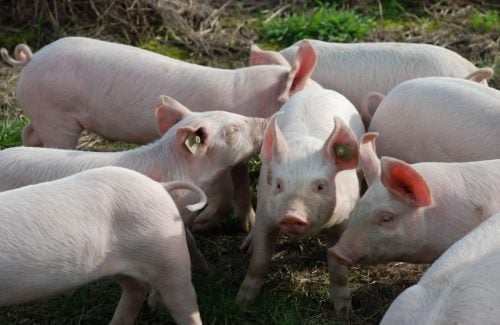 The outcome of trade negotiations following Brexit will be crucial to the UK pig industry.
The other option, in order to avoid this, is for the UK to impose lower tariffs on pork imported from the EU, or even do away with them altogether. Such a rule would have to apply to imports from outside the EU too.
But that scenario would put pressure on the UK pig industry to lower pig prices, which would undermine its long-term sustainability. Thus, the AHDB conclude:
“It is clear that the outcome of trade negotiations will be crucial to the pig industry.”
