
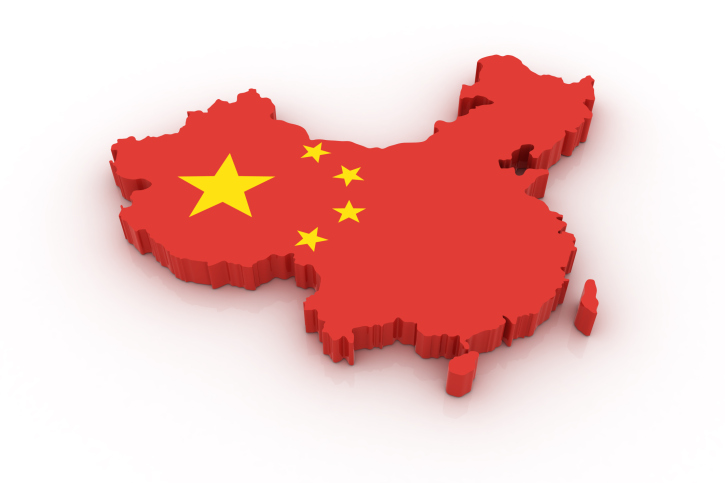
China

China has revised its ‘negative list’ to loosen foreign investment restrictions

Written by Joseph Nordqvist

Published: 02:44, July 1, 2019

China loosened foreign investment restrictions across a number of different business sectors, including petroleum and gas exploration, agriculture, mining and manufacturing.

China’s National Development and Reform Commission (NDRC) revised its so-called “negative list” which prohibits foreign investment in certain business sectors.

The market-opening measures were made a day after US President Donald Trump and Chinese President Xi Jinping reached a trade truce – the two countries have agreed to restart trade talks.

According to Xinhua, China’s Ministry of Commerce released two negative lists of 2019: one for piloted free trade zones (FTZ) and another for the rest of the country.

Pilot FTZs have 37 listed items for foreign investors, down from 45, while the number of listed items in non-FTZ areas is now 40, down from 48.

What has changed?

Restrictions on the exploration and development of petroleum and natural gas have been canceled, while prohibition on foreign investment in the exploitation of wildlife resources has been abolished.

China is also scrapping the need for Chinese entities to have control of domestic shipping agencies, gas and heat pipelines in cities with a population of more than 500,000, cinemas and performance brokerage institutions.

A ban was also lifted on foreign investment in the exploration and exploitation of molybdenum, tin, antimony and fluorite.

Bai Ming, deputy director of the Ministry of Commerce (MOFCOM)’s International Market Research Institute, was quoted by The Global Times as saying:

“Shortening the negative list is by no means a forced move, but rather China’s new effort to further pursue opening-up at a wider scope and to a deeper degree,”


Joseph Nordqvist Avatar

Other News

Why the weather can affect ratings of cold-weather gear

Nov 15, 2026

Seeing a purchase as part of a collection can change the shopping experience

Nov 15, 2026

Retail app ads may influence what customers do after installation

Nov 15, 2026

A bank tested AI customer twins for marketing, with mixed lessons for businesses

Nov 15, 2026

What makes a product vintage, and why the distinction matters to retailers

Nov 15, 2026

EU business social media use rises, but a gap remains by company size

Nov 15, 2026

Why startups may benefit from testing locally before expanding abroad

Nov 14, 2026

Novel product ideas can be harder to try but more rewarding afterward

Nov 14, 2026

What is in an online cart can influence whether shoppers check out

Nov 14, 2026

Subscription plans can miss customers who would save money, Lyft research finds

Nov 14, 2026

Workers with worse shifts than their colleagues were more likely to leave, restaurant study finds

Nov 14, 2026

More product options do not always reach more customers, cosmetics study finds

Nov 14, 2026

EU household spending grew in 2025 as communication purchases led gains

Nov 13, 2026

Ad experiments can help predict which campaigns drive additional sales

Nov 13, 2026

Browser choice screens lifted Firefox usage in Europe, researchers find

Nov 13, 2026

Online product rankings can cut shipping costs without reducing sales, experiment finds

Nov 13, 2026

Large companies lead EU service exports, but smaller firms dominate in some markets

Nov 13, 2026

Cart reminder timing is linked to different shopper responses

Nov 12, 2026

AI labels changed how consumers judged food images in three experiments

Nov 12, 2026

Shared AI tools were linked to higher sales for small online sellers

Nov 12, 2026