
A study of 413 potential visitors found that emotional responses and perceptions of technology were both linked to engagement with digital tourist attractions, but those relationships varied across sensory experiences. The results give operators a reason to test how effects work together before investing in more elaborate installations.
The research used videos and descriptions of experiences in Barcelona and Seoul. Participants did not visit the attractions or physically experience the smells, tastes and touch described in some scenarios. Their answers therefore reveal expectations about a visit, rather than how they behaved on site.
Elisa Mameli, Brigitte Stangl, Manuel Alector Ribeiro and Caroline Scarles conducted the study, first published online on June 28 in the Journal of Travel Research.
Six ways to combine a place with technology
The paper examines “phygital” tourism, which combines a physical attraction with digital features. These can range from projected images and audio to interactive screens and experiences that invite visitors to move, speak or touch something.
Participants were recruited through the online research platform Prolific and screened for travel experience and familiarity with, or interest in, technology. Each was randomly assigned one of six video scenarios, with three drawn from each destination.
The Barcelona scenarios included an audiovisual exhibition, a space visitors could walk around and a tablet-guided tour. Seoul’s examples included a voice-enabled information kiosk, an immersive K-pop studio and a wellness installation described as combining sound, projections, touch, scent and tea tasting.
Descriptions asked participants to imagine sensations that a video could not deliver. After watching, they answered questions about the experience, their engagement, satisfaction and intention to visit.
The researchers measured emotional responses through items concerning recreation, engagement and escape. Their technology-related measure covered visual attractiveness, perceived safety and freedom of movement. It was not a direct test of whether visitors could operate an interface easily.
The mix mattered, but the study found no ideal number of effects
Across the full sample, more positive emotional and technological assessments were associated with stronger engagement. Engagement was also associated with reported satisfaction and intention to visit.
The relationships differed between scenarios. In some, the emotional response had a clearer connection with engagement; in others, the technology-related assessment did. This supports examining the particular experience being designed instead of assuming that every added feature contributes in the same way.
However, the experiment did not progressively add senses to an otherwise identical attraction. The scenarios also differed in activity, content and location. Those differences make it difficult to isolate the effect of adding a smell, a touchscreen or another sensory feature.
Nor does a weaker statistical relationship in one group establish that its visitors were less engaged overall. The findings do not demonstrate a universal point at which an attraction becomes too stimulating, or show that a simpler installation will always outperform a complex one.
Operators still need to test the experience on site
The authors recommend coordinating sensory elements around the experience and testing different combinations. Their proposals include adjusting intensity, introducing effects in sequence and providing quieter areas or alternative formats for people with different sensory preferences.
For an operator, that could mean checking whether projected content helps people understand an exhibit, whether audio remains intelligible and whether visitors can move comfortably through the space. These are design questions arising from the research, not improvements whose commercial returns the experiment measured.
The gap between anticipation and experience also appears in separate research on AI hotel review summaries, which examined how positive summaries can raise expectations before a stay. That study concerns a different technology, but reinforces the value of checking responses after customers arrive.
For digital attractions, the next evidence needs to come from actual visits. Testing the same installation with different combinations of effects would help establish which additions improve the experience, for whom, and whether the gains justify their cost.
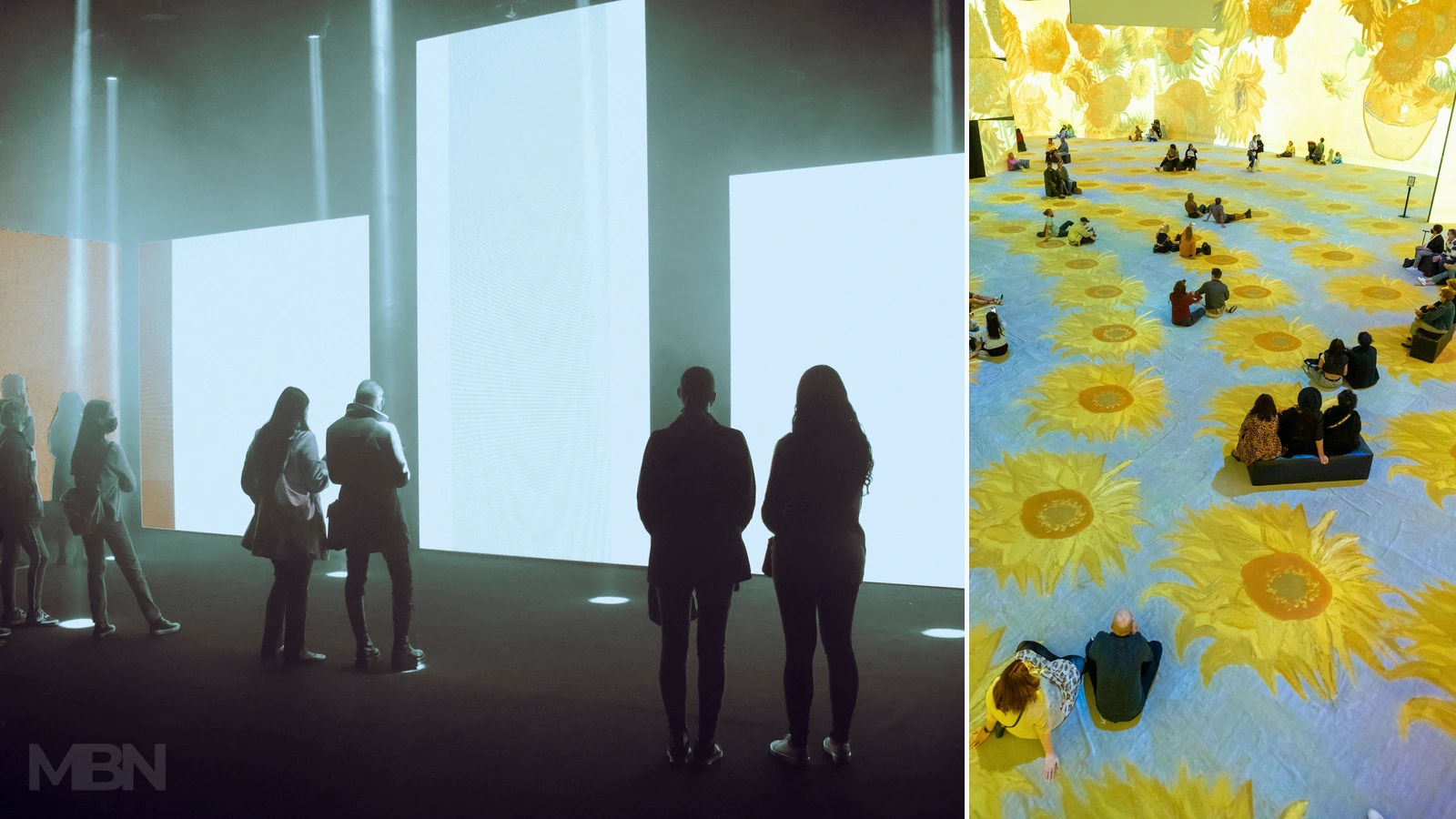
Cover image: Editorial composite of two digital exhibitions, shown as representative examples rather than attractions or participants identified in the study. Photos: Han Zibar and Lius Hansen / Pexels.
