
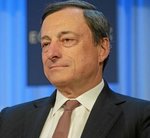
Mario Draghi, President of the European Central Bank, said on Monday that he and his team are ready to use additional unconventional instruments within their mandate to boost growth and inflation in the Eurozone if the current measures are not enough.
Mr. Draghi was talking to the European parliament’s Economic and Monetary Affairs Committee. He stressed that demand for the cheap loan program – TILTRO – will be more popular in December when it is offered again. The uptake last week was much lower than expected.
Take up was disappointing last week for the initial launch of the cheap loans because banks are still waiting to see what the ECB might do to bolster economic activity and push up prices. Bets are on that the central bank will start purchasing large amounts of sovereign debt (quantitative easing).
On Monday, Mr. Draghi said:
“The Governing Council remains fully determined to counter risks to the medium-term outlook for inflation. Therefore, we stand ready to use additional unconventional instruments within our mandate, and alter the size and/or the composition of our unconventional interventions should it become necessary to further address risks of a too prolonged period of low inflation.”
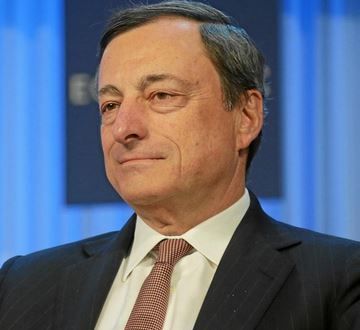
The ECB can only do so much, Mr. Draghi stressed. Urgent reforms must be implemented to improve the business environment.
He informed that last Thursday 255 banks took part in the first TLTRO for an amount of €82.6 billion. He added that it was within the range of take-up values he and his colleagues had expected, based on banks’ behavior on previous programs.
Experts across Europe commented that any uptake below €100 billion could not be seen as an effective measure. However, Mr. Draghi commented on Monday that news of the TLTRO has already improved financial market sentiment.
Too early to determine effectiveness, says ECB
Mr. Draghi says it is necessary to combine last Thursday’s participation with December’s when determining how successful the operation has been.
In 2015, banks will be able to take advantage of additional quarterly allotments of ultra-cheap loans.
Mr. Draghi said:
“Overall, we expect the TLTROs to act as a powerful tool to strengthen the transmission of monetary policy and facilitate new credit flows to the real economy, given the predominantly bank-based financing structure of the euro area economy.”
Other factors matter too
Mr. Draghi pointed out that the success of the ECB measures depends on several factors over which it has no direct control. The business environment would benefit enormously from courageous structural reforms and improvements in the competitiveness of the corporate sector. This would lead to greater investment and higher demand for credit.
Regarding structural reforms, Mr. Draghi explained:
“Structural reforms thus crucially complement the ECB’s accommodative monetary policy stance and further empower the effective transmission of monetary policy. As I have indicated now at several occasions, no monetary – and also no fiscal – stimulus can ever have a meaningful effect without such structural reforms.”
“The crisis will only be over when full confidence returns in the real economy and in particular in the capacity and willingness of firms to take risks, to invest, and to create jobs. This depends on a variety of factors, including our monetary policy but also, and even most importantly, the implementation of structural reforms, upholding the credibility of the fiscal framework, and the strengthening of euro area governance.”
