
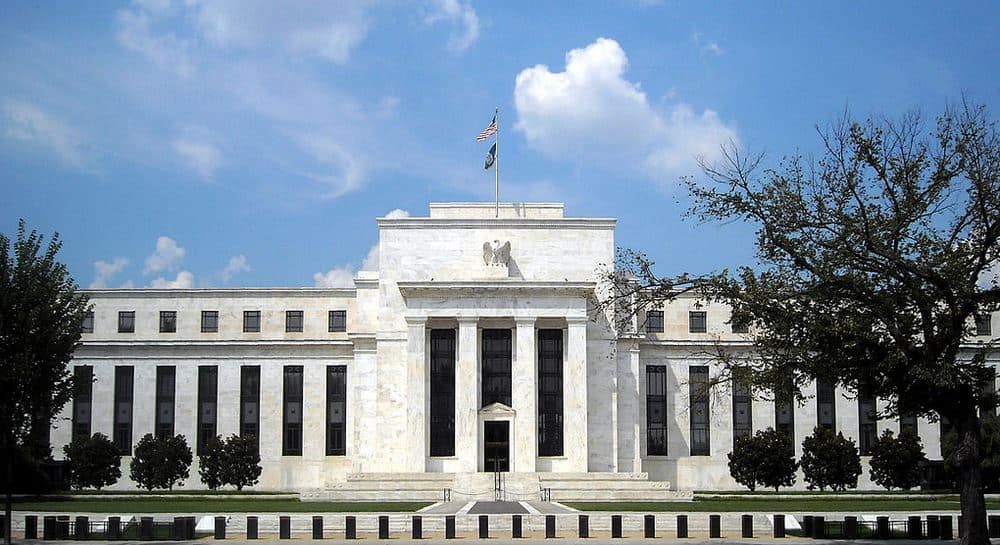
Most economists forecast that the US Federal Reserve will maintain its benchmark interest rate unchanged at a target range of 3.50% to 3.75% for the rest of 2026, according to a Reuters poll. The US Federal Reserve (the Fed) is America’s central bank. It helps manage the economy by setting a key interest rate, which influences borrowing costs, inflation, and employment. The Fed has a dual mandate of controlling inflation and maximizing employment.
US inflation is currently running above 4%, which is the highest it has been for over three years. It is more than double the rate of the Fed’s target rate of 2%. The economy is growing steadily and labor market conditions are improving. Oil prices have nearly returned to their pre-Iran war levels, but gasoline prices are still relatively high. Gasoline prices will take longer to come down because much of the fuel currently being sold was refined when crude oil was more expensive. If crude oil prices remain low, gasoline should continue declining.
Inflation and interest rates
Economists believe that the Fed will keep borrowing costs unchanged, despite elevated inflation.
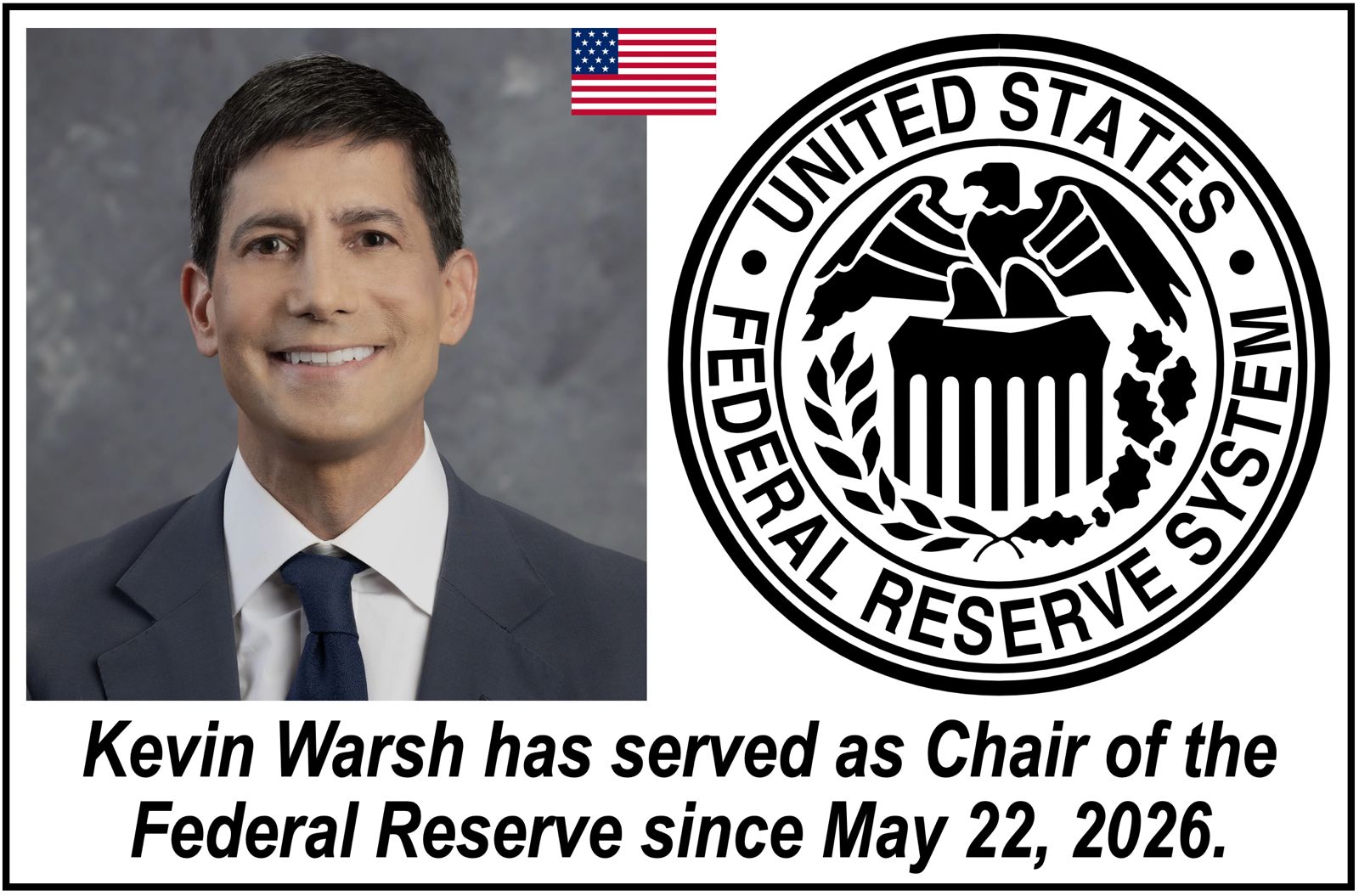
There has been keen interest in what the new Fed Chair Kevin Warsh, a Trump ally, might do. Despite a hot economy, would he lower interest rates in order to make the President happy? In his first press conference, Warsh surprised analysts when he emphasized that his priority was to bring inflation back to the Fed’s 2% target. He hardly mentioned the job market.
Rather than trying to lower the benchmark interest rate, a move that Trump publicly favored, Warsh has left it unchanged. He has shown that he is just as independent and inflation-obsessed as his predecessor, Jerome Powell.
The US Economy
Despite four months of geopolitical upheaval, Iran blocking the Strait of Hormuz, skyrocketing crude oil prices, and trade tariffs, the US economy has been growing steadily.
- The International Monetary Fund (IMF) says that the US economy is expanding solidly. It supports the Fed’s cautious approach to monetary policy.
- The Organization for Economic Cooperation and Development (OECD) explains that the US has the world’s fastest-growing advanced economy.
- The US economy remains “resilient,” says S&P Global Ratings, which reaffirmed the US government’s AA+ credit rating.
- The US Department of Commerce has revised Q1 GDP growth upward from 1.6% to 2.1%, and explains that business investment and government spending were higher than previously estimated.
Investors, economists, analysts, and policy markets say that US economic activity has been supported by strong business investment and healthy productivity.
US consumers remain pessimistic
Despite all this positive data, the majority of American consumers feel pessimistic about their financial futures and the state of their country’s economy.
This disconnect occurs because national employment numbers, GDP, credit rating, and investment measure big business, but families focus on their budgets. Prices have been rising faster than wages for several years, and gasoline has increased considerably since the end of February 2026, when the war in Iran began.
