
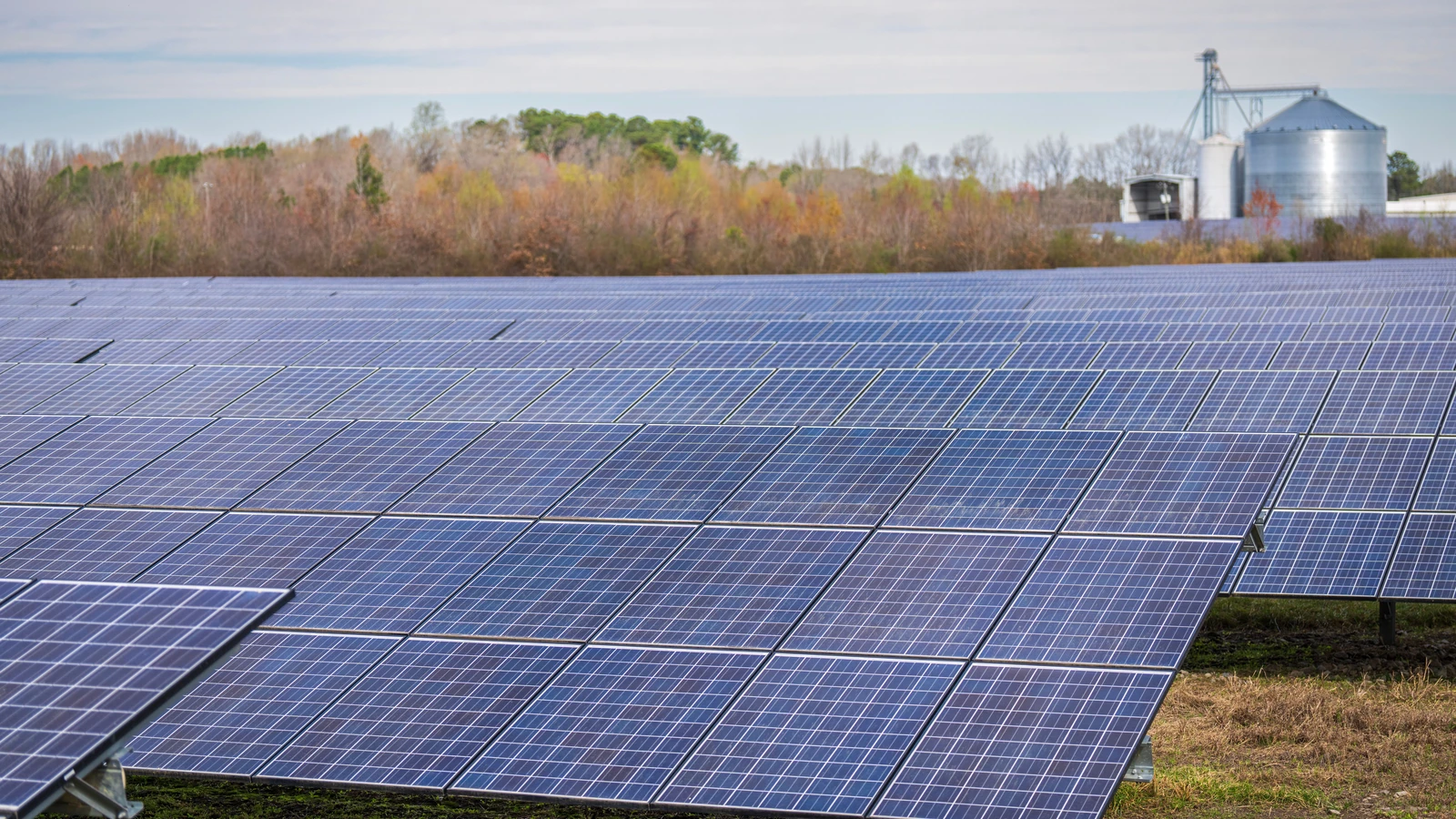
The EU’s solar-panel import bill fell much faster than import volumes in 2025, according to Eurostat data released on 20 October. Cheaper equipment can help businesses installing solar power, while adding pressure to the economics of producing panels locally.
Solar-panel imports were worth €8.0 billion, down 27.7% from 2024, while volumes fell by 4.0%. Eurostat said the comparison suggested lower average import prices.
China supplied 98.6% of the EU’s solar-panel imports. The statistics describe trade with countries outside the bloc, not all panels supplied to European customers or the share of electricity generated by Chinese equipment.
The trade pattern differs from wind turbines, for which the EU remained a net exporter. Turbine exports reached €3.1 billion in 2025, compared with €0.7 billion in imports. A single description of Europe’s renewable-energy manufacturing position would conceal those differences.
Buying panels is one part of building a solar project
A lower equipment price can reduce the cost of an installation without producing the same percentage reduction in its total budget. A project also needs design, mounting systems, electrical equipment, installation and a connection to the electricity network.
The US Department of Energy’s explanation of solar soft costs identifies permitting, financing, installation and customer acquisition among the costs beyond hardware. The amounts differ between countries and project types, but the categories explain why a panel-price headline is not a complete installation quote.
For a business comparing proposals, equipment specifications, installation responsibilities and the expected connection date all matter. The cheapest panels may offer little immediate benefit if the project cannot begin supplying usable electricity.
There is also a difference between buying generating equipment and earning revenue from its output. As we explained in our coverage of wind and solar curtailment, networks sometimes limit renewable generation when they cannot accommodate it.
Project returns depend on the electricity produced and used or sold, alongside financing, maintenance and other operating costs. A lower purchase price improves one part of that calculation.
Manufacturing capacity remains concentrated
The International Energy Agency’s Energy Technology Perspectives 2026 describes surplus manufacturing capacity relative to current demand in solar photovoltaics and batteries. Photovoltaics, or PV, is the technology that converts sunlight directly into electricity.
The IEA links China’s manufacturing competitiveness to accumulated production experience, scale, efficient factories, skills, supply networks and policy support. A new factory elsewhere must compete with that existing industrial base.
The agency also examines alternatives to producing every stage domestically. In one modelled comparison, EU modules using imported wafers from North Africa could cost almost 20% less than fully EU-made modules. Wafers are thin slices of semiconductor material used to make solar cells.
The comparison is a manufacturing scenario, not an observed saving for every factory. It illustrates a choice between concentrating all production locally and sourcing some stages from partners.
For governments, local production can provide capabilities and alternative sources of supply. For developers, the price and availability of equipment affect how much generating capacity an investment budget can buy. Policy has to address both groups’ costs.
Trade values cannot answer every industrial question
A fall in the money spent on imports is not sufficient evidence that investment in solar installations has fallen by the same amount. The price and mix of imported products affect the total, and equipment can be bought before a project starts operating.
Nor does a high share from one country establish that a disruption will occur. It identifies concentration, which buyers can examine alongside alternative suppliers, replacement parts and contractual arrangements.
A business procuring a system therefore needs to compare the complete installation and its operating requirements. For a manufacturer considering a European factory, the separate calculation is whether its production costs and expected selling prices can sustain that factory once it begins competing for orders.
