
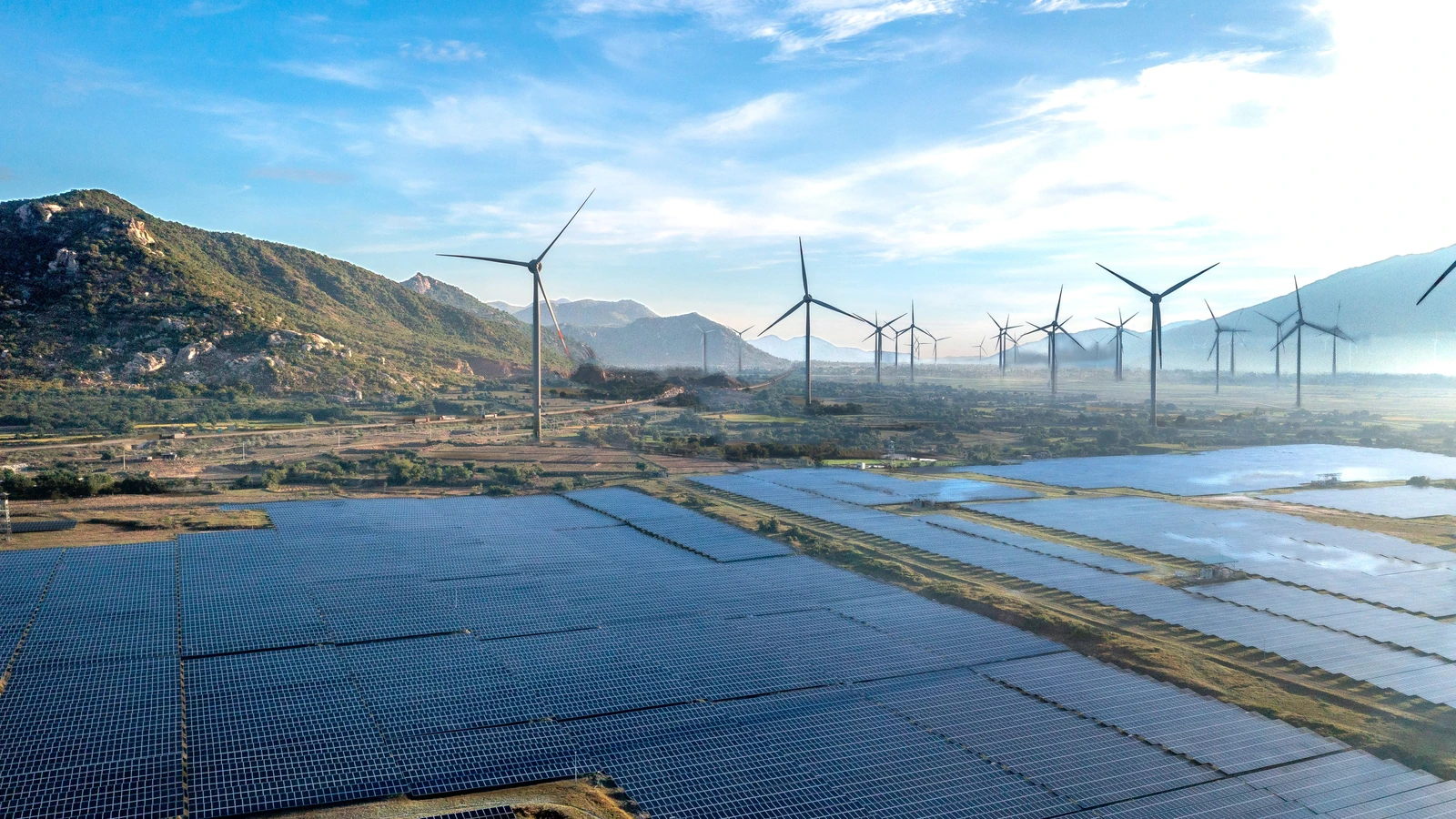
California’s main grid operator curtailed 3.4 million megawatt-hours of wind and solar generation in 2024, even though the equipment could have produced it. Similar restrictions arise when electricity cannot be used, transported or safely absorbed by the system.
The US Energy Information Administration reported that figure for the California Independent System Operator (CAISO), which serves most of the state. Curtailment increased 29% from 2023, and solar accounted for 93% of the curtailed energy.
For electricity producers, those restrictions can mean lost sales. For consumers, relieving them may require spending on networks, storage or changes in how electricity is used. Building enough equipment to capture every possible unit of renewable generation, though, can cost more than accepting occasional reductions.
What is renewable energy curtailment?
Curtailment means deliberately reducing a wind or solar installation’s output below what it could produce under the prevailing conditions. Equipment may be working normally, with enough wind or sunshine available.
A solar farm capable of supplying 100 megawatts (MW), for example, might be limited to 70 MW. That is a 30 MW reduction in power. If it lasts two hours, the electricity not generated amounts to 60 megawatt-hours (MWh).
Megawatts measure the rate of generation. Megawatt-hours measure energy over time. Curtailment prevents some potential electricity from being generated; it does not necessarily mean already-produced electricity is being thrown away.
Operators can instruct plants to reduce output for network or system reasons. Generators may also reduce production because market prices make it uneconomic to continue. Definitions differ between reporting systems, so curtailment figures are not always directly comparable.
The grid needs electricity at the right time and place
Electricity supply must continuously match consumption, storage charging, exports and network losses. Power cannot accumulate indefinitely inside transmission lines. A serious imbalance can disturb grid frequency, the number of electrical cycles per second, and threaten reliable operation.
Wind and solar output follow weather patterns that may not match demand. Solar production can be high on a mild spring afternoon when homes need little heating or air conditioning. Storage and exports may absorb the surplus, but their available capacity is limited.
Location creates a separate problem. A windy coastal region may have more generation available than the transmission routes to distant cities can carry safely. The country as a whole might still need electricity, yet the operator must reduce output on one side of the bottleneck and increase it elsewhere.
A 2020 study in Solar Energy by Eric O’Shaughnessy, Jesse R. Cruce and Kaifeng Xu estimated that about 6.5 million MWh of potential solar generation was curtailed across Chile, China, Germany and the United States in 2018. That is 6.5 terawatt-hours, a historical example, not a current global total.
The researchers identified transmission limits, the location of installations and seasonal demand among the influences. Across the markets studied, curtailment was particularly pronounced in spring and fall.
Conventional generators cannot always fill every gap or stop instantly, either. Some have minimum operating levels, lengthy restart times or duties supporting system stability. The EIA notes that CAISO retains some gas generation for reliability and to prepare for the evening increase in demand as solar output falls.
Low prices and constraint payments are different issues
Abundant generation can push wholesale prices below zero. At a negative price, supplying electricity carries a charge in the relevant wholesale market, instead of earning the usual energy payment.
Generators may still keep running if a brief loss costs less than shutting down and restarting. Subsidies tied to output or payments under contracts can also affect the decision. The EIA’s explanation of negative wholesale prices describes these operating and financial incentives.
Negative wholesale prices can encourage batteries to charge or flexible customers to use more electricity. They do not automatically make household electricity free: retail bills also depend on tariffs, network charges, taxes and contracts.
Payments for reducing output involve a different arrangement. When a transmission bottleneck requires a generator to turn down, market rules may provide a payment for that action. Another plant may need to increase production closer to customers.
Britain’s National Energy System Operator distinguishes direct payments to wind generators from wider system costs (PDF), which also include replacement energy. A headline congestion-cost figure should not automatically be read as money paid entirely to wind farms.
Compensation is not universal. Whether curtailment reduces a project’s revenue, creates a contractual claim or falls mainly on the buyer depends on local market rules and the agreement governing the sale.
Storage, networks and flexible demand address different limits
A battery can shift electricity from a sunny afternoon into the evening. It has limits on charging power, stored energy and discharge duration, and some energy is lost in the process. Once full, it cannot absorb another surplus until space becomes available.
Transmission expansion moves electricity between places. Connections to neighboring regions can also help, provided those regions need the power and the routes have spare capacity. Neither storage nor interconnection can absorb an unlimited surplus.
Existing networks may have room for improvement before new lines are completed. As we explained in our earlier coverage of grid-control technologies, monitoring actual line conditions and redirecting power can relieve some bottlenecks. Those gains depend on the physical network and are not an unlimited substitute for construction.
Demand flexibility tackles timing from the customer’s side. Electric vehicles, water heating and some industrial processes can shift consumption into periods of abundant renewable generation where tariffs and operations allow it.
The International Energy Agency’s Electricity 2026 assessment treats flexible demand, storage and improved control of generation as complementary responses. A factory’s production requirements or a household’s immediate needs still constrain how far consumption can move.
Eliminating every curtailment can be too expensive
A transmission line needed only during a few exceptional hours may spend most of the year underused. The cost of building it could exceed the benefit of capturing the electricity otherwise curtailed.
The IEA makes this point in Modernising Grids in the Age of Electricity: removing all congestion would require sizing networks for peak conditions, even though those conditions occur only part of the time.
Curtailment can also provide operating flexibility. A suitably equipped renewable plant running below its available maximum has room to raise output when requested, provided the wind or sunshine remains available.
In a 2022 explanation from the National Renewable Energy Laboratory, researcher Bethany Frew said “our research shows it can provide value to the grid.” That does not make persistent restrictions harmless. Repeatedly preventing valuable electricity from reaching buyers can still justify investment.
Developers need to price the connection risk
Strong wind or sunshine does not guarantee a commercially attractive project. Investors also need to assess local congestion, expected demand, restrictions on the grid connection and who bears the risk under a power purchase agreement, the contract for selling the project’s electricity.
Two otherwise similar farms can earn different returns if one faces frequent uncompensated curtailment. Adding a battery may improve receipts, but its investment and operating costs must be weighed against the energy it can actually capture.
For planners, the comparison is between the cost of restrictions and the cost of reducing them. A credible project forecast needs to account for electricity the plant may be unable to sell, even on its windiest or sunniest days.
