

Although artificial intelligence (AI) refers to software technologies that make computers or robots think and behave like human beings, they have not quite reached the intellectual level of human thinking. In other words, AI that is as intelligent as human beings does not yet exist.
However, it may become possible earlier than most people predict thanks to psychological learning models combined with specific types of AI.
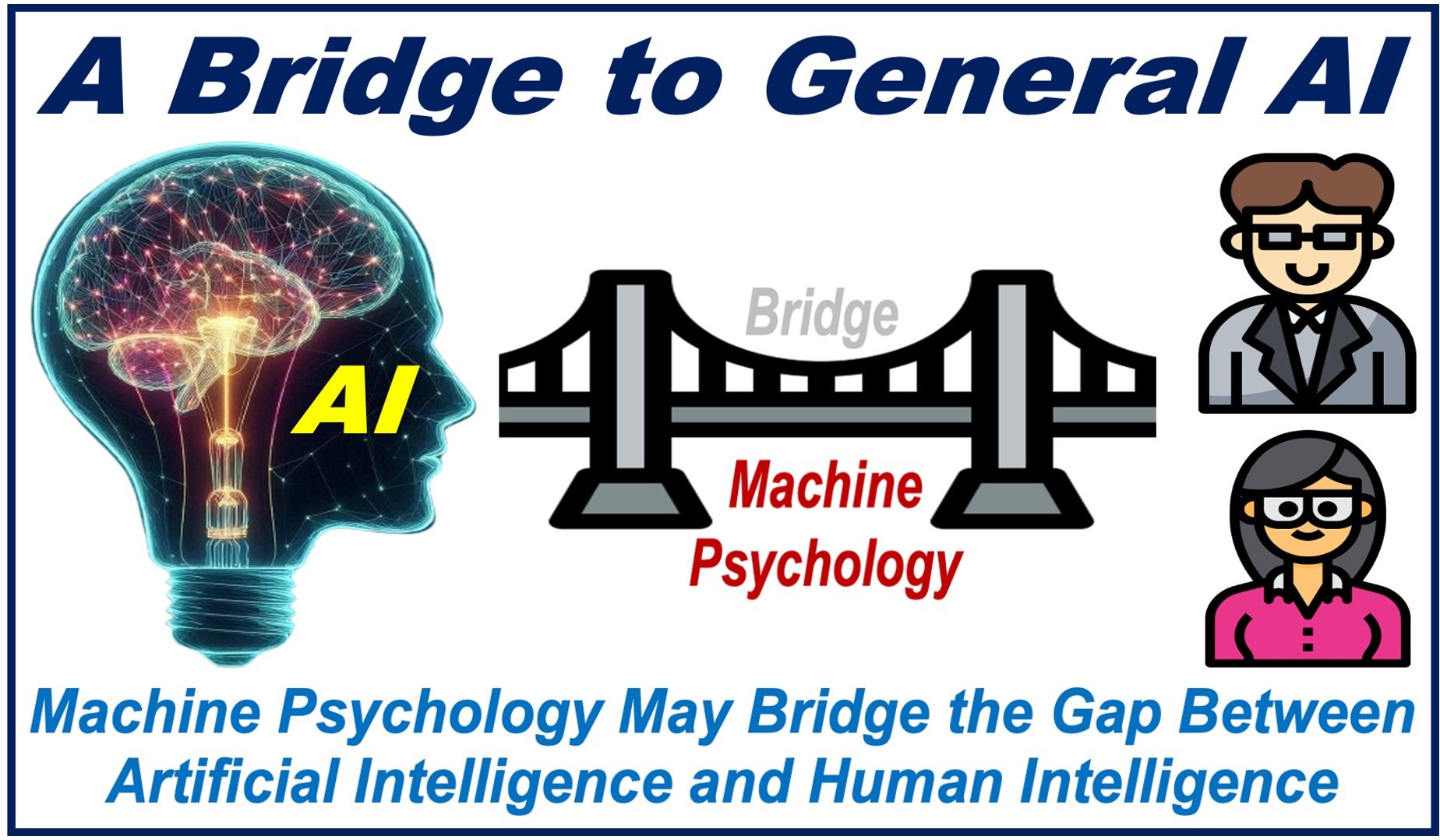
This is the conclusion of Robert Johansson, a psychology researcher currently pursuing his second PhD, this time in computer science at Linköping University. In his dissertation (citation below), Johansson developed the concept of Machine Psychology and discussed how it could contribute to AI development.
Artificial General Intelligence (AGI)
AGI has been the ultimate goal of AI research since the middle of the last century. We have not yet managed to develop an AI that can solve intellectual tasks like we (human beings) can.
Some experts, however, including Johansson, believe that this may happen within the next five years.
Unlike many experts, filmmakers, and futurists who conjure up gloomy scenarios about AGI in the future, Johansson believes that it may benefit us.
Johansson said:
“Yes, I’m sure of that! It changes everything we do and isn’t just a continuation of ordinary AI – it’s something completely different. I think AGI will have a broad impact in society in a completely different way than today’s AI.”
“You can create a new type of agent, such as virtual researchers or psychologists – but also a lot more.”
At the same time, he also acknowledges the challenges that technological developments pose in today’s turbulent world. AGI has the potential to exacerbate divisions within society.
Johannson said:
“It’s a technology we really have to handle with care. On the other hand, I also think that artificial general intelligence can help counter several destructive developments in society. It might help us human beings to emerge as more loving. I’m open to AGI being able to help us develop in that way as well.”
A Huge Challenge
Creating an AI that can think like humans and operate at our level is a monumental task.
Researchers across the globe have different ways to approach the problem. Some argue that large-scale AI models such as ChatGPT are the best way to go, while others favor simulating the brain.
Johansson has chosen to follow a ‘principle-based’ path, focusing on identifying key psychological learning principles that explain intelligence and translating them into computational models.
Johansson is also an associate professor and researcher in clinical psychology at Stockholm University, a background he drew upon in his thesis, Empirical Studies in Machine Psychology (citation below).
Johansson said:
“I’ve used the principles of modern learning psychology to approach the issue of learning, thinking and intelligence. Then I used a specific form of adaptive artificial intelligence which is a logic system where I try to implement learning psychology.”
The logic AI system, known as the Non-Axiomatic Reasoning System (NARS), has been created to function with incomplete data, limited computational power, and in real-time. It offers the flexibility needed to address challenges that may emerge in real-world scenarios.
Gaining Recognition
The combination of NARS and principles from learning psychology form a unique approach that Robert Johansson calls Machine Psychology. He was the first person to introduce this concept, which is rapidly gaining recognition.
Organizations like Google DeepMind have started adopting this approach. This interdisciplinary method focuses on using ideas from psychology to improve how artificial intelligence learns and adapts.
The idea behind Machine Psychology is that AI should learn from various experiences during its lifetime. What it has learned should then be applied to many different situations.
We start developing this ability at around 18 months old. Humans are the only species in the animal kingdom capable of this.
Johansson said:
“If you manage to implement this in a computer, then you’ve really cracked the riddle of artificial intelligence on a human level. And I think psychology will be a potentially crucial science for AGI.”
Whether we manage to create our intellectual equal (in artificial form) within the next five years remains to be seen.
According to Robert Johansson, however, there are many important factors that need to be carefully considered before that can happen.
Johansson said:
“We live in a society with laws and rules and moral premises. It’s necessary to take a stance on how to view the rights and obligations of such agents. Maybe AGI will just be a program you run in your browser, but I think that if it has a consciousness, it’s still some kind of life.”
Citation
Johansson, R. (2024). Empirical studies in machine psychology (Doctoral dissertation). Linköping University, Faculty of Science & Engineering.
DOI: 10.3384/9789179295066
