
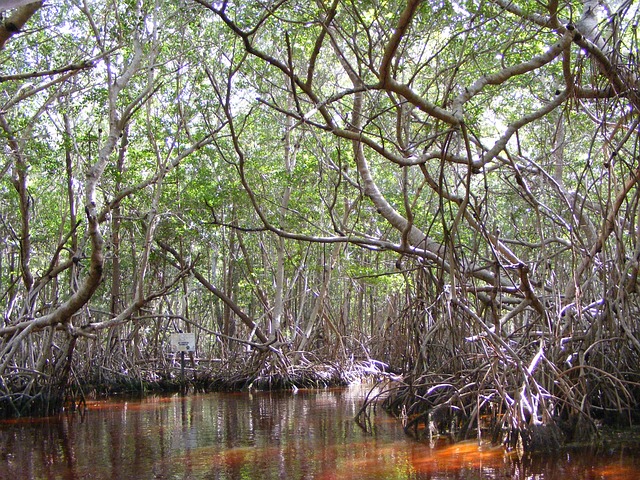
They grow along salty shores, with roots twisted in strange patterns. However, mangroves can help save hundreds of billions of dollars and countless lives, according to a new study from UC Santa Cruz’s Center for Coastal Climate Resilience. One leafy patch at a time, mangroves are holding back storms and floods that would otherwise pummel coastal towns.
The numbers in the research, featured in the World Bank’s 2024 edition of The Changing Wealth of Nations, are eye-opening: $855 billion in long-term flood protection. Hard to wrap your head around that sum. “The results are clear: Mangroves play a critical role in reducing flood risks and should be viewed as valuable natural assets,” says project co-lead Pelayo Menendez.
This fresh data isn’t just a small footnote. It builds on earlier work and crunches global figures from 121 countries. From 1996 to 2010, mangroves’ protective value jumped by $130 billion. Then, from 2010 to 2020, it shot up another $502 billion. Even where some forests shrank, their worth grew as more people and infrastructure crowded the coasts. It’s strange math, but it shows how mangroves can shield entire neighborhoods.
Picture a family in a seaside home. They know storms are coming. They brace for trouble. But out near the shoreline stands a ragged line of green, roots gripping the mud. Those mangroves slow the waves. The flooding doesn’t slam their walls with full force. It’s less damage. As more homes cluster near rising waters, this natural protector matters more every year.
The gains reach across continents. China, Vietnam, Australia, the United States, and India top the list of those benefiting from mangroves. Meanwhile, places like Malaysia and Myanmar have watched benefits slip away as thei disappear. The stakes are real. Lose mangroves and you lose natural protection that holds back environmental destruction. “Protecting and restoring mangroves isn’t just good for the environment—it’s a smart economic choice,” says Michael W. Beck, the center’s director.
