
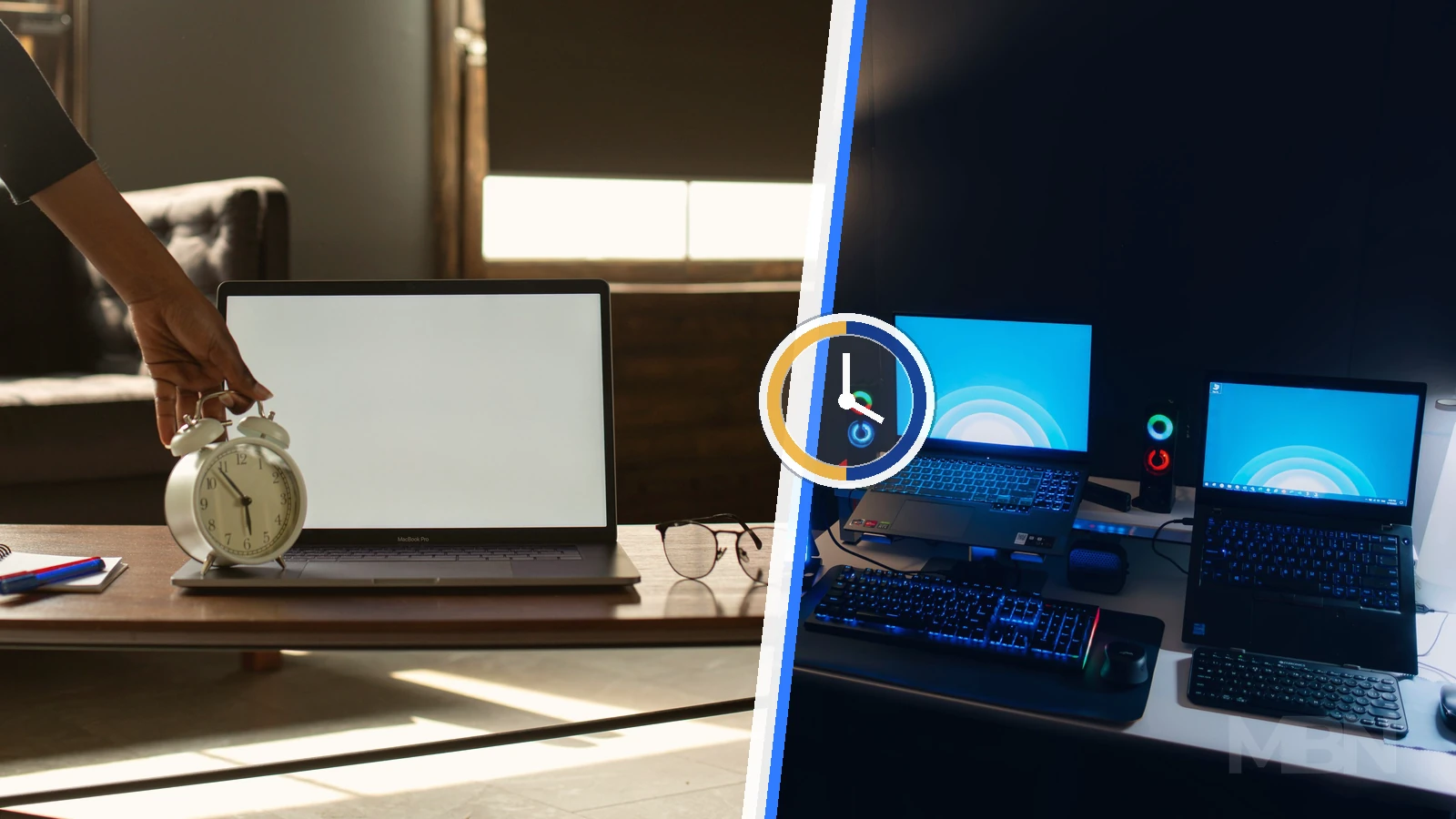
Employees who identify as evening types report more work-life conflict, poorer recovery after work and more mental health problems than morning types, according to a Finnish population study.
The research involved 2,266 working adults from the Healthy Finland Study. Their average age was 44, and 57% were women.
It adds to evidence that an employee’s natural sleep timing, known as chronotype, may be relevant to work ability and health. Morning types tend to sleep and wake earlier. Evening types, often called night owls, naturally favor a later schedule.
The results do not establish that conventional office hours caused the reported problems. The observational study did not compare fixed schedules with flexible start times, so it cannot show that moving the workday later would improve an employee’s mental health or performance.
Evening types had more trouble recovering
The peer-reviewed study, published in the June 2026 issue of Sleep Health, classified participants using a widely used question from the Morningness-Eveningness Questionnaire.
Researchers measured psychological distress, anxiety, depression and suicidal thoughts using validated questionnaires. Finnish healthcare records were also used to identify treatment for depression and anxiety.
Participants reported how often work occupied their time or thoughts outside working hours and how well they recovered before the next workday. Evening types reported more work spilling into their personal lives and poorer recovery than morning types.
They also had poorer results across several mental health measures. The associations remained after the researchers adjusted for age, sex, insufficient sleep, low physical activity and risky alcohol use, although the results were not identical for every measure.
One statistical analysis found that recovery from work accounted for 12.7% of the association between chronotype and healthcare-treated anxiety. Mediation analysis can identify a possible pathway between factors, but it cannot prove that poor recovery caused anxiety.
“This way, measures to promote work-life balance and recovery from work can be targeted at the right people,” principal investigator Ilona Merikanto said in the University of Eastern Finland’s report. “This will also promote well-being at work and reduce inequality in the workplace.”
The business question is schedule fit
A separate Korean panel study points to a possible operating cost. Using worker data collected from 2022 to 2024, researchers found that evening types had 2.29 times the odds of poor work ability and 5.36 percentage points more health-related productivity loss than morning types.
The Korean findings were also observational. They show an association, not proof that an early start reduced productivity.
For employers, the relevant issue is whether every role needs the same start time. A customer service team, factory or hospital may require fixed coverage. Many office roles have more room to use a start-time window while preserving several shared hours for meetings and collaboration.
The World Health Organization lists long or inflexible working hours and low control over job design among the risks to mental health at work. It estimates that depression and anxiety cost the global economy about $1 trillion a year in lost productivity.
Those figures cover the entire working population, not chronotype-related losses. They explain why schedule design and recovery deserve attention from employers even before researchers can attach a precise financial cost to circadian mismatch.
Flexibility should be tested, not assumed
Chronotype is not a measure of effort, reliability or talent. Labeling a worker as a night owl also says little about the demands of that person’s job, family responsibilities, commute or health.
A company considering flexible start times could test the policy in suitable teams and track output, absences, turnover, safety and service coverage. Core collaboration hours can limit the coordination cost while giving employees some control over when the workday begins.
The Finnish evidence supports examining schedule fit, work-life spillover and recovery together. It does not support replacing one rigid timetable with another or assuming that every evening type needs the same accommodation.
