
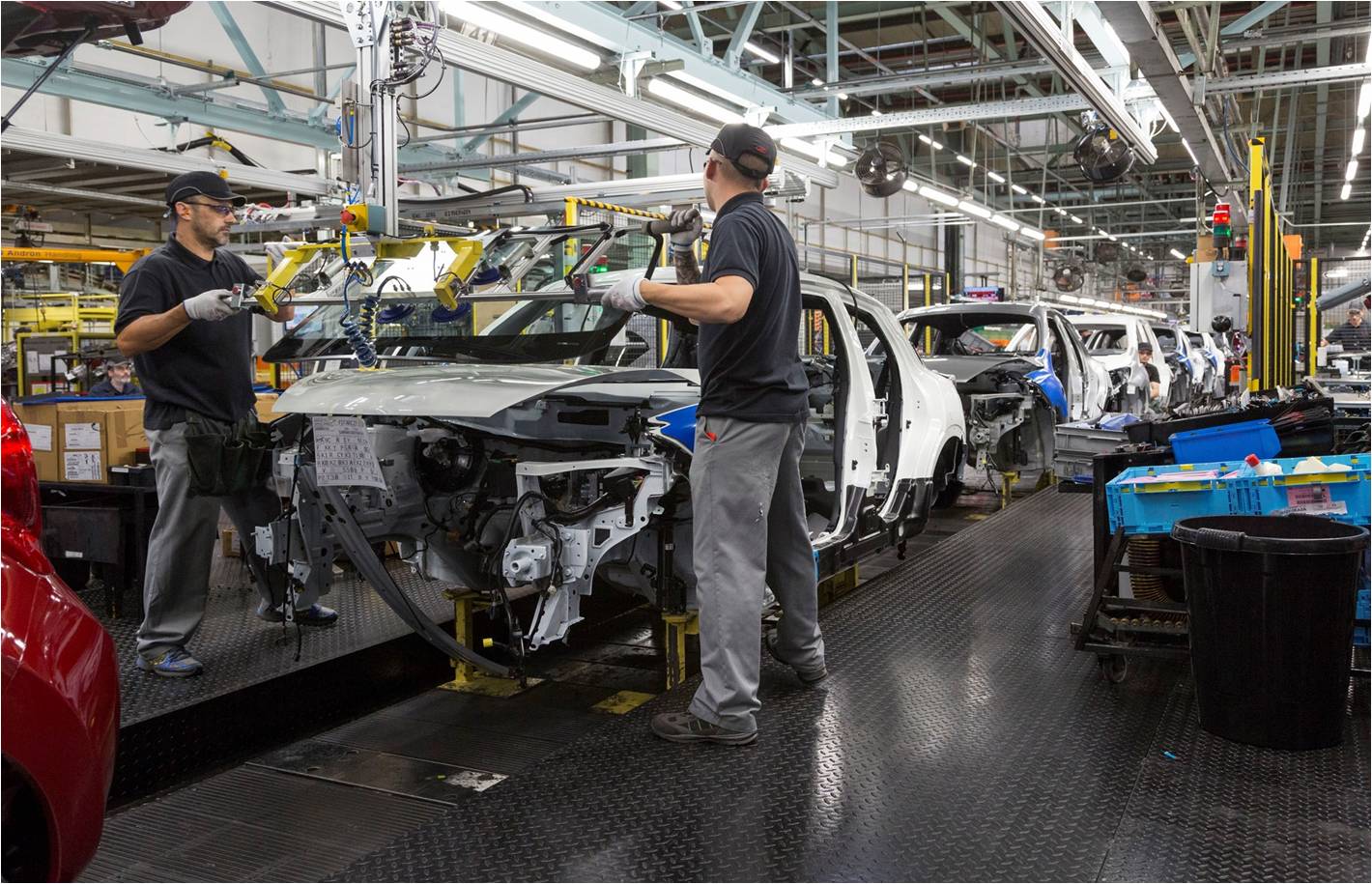
Juke line at Nissan Sunderland

Nissan announces 12,500 job cuts worldwide

Published: 04:04, July 26, 2019

Japanese automotive giant Nissan announced it will shed 12,500 jobs worldwide.

The number of job cuts is more than double what it had previously announced.

Earlier this year, in May, Nissan announced it would cut 4,800 jobs – these losses are included in the new total.

The company didn’t say where the job cuts will be made, but said it plans on reducing its global production capacity by 10% and the size of its product lineup by 10% by the end of 2022.

The announcement was made along with the carmaker’s first-quarter results for fiscal year 2019.

Nissan generated an operating profit of 1.6 billion yen on net revenues of 2.37 trillion yen – an operating margin of 0.1%. First quarter net income dropped by 94.5% to 6.4 billion yen – one of the company’s worst quarterly performances in ten years.

Nissan said it is “moving quickly to optimize cost structures and manufacturing operations”.

The company said:

“To improve its overall utilization rate, Nissan will reduce its global production capacity by 10% by the end of fiscal year 2022. In line with production optimizations, the company will reduce headcount by roughly 12,500.

“Furthermore, the company will reduce the size of its product lineup by at least 10% by the end of fiscal year 2022 in order to improve product competitiveness by focusing investment on global core models and strategic regional models.”

According to the BBC, chief executive Hiroto Saikawa said in a news conference that the job cuts would account for a “big portion” of the savings the company wants to make.

Of the 12,500 job cuts, 6,400 have already been implemented at eight locations, Saikawa said. The other 6,100 jobs will be shed at six locations between 2020 and 2022 financial years.


Christian Nordqvist Avatar

Other News

Internet coverage alone cannot close the digital divide, World Bank says

Nov 1, 2026

Energy upgrades can save businesses money, but financing the work remains a hurdle

Nov 1, 2026

Why tighter credit can disrupt supply chains before orders disappear

Oct 31, 2026

South Africa plans a more open payments system as digital transactions grow

Oct 31, 2026

African cities face a jobs test as urban populations grow

Oct 31, 2026

Online platforms can open foreign markets, but sellers still face costs

Oct 31, 2026

Trade barriers beyond tariffs can keep Balkan exporters from growing

Oct 31, 2026

Off-grid solar reaches more customers, but affordability limits its growth

Oct 31, 2026

World Bank survey finds a wide gap in business innovation across economies

Oct 30, 2026

Air conditioning is adding a growing challenge for electricity grids

Oct 30, 2026

Fewer bidders can make public contracts harder for businesses and taxpayers

Oct 30, 2026

Small firms’ productivity gap is wider in manufacturing than services

Oct 30, 2026

Battery storage is expanding beyond emergency grid support

Oct 30, 2026

Hiring pressure persists in technical, health and teaching jobs, OECD finds

Oct 30, 2026

Small manufacturers face different costs in the shift to new supply chains

Oct 29, 2026

Crowded hedge fund trades can deepen market falls, IMF research finds

Oct 29, 2026

Electronic payments are linked to easier credit for small businesses

Oct 29, 2026

China’s carbon market may reward cleaner plants while increasing output

Oct 29, 2026

Groundwater pumping can create costs that arrive years later

Oct 29, 2026

Commodity shocks are spreading from energy to food and metals

Oct 28, 2026