
Nth Cycle’s planned supply and sales arrangement with Glencore, valued by the company at more than $1 billion over 10 years, shows how battery waste is being developed into a source of lithium and other materials. Turning that resource into a profitable business depends on securing suitable inputs and controlling recovery costs.
On September 22, the US refining company announced a binding term sheet with Glencore for its proposed Project SHIELD facility. A term sheet sets out the principal terms of a transaction; the parties are targeting definitive supply and sales agreements by the end of 2026.
Glencore would provide the facility’s black mass, material produced from processing lithium-ion batteries, and purchase refined products including battery-grade lithium carbonate, a lithium compound used in battery manufacturing. Nth Cycle based the projected commercial value on forecast prices as of the second quarter of 2026. The figure is not a cash investment or revenue already earned.
The arrangement addresses two requirements for a recycling business: material to process and customers for what it produces. The wider industry must also deal with a long wait for recently installed electric vehicle batteries to reach retirement.
Factory scrap arrives before retired vehicle batteries
The International Energy Agency’s Global EV Outlook 2026 says global recycling capacity already exceeds available material. Factory scrap, generated while making batteries, remains an earlier source of supply than packs removed from vehicles after years of use.
The IEA expects end-of-life batteries to become the leading recycling input in the mid-2030s. It describes roughly a 15-year lag between rising battery demand and comparable volumes reaching retirement, while cautioning that future returns remain uncertain.
A review published in Nature Energy in July, involving the University of Münster, Fraunhofer FFB, Porsche Consulting and Volkswagen, anticipates substantial expansion from around 2030. Its projected inputs include batteries from accidents and technical failures as well as vehicles reaching the end of their lives.
These forecasts use different return categories and timelines. Growing volumes around 2030 do not establish that normally retired vehicle batteries will dominate the global market by that date.
Second-hand vehicle sales can keep packs in service longer. Some removed batteries may also suit stationary energy storage, subject to testing and repurposing costs. Both routes can delay their arrival at recycling plants.
Battery chemistry determines the recovery economics
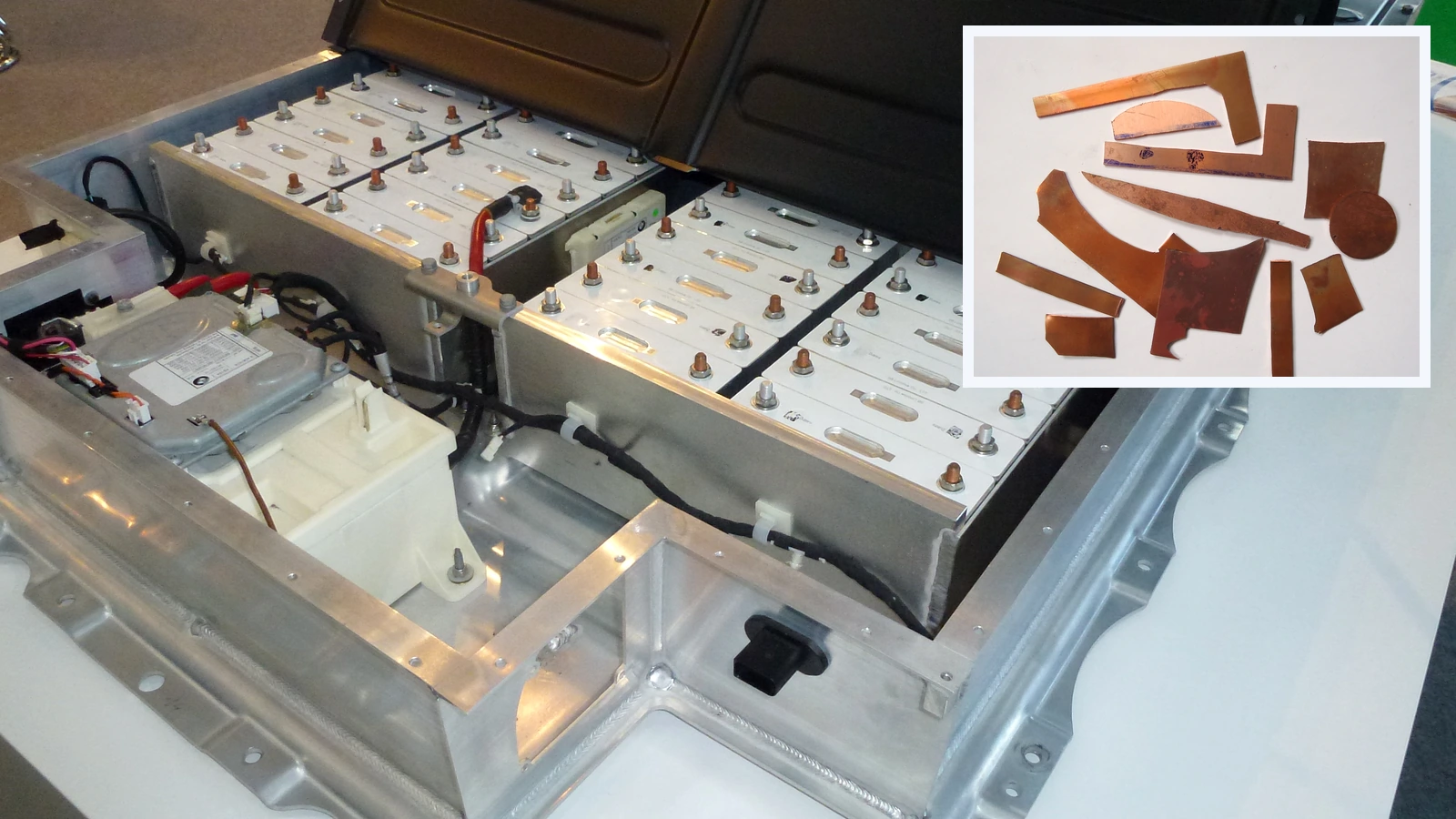
A recycling facility must identify, handle and prepare batteries with different designs and conditions. Mechanical processing can separate casings, copper and aluminum foils, and black mass.
The US Environmental Protection Agency describes black mass as a granular mixture of shredded material from the cathode and anode, the battery’s two electrodes. Its composition depends on the batteries and the processing method. It still needs treatment before recovered ingredients can enter new battery production.
Established metal-recovery routes include high-temperature smelting, known as pyrometallurgy, and chemical extraction in liquids, known as hydrometallurgy. Direct recycling instead seeks to restore usable electrode material while preserving more of its engineered structure.
Not every chemistry provides the same sales opportunity. Lithium iron phosphate, or LFP, batteries contain no nickel or cobalt in their cathodes, removing two metals that help make some other batteries financially attractive to recycle.
According to the University of Münster’s account of the review, recovered materials from nickel- and cobalt-containing batteries can often cover processing costs. Lower-value chemistries can be harder to recycle economically.
The researchers identify easier-to-remove fasteners and adhesives, standardized transport packaging and regional collection centers as ways to reduce costs. The review reports that semi-automated dismantling of standardized packs can cut labor by 50% to 80%. That estimate concerns dismantling, not a guaranteed reduction in a plant’s total costs.
Processing contracts and recovery rules shape investment
Lower material values can push recyclers toward charging for their work. Under a toll-based model, a customer pays a processing fee and keeps ownership of the recovered materials. The IEA identifies this as an alternative to depending entirely on profits from metal sales.
Regulation also sets requirements beyond the market price of an old pack. In a September 11 assessment, the European Commission concluded that existing EU battery-recycling targets remained appropriate.
By the end of 2030, lithium-based battery recycling must achieve at least 70% efficiency by average weight. Separate material-recovery targets require recovery of 50% of lithium by the end of 2027 and 80% by the end of 2031. Overall recycled weight and recovery of a particular metal are different measures.
Companies are building facilities to serve this market. As we reported in our coverage of Sumitomo’s completed recycling plants, physical capacity must be supported by collection arrangements, trial operations and buyers for recovered products.
Recycling can supply manufacturers with materials already circulating in the economy, but the IEA says its contribution to battery-mineral demand remains limited beyond production scrap. For Project SHIELD, the announced binding term sheet still has to become definitive supply and sales agreements before the proposed commercial arrangement can move ahead.
