
A recent study led by the University of Oxford suggests rising temperatures and a lack of insects to pollinate cocoa flowers could threaten chocolate supply.
The research took place in Brazil, Ghana, and Indonesia — countries that together account for a significant share of cocoa production worldwide.
In each location, the team set up study plots and applied six different pollination treatments: 0%, 20%, 40%, 60%, 80%, and 100% hand-pollination. This let them compare natural pollination with different levels of artificial pollination.
They found that hand-pollinating cocoa flowers increased production by about 20%, which strongly suggests that many cocoa trees in the study regions were simply not receiving enough pollination in natural conditions.
“Our research proves that sustainable farming can increase cocoa production without harming the environment. By focusing on biodiversity-friendly and climate-resilient methods, farmers can boost yields and protect their livelihoods,” said Dr. Tonya Lander, from the Department of Biology at the University of Oxford and lead author of the study.
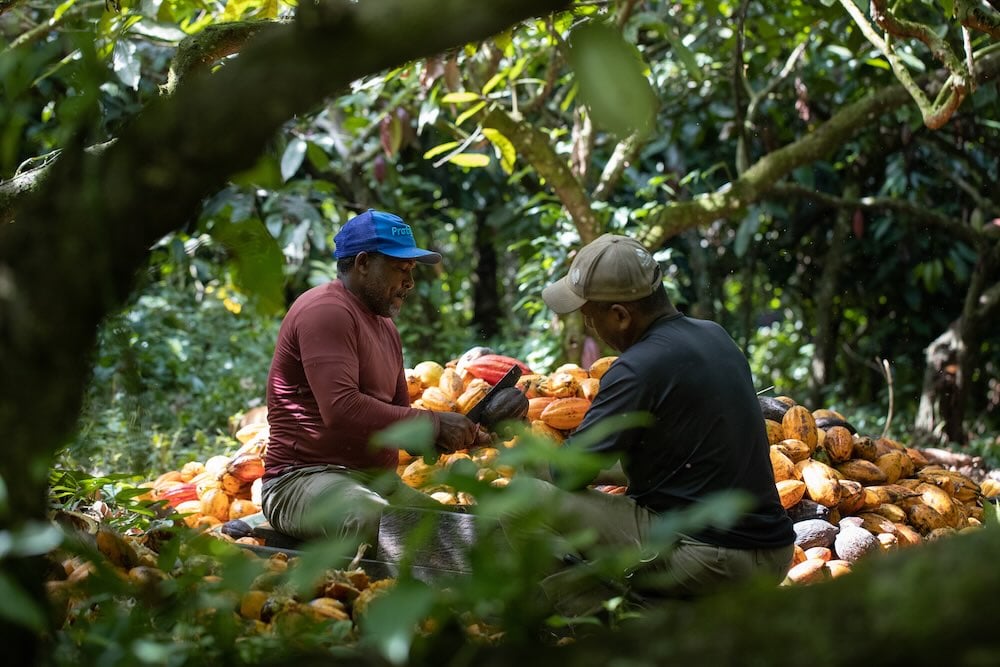
Cocoa comes from Theobroma cacao, a plant grown by millions of small-holder farmers. To these farmers it represents much more than an ingredient in a treat; selling cocoa beans and chocolate products is what lets them afford food, medicine, and schooling.
But the crop is under pressure. Higher temperatures reduce yields, and low pollination rates keep farmers from harvesting as many beans as they could.
One of the researchers, Prof. Yadvinder Malhi from the Environmental Change Institute at the University of Oxford, stated: “Chocolate is on many people’s mind today. As well as being a luxury good, its production as a tree crop provides essential income for over 5 million small holders across the tropics. This chocolate supply, and its associated income benefits, is increasingly threatened by global heating.”
Pollination is a huge concern, since many cocoa flowers never set fruit. “Cocoa is pollinated by tiny insects such as midges and thrips, and it comes as quite a surprise that most of the time there simply isn’t enough pollination happening to produce the cocoa crop that is possible,” explained Dr. Acheampong Atta-Boateng, who completed his doctoral work at Oxford.
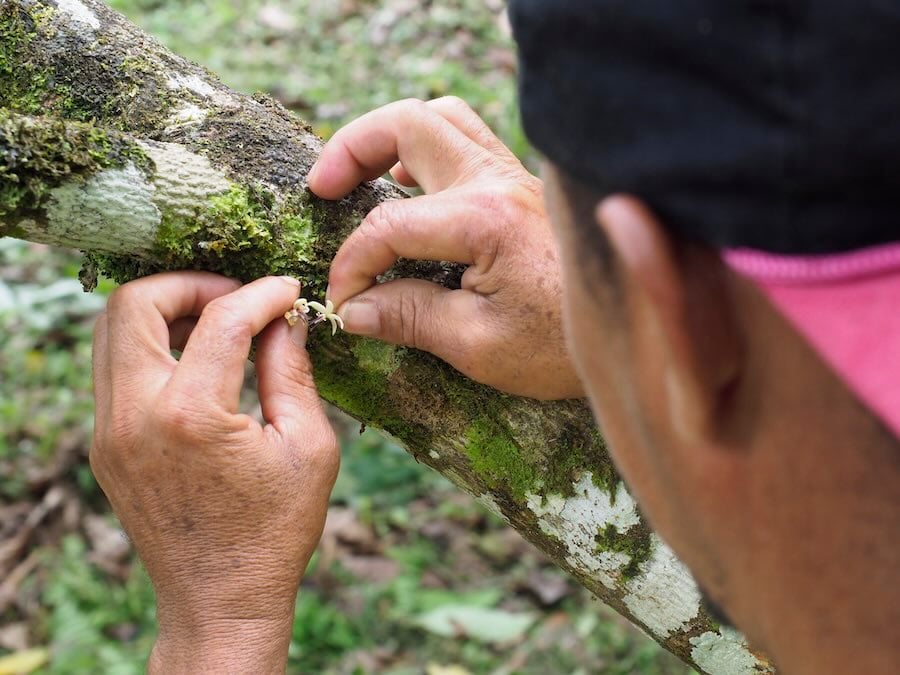
When the researchers hand-pollinated some of the flowers, yields shot up. That illustrates the problem: not enough insects are doing the job naturally. It seems likely that poor habitat, lack of leaf litter, excessive heat, and chemical use all play a part.
Adding a bit of shade on cocoa farms was found to help. Shade trees can cool the understory, which benefits both the cocoa plant and the tiny pollinators that rely on damp conditions.
Keeping leaf litter on the ground also gives pollinators a better breeding environment while improving soil quality. In hotter regions, that could mean stronger trees, more stable production, and less incentive to clear more forest.
Dr. Tom Wanger from Westlake University, China, also contributed, and commented: “The rising demand for cocoa and the short-term economic benefits to farmers has led to plantation expansion and ecological homogenization at the expense of biodiversity and vital ecosystem services, like pollination. This study highlights the long-term risks of this approach, and how pollination can be a solution that works alongside climate-resilient agricultural systems to achieve long-term, ecologically and financially sustainable solutions.”
Some nations have already tested methods that relate to these findings. Ghana, for example, has run a Hand Pollination Programme to raise yields, showing that manual pollination can sometimes double a farmer’s harvest.
Elsewhere, projects that introduce shade trees have faced hurdles. One report found that very few seedlings survived on farms, possibly because growers lacked tools or worried shade might invite crop diseases.
Still, many experts agree that moderate canopy cover can protect pollinator habitats and help control heat.
It may seem like a tall order to make such changes, but the payoff could be real. Farmers stand to gain larger harvests and more stable incomes by preserving biodiversity on their land. Consumers, in turn, might enjoy chocolate bars without fretting that they’ll be less available.
Still, there are hurdles. Ensuring farmers have resources to shift their practices can be a challenge. Some rely heavily on chemicals, or they simply don’t have access to better seedlings. But every small measure, from reducing pesticides to planting a few shade trees, could help keep cocoa yields strong.
Organizations involved in cocoa sustainability suggest more training and better access to finance might help farmers adapt over time.
It’s a multi-layered issue, and one that might benefit from sensible changes carried out across entire cocoa-growing regions. Encouraging natural pollinators, moderating farm temperatures, and protecting soils can significantly increase yield. Strategies like maintaining leaf litter, using fewer chemicals, and providing moderate shade could help farmers adapt to climate change while raising cocoa production.
Citation:
Lander, T.A., Atta-Boateng, A., Toledo-Hernández, M. et al. Global chocolate supply is limited by low pollination and high temperatures. Commun Earth Environ 6, 97 (2025). https://doi.org/10.1038/s43247-025-02072-z
