
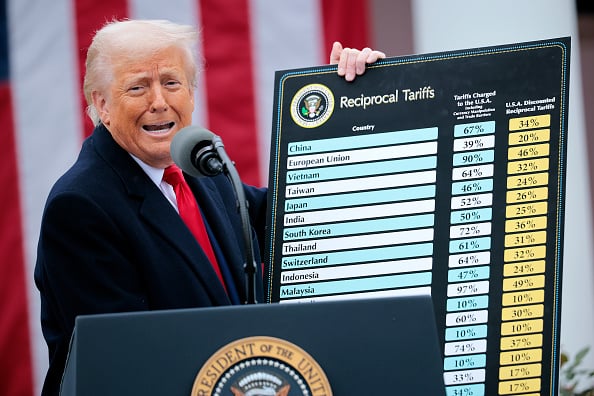
Donald Trump has just fired a broad salvo at global trade with a sweeping set of tariffs on goods entering the United States. Announced during a lively event at the White House, these new duties set a baseline of 10% on imports from many nations, but certain places, like China, Taiwan, and the European Union, face far higher rates.
China stands out with an added 34%, while the EU’s rate is 20%.
In a move already stirring debate, all foreign-made cars will be taxed at 25%.
The president framed this as a way to safeguard U.S. manufacturing and workers, insisting these measures will bring factories back to American soil. He declared the day a “liberation” for the nation, saying other countries have pushed sky-high tariffs on American goods for decades.
Europe Sounds the Alarm
Not everyone is cheering. Europe’s leaders see these taxes as a shot across the bow, warning that they could slow the global economy. Ursula von der Leyen, head of the European Commission, underlined how ordinary people could soon pay more for everyday goods.
Ursula von der Leyen said: “Let’s be clear about the immense consequences: the global economy will massively suffer, uncertainty will spiral and trigger the rise of further protectionism... The consequences will be dire for millions of people around the globe.”
“The cost of doing business with the United States will drastically increase,” Ursula added. “And what is more there seems to be no order in the disorder – no clear path in the complexity and chaos that is being created, as all major trade partners are hit.”
China Threatens Retaliation
Meanwhile, in Beijing, officials promised firm retaliation. They argue that these tariffs endanger international supply chains and boost the risk of a worldwide trade war. According to the BBC, China’s Commerce Ministry, has urged the US to “immediately revoke these unilateral tariff measures and to resolve trade disputes properly through equal dialogue with its partners”.
A spokesperson said that “China firmly opposes this move and will take resolute countermeasures to safeguard its rights and interests.”
Investors React to New Trade Barriers
Financial markets did not stand by idly. Major indexes stumbled, with investors worried about disruptions that could hurt growth and jack up consumer prices.
As of writing, the Nikkei index is down by 3.11%, the Shanghai Composite index is down by 0.5%, Kospi in South Korea is down 0.83% and Australia’s ASX 200 index is down 0.93%.
Some analysts predict that if these rates stay in place long enough, a handful of smaller countries may slide into recession.
Takahide Kiuchi, executive economist at Nomura Research Institute, was quoted by Reuters as saying: “Trump’s tariffs carry the risk of destroying the global free trade order the United States itself has spear-headed since the Second World War.”
What’s Next for World Trade?
Whether these tariffs last for months or years is anyone’s guess. The administration has hinted that they might cut some slack for countries that ease up on their own barriers. If not, the global trading system could look a lot different by the time the dust settles. For now, everyone from soybean farmers in Iowa to smartphone importers in California is watching nervously, hoping their bottom line won’t suffer more than it can bear.
