
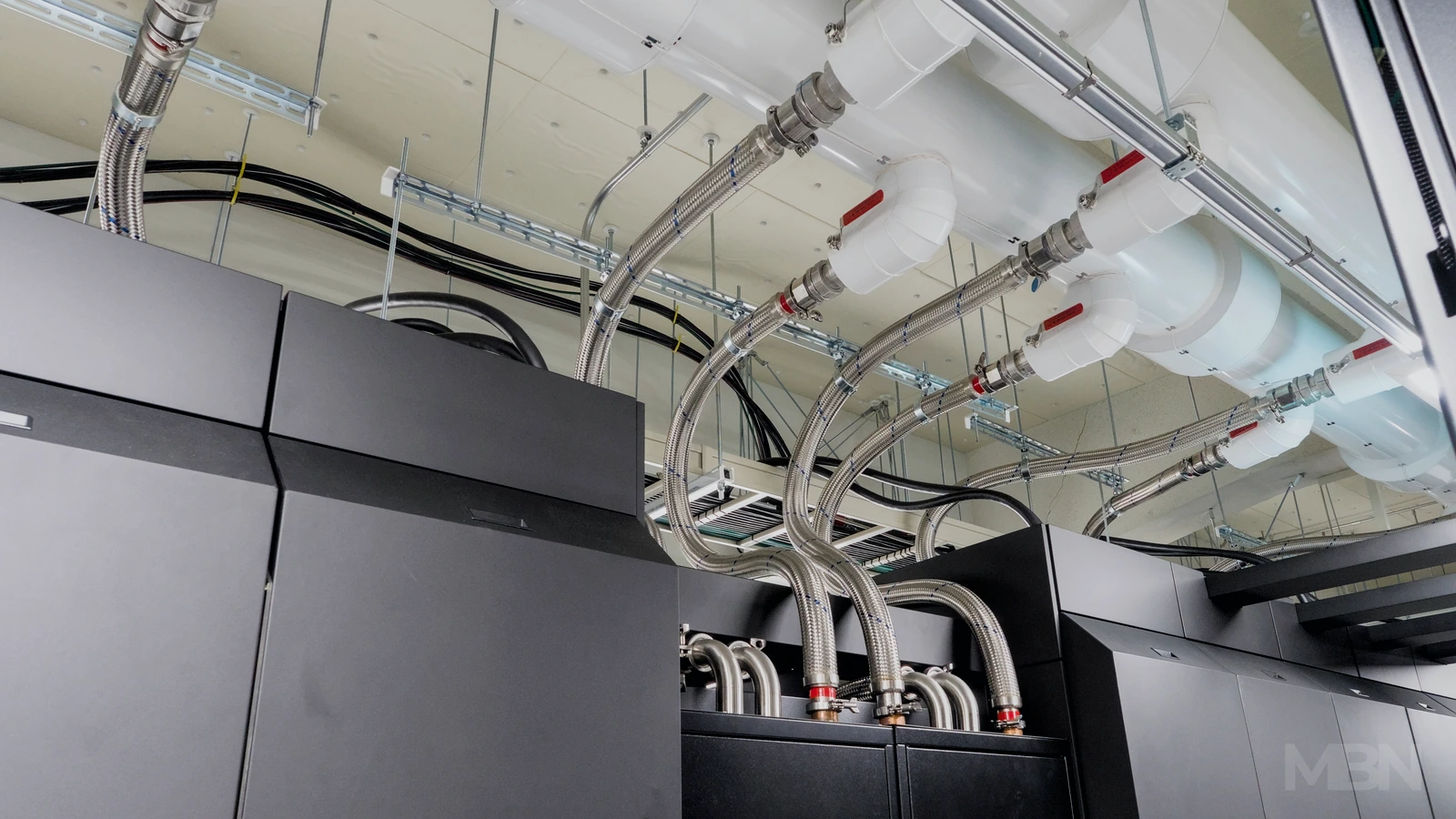
Singapore has introduced a technical standard for operating liquid-cooled data centers in tropical climates, giving companies a common reference for managing the heat produced by increasingly powerful artificial intelligence systems.
The August 27 announcement brings the physical demands of AI computing into focus. Buying faster processors also means providing pumps, pipes, heat exchangers, and maintenance procedures that can keep them operating reliably.
Singapore Standard SS 726:2026, Liquid Cooling in Tropical Data Centres, was developed by the Infocomm Media Development Authority and Enterprise Singapore through the Singapore Standards Council, with industry input.
Its published scope covers systems that remove heat directly from computing components. It excludes indirect arrangements such as liquid-cooled rear doors that remove heat from air behind server racks. Systems in which the coolant changes between liquid and vapor are also outside its scope.
Cooling moves closer to the chips
A server rack is a cabinet containing computing equipment. Packing more power into each rack concentrates the heat that must be removed, making cooling capacity part of the decision about which machines a facility can accommodate.
One approach places metal cooling plates against processors. Fluid circulates through the plates and carries away heat. A coolant distribution unit manages the flow and transfers heat onward, typically through a heat exchanger connecting separate cooling loops.
The liquid does not have to be icy. Nvidia says its latest liquid-cooling architecture can accept coolant at up to 45°C (113°F). The fluid can still absorb heat because the components it cools operate at higher temperatures.
Warmer coolant can make it easier to release heat through outdoor equipment without relying as heavily on mechanical refrigeration. Nvidia says the savings depend on geography and system design. Conditions that work in a cool climate cannot simply be assumed to work throughout a tropical year.
Removing heat consistently also helps prevent thermal throttling, when processors reduce their performance to avoid overheating. For a business paying for expensive computing hardware, lost performance can reduce the amount of work completed by that investment.
Installation costs and maintenance shape the business case
Singapore’s accompanying factsheet identifies leaks, equipment corrosion, and fluid quality as operating concerns. Microbial growth can produce biofilms, layers of microorganisms that interfere with the cooling system.
Retrofitting an existing data center can require new pipework, different equipment layouts, and coordination with the air-cooling systems already installed. The agencies say tighter connections between cooling equipment and server racks can also complicate equipment replacement.
Those demands create work for equipment suppliers, installers, and maintenance teams. They also create costs beyond the initial purchase: operators need to monitor fluid condition, manage leaks, and plan how equipment can be serviced.
The supplier market is already attracting investment. As we reported in our coverage of SLB’s planned Kelvion acquisition, the energy technology company has agreed to pay about US$3.4 billion in cash and assume approximately $700 million in debt for the heat-exchange specialist.
SLB expects data centers to generate $1.2 billion to $1.3 billion of Kelvion’s revenue in 2026. The acquisition remains subject to regulatory approval and other closing conditions. It shows how cooling demand is influencing industrial investment alongside purchases of AI chips.
Energy savings and water savings need separate checks
A closed loop recirculates coolant, but the heat still has to leave the building. The US Department of Energy’s cooling guidance illustrates a liquid-cooled system that transfers heat from a closed server loop to a cooling tower, where water evaporates.
That means a facility can use closed-loop cooling at the servers and still consume water elsewhere. Operators need to examine the complete system, including how it releases heat outdoors.
One common energy measure is power usage effectiveness, or PUE. It divides the facility’s total energy use by the energy used by its computing equipment. A lower ratio means less overhead for cooling and other supporting systems; it does not measure how much useful computing the servers deliver.
Nor does a better ratio guarantee a smaller electricity bill if the facility adds more servers. Water consumption and total energy use need to be tracked alongside efficiency measures.
The standard’s public preview explains that Singapore Standards are generally voluntary unless made mandatory by a regulator, but can become a business requirement when cited in contracts. For data center customers and suppliers, agreed specifications provide a basis for deciding what equipment must deliver and how its performance will be assessed.
