
SLB has agreed to acquire heat-exchange specialist Kelvion for about $3.4 billion in cash and assume roughly $700 million of debt, giving the energy technology company a much larger position in data center cooling.
The approximately $4.1 billion total transaction value is equivalent to about 11 times Kelvion’s estimated 2026 adjusted earnings before interest, taxes, depreciation and amortization, or EBITDA, before expected savings and new revenue from combining the businesses.
SLB is buying the company from funds managed by Apollo Global Management, Kelvion’s majority owner, and funds advised by minority shareholder Triton. The deal requires regulatory approval and is expected to close in the first half of 2027.
SLB shares rose more than 5% to about $60 in Monday trading after the announcement, Reuters reported.
Cooling becomes part of SLB’s data center offer
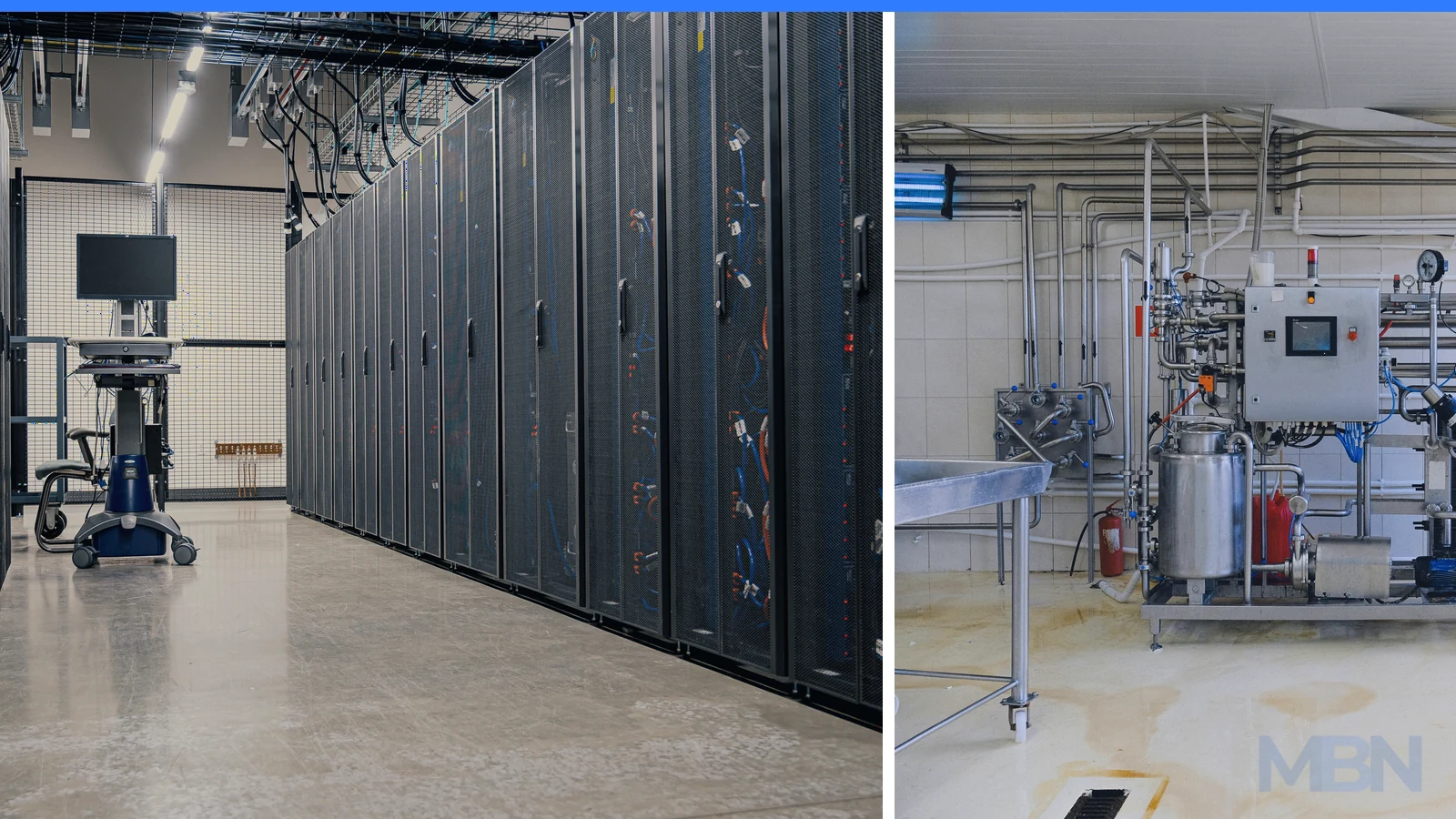
Kelvion makes heat exchangers and other thermal management equipment. In practical terms, that technology moves heat away from equipment or between liquids and air. It is becoming more important in data centers as denser AI computing systems produce more heat.
The German-headquartered company is expected to generate revenue of $2.3 billion to $2.4 billion in 2026, according to SLB’s announcement. Data centers are forecast to contribute $1.2 billion to $1.3 billion, making them Kelvion’s largest and fastest-growing end market.
Kelvion also supplies energy and industrial customers, including heat-pump, renewable energy, carbon-capture and process-industry projects. Its more than 5,800 employees are expected to join SLB’s New Energy and Industrial business after closing.
SLB is best known for oilfield services and energy technology, but it has been building a data center infrastructure business that combines engineering, modular manufacturing, off-site construction and digital systems. The company expects that unit’s revenue to have grown at a compound annual rate of more than 90% between 2024 and 2026.
Adding Kelvion would more than double SLB’s potential revenue per gigawatt of data center capacity delivered, the company said. A gigawatt is a measure of power equal to one billion watts. In this context, it is used to describe the scale of computing facilities that SLB can help build and equip.
SLB targets $5 billion in data center revenue
On a combined basis, SLB and Kelvion are expected to produce more than $2 billion in data center revenue and about $300 million in adjusted EBITDA in 2026. Those figures are pro forma, meaning they estimate what the businesses would produce if treated as one company for the period.
SLB is targeting $4.5 billion to $5 billion in revenue and $700 million to $800 million in adjusted EBITDA from the combined data center business in 2028.
It also expects about $120 million in annual EBITDA benefits within three years. These so-called synergies are projected savings or additional earnings that management believes the combined businesses can produce. They are forecasts, not money already secured.
The company said the acquisition should add to earnings per share and free cash flow per share during the first 12 months after closing. Free cash flow is the cash left after the company pays its operating and capital expenses, making it a useful measure of how much financial room a business has for debt repayment, dividends, buybacks or further investment.
SLB expects its net debt-to-EBITDA ratio to remain within its target of no more than 1.5 times. It also maintained its plan to return more than $4 billion to shareholders through dividends and share repurchases in 2026.
AI growth is creating a market beyond the chips
The acquisition reflects how AI investment is spreading into the physical systems surrounding servers. Semiconductor demand receives much of the attention, but a large data center also needs power distribution, cooling equipment, network connections and construction capacity.
As we reported, some projects are already waiting years for grid connections. Cooling is a different constraint, but it arises from the same problem: companies can order computing hardware faster than some of the supporting infrastructure can be built.
The Kelvion deal would give SLB direct control of another part of that infrastructure. Whether the purchase meets its financial targets will depend on regulatory approval, a smooth integration and continued data center investment at the pace assumed in SLB’s forecasts.
