
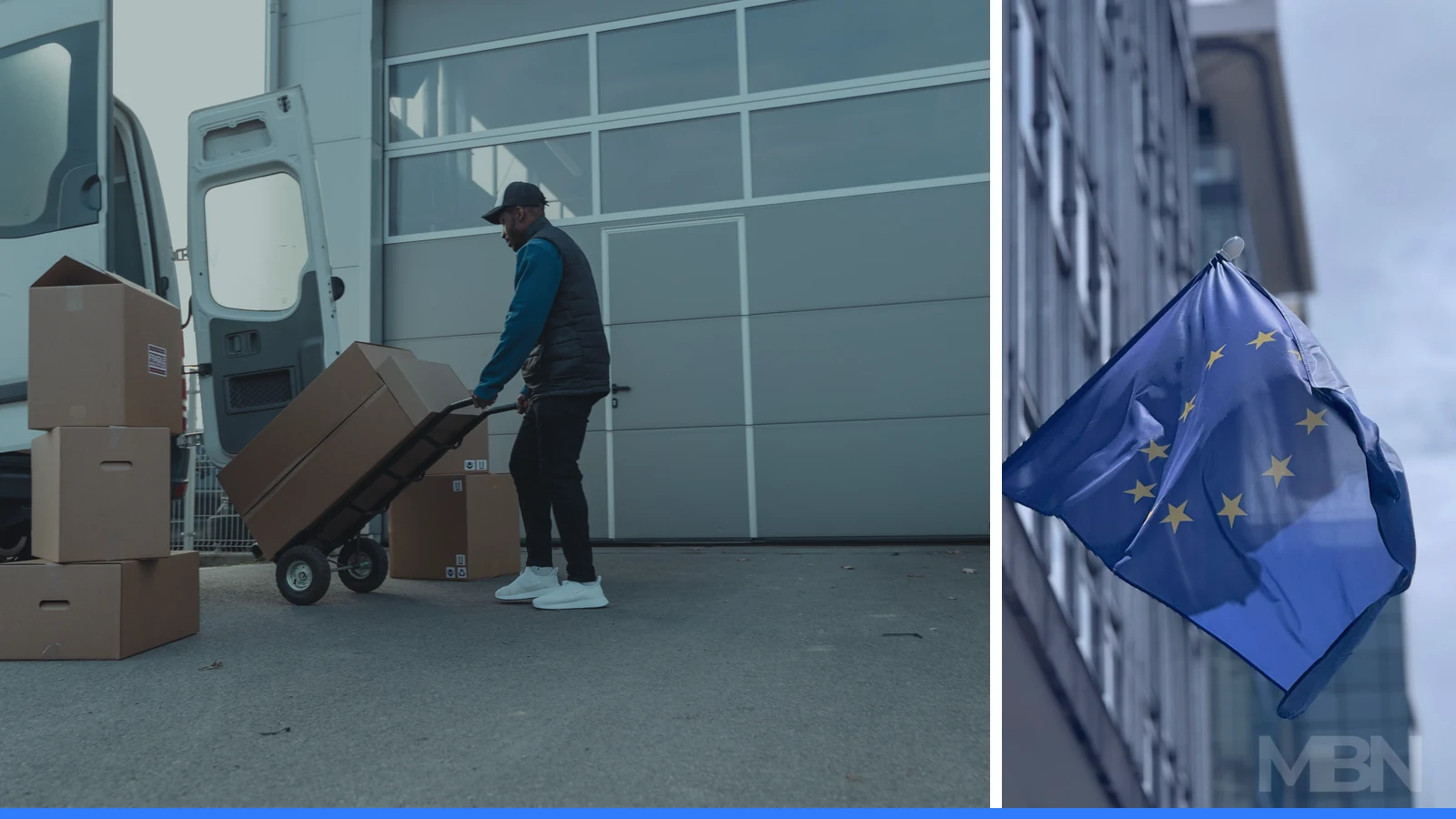
Businesses declared €38.8 billion in European Union value-added tax through the bloc’s three e-commerce one-stop-shop systems in 2025, a 17% increase from the previous year, according to a European Commission report published on Monday.
The total rose by €5.7 billion from €33.1 billion in 2024. It was split between €27.9 billion declared through the Union scheme, €3.2 billion through the non-Union scheme and €7.7 billion through the Import One-Stop Shop.
The figures measure VAT declared through the systems, not the value of goods sold online. They also should not be read as proof that every euro declared was collected without delay. Even so, the increase shows that a growing amount of cross-border consumer trade is passing through a tax framework designed to replace multiple national registrations with one electronic return.
What the one-stop shop does
Value-added tax, or VAT, is a consumption tax charged on goods and services. In cross-border consumer sales, the tax is generally due in the country where the customer is located.
Before the present system, an online seller could have to register separately in several EU countries. Under the One Stop Shop, a participating business registers in one member state, files an electronic return there and pays the VAT owed across the countries covered by that return. The member state of registration then sends the money and return information to the countries where the sales took place.
The system is optional, and it does not replace a business’s normal domestic VAT return. It covers three different arrangements. The Union scheme is used mainly for eligible cross-border sales within the EU, while the non-Union scheme covers certain services supplied to EU consumers by businesses established outside the bloc. The import scheme, known as IOSS, applies to eligible goods imported in consignments worth no more than €150.
Low-value imports recorded the fastest growth
VAT declared through IOSS rose 22% to €7.7 billion in 2025, up from €6.3 billion a year earlier. The Commission said the increase reflected continued growth in low-value consignments entering the EU.
The Union scheme remained much larger in absolute terms. It accounted for nearly three-quarters of all VAT declared through the three systems, based on the Commission’s figures.
Since the expanded arrangements began in July 2021, businesses have declared about €125.45 billion through OSS and IOSS. The 2021 figure covers only six months and is therefore not directly comparable with the full-year totals that followed.
Registrations are also rising. More than 193,000 traders were registered across the three schemes at the end of 2025. Union-scheme registrations increased 13% to 173,630, while non-Union registrations rose 8% to 6,076 and IOSS registrations climbed 7% to 13,733.
Higher declarations have more than one explanation
A larger VAT total does not reveal by itself whether online sales volumes, prices, compliance or participation in the schemes did most of the work. VAT rates also differ among member states and by product.
The registration data provide one useful clue. More businesses are using the simplified route, so part of the increase is likely to reflect wider adoption as well as growth in the transactions reported through it. The Commission described the figures as evidence that traders are relying more heavily on the system.
There is an economic trade-off behind that administrative change. A common portal can reduce the cost of selling across borders, particularly for a business that would otherwise need several local VAT registrations. At the same time, the system gives national tax authorities a structured way to receive VAT from sellers that may have no physical presence in the customer’s country.
The rules will continue to expand
The EU is already preparing the next stage. Its VAT in the Digital Age package, adopted in March 2025, will be introduced in phases through 2035.
Clarifications affecting OSS and IOSS users take effect on January 1, 2027. From July 2028, further single-registration measures are scheduled to extend the one-stop-shop approach to more transactions. Online platforms facilitating short-term accommodation and road passenger transport will also face new VAT responsibilities in cases where the underlying supplier does not collect the tax, although member states may delay that measure until 2030.
For businesses, the direction is clear: more cross-border VAT obligations will move through shared digital systems. The latest Commission report shows that the existing systems are already handling a substantial and fast-growing part of the tax declared on European online commerce.
