
T-Mobile is taking a big leap forward in hopes of ending those frustrating “no service” moments, especially in places you never thought you’d see a signal bar. The company just opened registration for a test program that connects regular phones directly to Starlink satellites. If all goes as planned, hikers deep in remote forests or drivers on lonely highways might soon be able to stay connected without relying on any cell tower in sight.
Right now, T-Mobile’s plan is starting small. Early next year, a limited group of customers can try sending text messages by tapping into Starlink’s vast network of low-orbit satellites.
This announcement follows the FCC’s approval of the service.
“The FCC is actively promoting competition in the space economy by supporting more partnerships between terrestrial mobile carriers and satellite operators to deliver on a single network future that will put an end to mobile dead zones,” FCC Chair Jessica Rosenworcel said last month, according to Reuters.
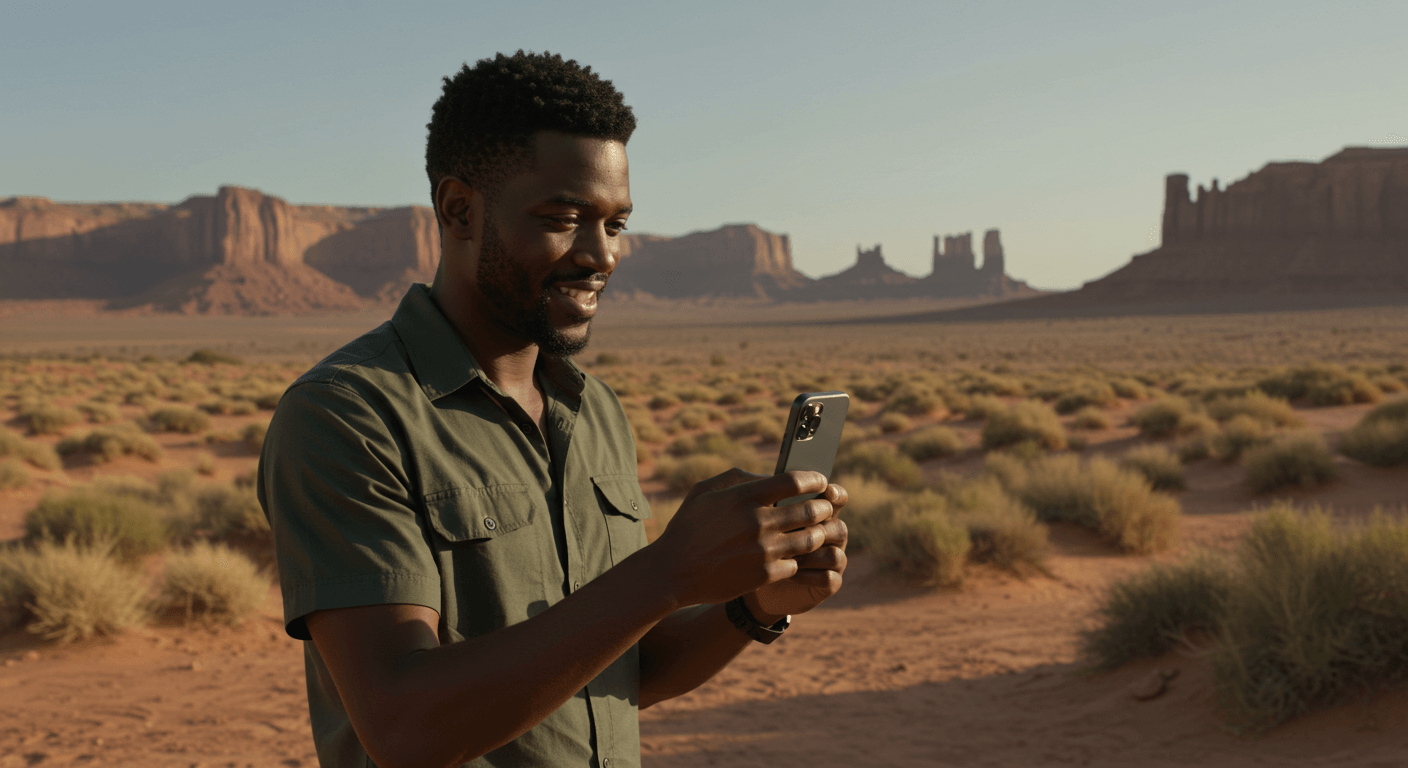
So, what’s powering this idea? It’s a service called Starlink, run by SpaceX. Instead of one or two large satellites high above Earth, Starlink relies on fleets of thousands of smaller ones orbiting much closer. They’re able to beam signals more quickly and cover areas where traditional towers never reached. While Starlink started as a satellite internet service, T-Mobile wants to blend that technology into its existing mobile network.
“T-Mobile Starlink is the first major low-earth orbit constellation in the world paired with terrestrial cellular spectrum, making the phone in your pocket work in areas of the U.S. that have never, and probably never will, have ground based coverage,” said Mike Katz, President of Marketing, Strategy and Products, T-Mobile. “It’s a truly groundbreaking engineering breakthrough and means that we are one step closer to helping T-Mobile customers have confidence that, no matter where they are, if they can see the sky, they will be covered by T-Mobile.”
Starlink Direct to Cell will help eliminate dead zones for cell phones and provide peace of mind when you need connectivity 🛰️📱 https://t.co/5O4qErd2f5
— Starlink (@Starlink) December 17, 2024
T-Mobile is giving first responders and certain businesses priority for these early trials. If the tests go well, it may help out in emergencies, much like it did during Hurricanes Helene and Milton, when even a limited version of this setup kept some customers connected at critical moments.
“We expect the beta to begin in early 2025, starting with texting and expanding to data and voice over time. The beta is open to all T-Mobile postpaid customers for free, but capacity is limited,” the company says on a registration page.
Some might doubt how soon this service will truly be seamless, or wonder if it can ever replace traditional networks in all conditions. It seems like it’s very much worth a fair shot. If T-Mobile and Starlink manage to make this tech reliable and easy to use, we might finally stop labeling huge swaths of our country as permanent dead zones. Instead, they could simply become places on the map where you can still get a message out, wherever you wander.
