
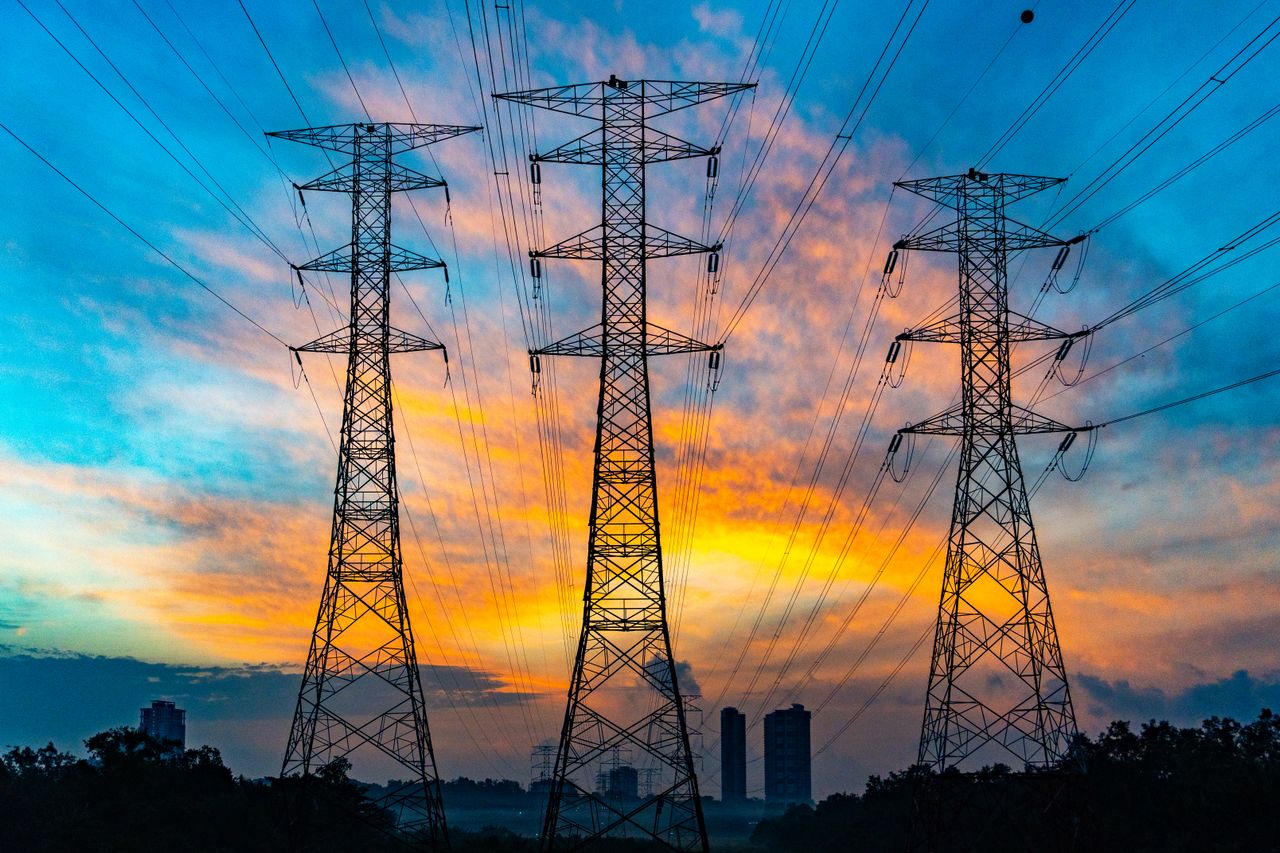
America’s demand for computing power may look like a new economy, but the places supporting it are often shaped by an older one.
A peer-reviewed study published in Nature Cities mapped 4,283 data centers across the contiguous United States. It found that 97.5% were inside metropolitan or micropolitan statistical areas.
These areas include suburbs and smaller urban regions, not only downtown districts. Even the small share of data centers outside them was, on average, only 8.5 miles from the nearest urban boundary.
The findings challenge the idea that the cloud is spreading mainly across remote rural land. Data centers remain closely tied to cities and the infrastructure already built around them.
Power capacity matters most
The strongest predictor of where data centers were located was the generating capacity of nearby power plants, according to the researchers from New York University’s Tandon School of Engineering.
Data centers need large and reliable supplies of electricity to run servers, networking equipment, and cooling systems around the clock. Places with substantial power generation and grid connections are therefore better prepared to support them.
Broadband quality, local information technology employment, retired coal plants, and exposure to natural hazards were also associated with data center locations.
The connection with retired coal plants is particularly important. When a coal-fired power station closes, the site may still have transmission lines, industrial land, and grid connections designed to handle a large, steady flow of electricity.
Old energy regions may gain a new advantage
The researchers also examined federally designated Energy Communities, which include areas affected by coal closures and other changes in the fossil fuel economy.
Cities that overlapped with these areas were about twice as likely to have data centers under development as cities without the designation, according to the NYU Tandon summary of the research.
This does not prove that closed coal plants directly cause new data centers to be built. Land, local policy, internet access, labor, and other factors also shape investment decisions. However, the pattern suggests that the digital economy is often building on the electrical geography created by power stations and heavy industry.
Grid access may matter more than cheap land
The wider business implication is that access to power may become a greater advantage than simply finding inexpensive land. A large site is of limited use if it cannot receive enough electricity without years of new construction.
The US Department of Energy has highlighted the possibility of reusing infrastructure at retired coal facilities for data centers and associated power projects.
A Pacific Northwest National Laboratory report says former coal sites may already have electrical connections, transport links, water infrastructure, industrial zoning, and a nearby workforce. Connecting a new large user to the grid elsewhere can involve years of studies, construction, and upgrades.
This advantage is becoming more important as electricity use rises. A Lawrence Berkeley National Laboratory report estimated that US data centers consumed 176 terawatt-hours of electricity in 2023, up from 58 terawatt-hours in 2014.
The report projected consumption of between 325 and 580 terawatt-hours by 2028, although the range is highly uncertain.
Places with available power and reusable grid infrastructure may therefore attract investment more quickly. Other regions could need costly transmission lines, substations, and generation before similarly large projects can move forward.
Growth may remain concentrated
Data centers were already heavily clustered. The Washington-Arlington-Alexandria region had 610 facilities in the dataset. Chicago had 241, followed by Dallas-Fort Worth with 192, New York-Newark-Jersey City with 163, and Phoenix with 154.
Together, those five metropolitan regions accounted for almost one-third of the facilities studied. The researchers’ projections suggest future growth may strengthen existing urban centers rather than spread computing infrastructure evenly across rural America.
This concentration raises questions about electricity supply, land use, local tax incentives, and pressure on public infrastructure. Its environmental effect will also depend partly on how each region generates electricity.
What the study cannot show
The research covers data centers generally, not only facilities dedicated to artificial intelligence. However, AI is one of the forces increasing demand for computing capacity, making the findings relevant to the industry’s growth.
The researchers used a commercial database and noted that public information about the sector remains limited. The figure of 4,283 is the number of facilities in the dataset, not a real-time census of every US data center.
The study also identifies broad patterns rather than explaining every company’s individual site decision.
The AI industry may be technologically new, but its expansion is still constrained by an old industrial question: where can enormous amounts of power be delivered quickly?
