
A Citigroup Inc. and Argentinian appeal resulted in a “no verdict” by the 2nd U.S. Circuit Court of Appeals in New York on Friday, i.e. the three judges declined to rule. Judge Thomas P. Griesa of the United States District Court had ordered Citigroup not to process $5 million in interest payments on $8.4 billion in bonds issued under Argentine local laws.
The US Appeals Court stated that it did not have the jurisdiction to decide on the lower-court order.
The Appeals Court order said:
“Nothing in this court’s order is intended to preclude Citibank from seeking further relief from the District Court.”
Citigroup is caught in the middle of a dispute between the Argentine government and US courts. If it processes the payments it will be in trouble with US authorities, and if it doesn’t it faces regulatory and criminal sanctions by Argentina, Karen Wagner, Citigroup’s lawyer said.
Argentina faces a September 30th deadline to meet the $5 billion interest payments. If the deadline is missed there is a risk the creditors will ask for all their money back.

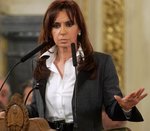
President Elisabet Fernández de Kirchner says it has paid, but the US courts are standing in the way.
Argentina defied US court ruling
On September 11th, Argentina passed a new law bypassing Judge Griesa’s ruling so that it could deal directly with creditors without interference from abroad.
President Elisabet Fernández de Kirchner signed off the bill, which had been passed by both the Senate and Congress.
In July, 2014, Argentina fell into technical default for the second time this century after Judge Griesa ruled that the Bank of New York could not transfer interest payments to bondholders unless the ‘holdouts’ were first settled.
Ninety-five percent of Argentina’s creditors have accepted a new deal, except for the ‘holdout’s, which include NML Capital, Aurelius Capital Management, Elliot Management, and some others.
The ‘holdouts’ had bought the government bonds from other creditors many years ago at knockdown prices. Even if they accepted the new terms the others are happy with, they would still make a huge profit.
‘Holdouts’ dubbed ‘vultures’
President Kirchner says her country is doing everything it can to make the payments to creditors, but is being blocked by the US court, which made an “irrational decision” to back the ‘holdouts’. She describes them as ‘vultures’ (Spanish: buitres).
On signing off the bill, Ms. Kirchner said:
“One day we will have a fairer world, with more doves and fewer vultures.” (“Algún día conseguiremos un mundo más justo, con más palomas y menos buitres.”)
On September 16th, Jorge Capitanich, head of Argentina’s cabinet, said Kevin Sullivan of the US Embassy in Buenos Aires had been summoned to explain why he had declared that Argentina was in default.
Mr. Capitanich said (quoted from the Argentinian President’s website):
“When Argentina deposited the funds, they are funds that belong to the bondholders and not Argentina. So Argentina has complied with the payment. The person who responsible (for the payment not going ahead) is a judge of the jurisdiction of New York.” (“Cuando Argentina depositó sus fondos, son fondos que pertenecen a los bonistas y no a Argentina. Entonces, Argentina ha cumplido con el pago, el que es responsable es un juez de la jurisdicción de Nueva York.”)
Experts say that Argentina needs to find a bank that is outside the US court’s jurisdiction in order to make the payments.
