
This year is expected to be a landmark year for technological advancement, especially in the field of artificial intelligence. In other words, AI in 2025 will be a landmark year.
First, it was the Industrial Revolution in the 19th century, and then the advent of the Internet – both changed our daily lives and the global economy dramatically.
Technology pioneers like Elon Musk, economists such as Daron Acemoglu, and futurists including Ray Kurzweil believe that AI is currently ushering in a revolution of its own.
From reshaping workplaces and revolutionizing healthcare to streamlining transportation, improving education systems, and enhancing personal devices, AI is becoming deeply integrated into our daily lives.
Let’s take a look at the key trends that will most likely define AI’s trajectory in 2025, as well as how they might impact us as individuals, the business world, and society at large.
AI Agents: Transforming Workflows
AI agents are predicted to redefine how businesses operate. The term ‘AI agents’ refers to software programs that are capable of making decisions and performing tasks on their own, without human intervention.
Powered by machine learning algorithms, they continuously improve their performance by analyzing data and adapting to new information over time.
These agents will automate repetitive tasks like handling customer inquiries, processing invoices, scheduling appointments, analyzing large datasets, drafting initial software code, and creating design prototypes.
Consulting firm Deloitte Touche Tohmatsu Limited (Deloitte) estimated that about 25% of businesses that are currently using AI will deploy AI agents by the end of 2025. They expect this figure to rise to 50% by 2027.
This change will completely change how work gets done, allowing employees to focus on important and creative tasks while AI handles administrative duties.
AI spending worldwide is also expected to rise significantly. International Data Group, a market intelligence and demand generation company, estimates that investments will reach $632 billion by 2028.
If your company or employer adopts AI agents early, you will likely see efficiency gains and a competitive edge in the market.
Industry-Specific Innovations
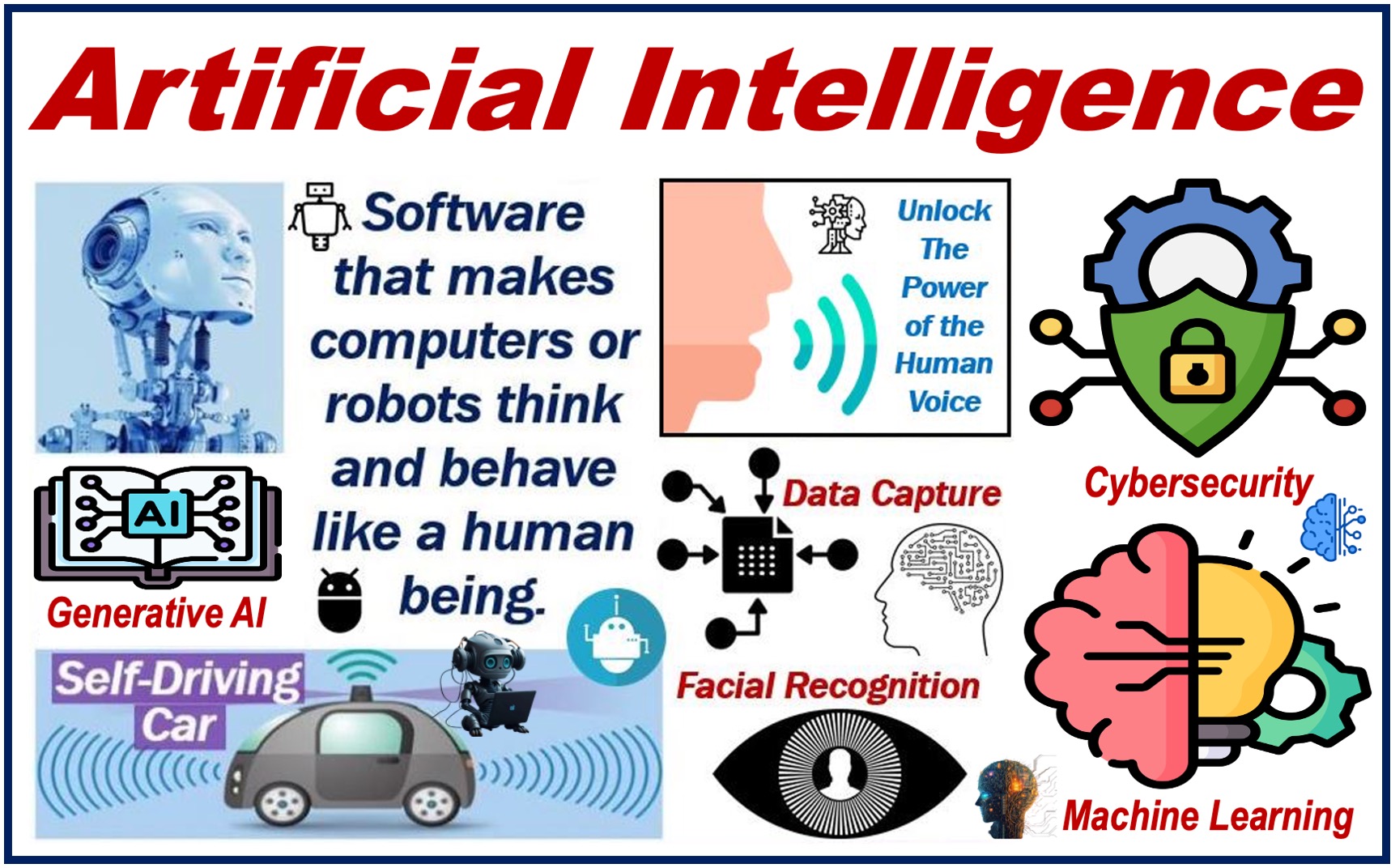
There will also most likely be advancements in narrow AI in 2025. Narrow AI is tailored to specific industries like healthcare, law, education, finance, and manufacturing.
Narrow AI systems are designed to do specific tasks really well. They are easier and cheaper to create and use compared to broader AI models.
-
Healthcare
In healthcare, AI is already being used to reduce administrative burdens like notetaking. Experts predict its use will expand into drug development, medical imaging analysis, predicting disease outbreaks, assisting in surgery, and even personalized medical treatments.
Catherine Breslin, founder of AI consulting firm Kingfisher Labs, explained that industry professionals need to identify how AI can best enhance their work.
Smaller, more focused AI systems are also expected to provide cheaper and easier solutions without needing powerful computers.
AI-Integrated Devices: Smarter and More Accessible
The integration of AI into consumer devices is another trend to watch. Consumer devices are everyday gadgets that we use, such as smartphones, laptops, smartwatches, tablets, home assistants (like Alexa), TVs, and smart home devices (like thermostats, doorbells, and lights). They are designed to make our lives easier, more convenient, or entertaining.
Deloitte predicts that by the end of 2025, thirty percent of most consumer devices will feature generative AI capabilities, with this figure rising to 50% for laptops.
Generative AI, a subset of AI, uses generative models to create text, images, videos, or other types of data. It contrasts with AI systems designed for specific tasks, such as those used in automatic factories for repetitive processes.
Thanks to these advancements, applications will become more intuitive and powerful. This is already happening to a certain extent. Smaller AI models, for example, can now run directly on devices without any need for an Internet connection, which makes them faster, more reliable, and safer.
Leading AI companies such as Microsoft are currently developing AI models that enable sophisticated tasks on everyday devices, which marks a major step forward in accessibility and convenience.
Multimodal AI: Enhanced Content Generation
Multimodal AI, a technology that combines and understands information from different sources such as text, images, sounds, and videos, is expected to grow in popularity this year (2025).
This type of AI has the ability to create various types of content and provide more detailed answers to user questions.
Google’s Gemini 2.0, for instance, a cutting-edge multimodal AI model designed to understand and generate information across various formats, brings together text, images, and video to produce detailed and meaningful content.
These systems have the ability to interpret complex data, such as audio and vibrations in industrial settings, to predict what a company’s maintenance needs will be or enhance operations.
In some parts of the world, such as Europe, regulatory challenges could influence the availability of these advanced tools.
Challenges and Considerations
Despite the exciting potential that AI is expected to bring in the future, it also raises critical concerns.
Training large AI models is a very energy-hungry endeavor, which contributes to sustainability issues. This is ironic because we use AI extensively to combat climate change.
Cybersecurity is another concern: while AI can shore up our defenses, it can also unintentionally arm cybercriminals with the tools to carry out more sophisticated attacks.
As an increasing proportion of online content is generated by AI, it may become harder to differentiate between real and fake information.
The European Union’s AI Act and other regulations elsewhere aim to address transparency and accountability. However, we must stay vigilant and take responsibility for verifying the authenticity of online content.
Conclusion
We have before us a unique opportunity to shape the future of AI responsibly.
We can ensure that AI becomes a force for good for all of us if we embrace innovation while also addressing its challenges and potential risks.
Artificial intelligence is transforming how we all live and work. The decisions we make today will shape how AI affects us for years to come.
