
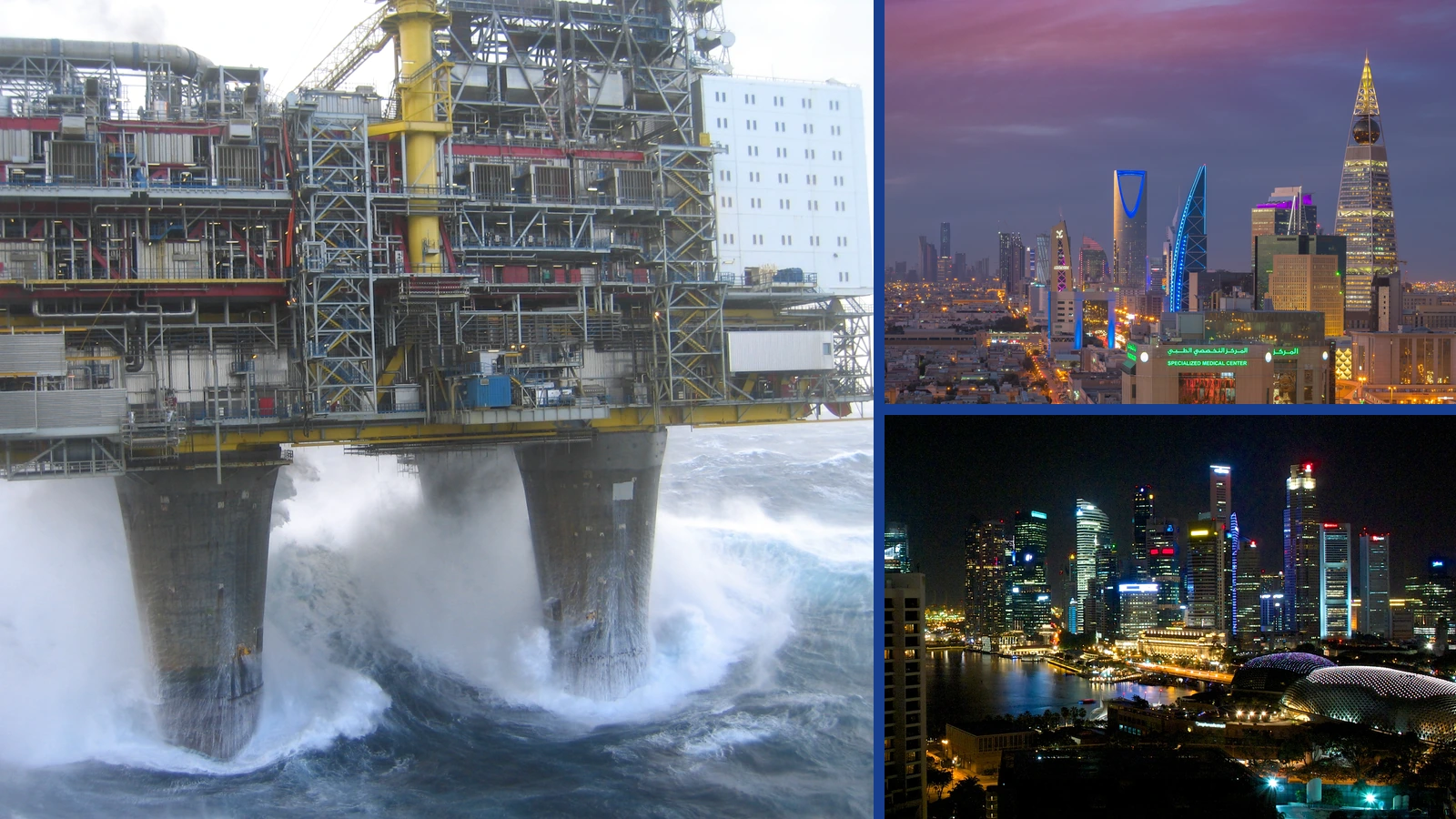
Norway’s Government Pension Fund Global held 22.683 trillion Norwegian kroner at the end of June 2026. Saudi Arabia’s Public Investment Fund reported more than $900 billion in assets under management for 2025. Both invest public wealth, but their portfolios serve different purposes.
Norway invests petroleum revenues abroad to help finance public spending over generations. Singapore’s GIC manages government reserves for long-term returns. Saudi Arabia uses its fund partly to finance businesses and industries intended to reduce the economy’s dependence on oil.
For companies receiving their capital, the fund’s mandate determines more than how much money is available. It helps explain whether the investor wants a small shareholding, a long-term financing relationship, or an active part in building a business.
What is a sovereign wealth fund?
A sovereign wealth fund, often shortened to SWF, is a government-owned investment fund or arrangement that manages assets for financial objectives. It gives a government a way to invest public resources beyond the immediate spending cycle.
A fund’s sources of funding can include oil and mineral revenues, budget surpluses, proceeds from selling state assets, or accumulated foreign currency resources. Some arrangements also invest borrowing proceeds. The source of the money and the obligations attached to it affect how much risk a fund can take.
The International Forum of Sovereign Wealth Funds identifies savings, stabilization, and strategic development among their mandates. A savings fund invests for future generations. A stabilization fund provides money for the budget when revenues fall. A development fund invests partly to build economic activity.
Those purposes can overlap. A fund may save for the future while supplying income to the budget today. Its rules should specify when money enters, when it can be withdrawn, and who makes investment decisions.
Norway invests oil revenues outside its economy
Norway’s fund received its first transfer in 1996. Its manager explains that it was established to protect the economy from fluctuations in petroleum income and preserve wealth for current and future generations.
The fund invests abroad. This spreads the country’s financial exposure beyond its domestic economy and allows petroleum income to enter public spending gradually, instead of being spent as soon as it arrives.
According to its first-half report, investments returned 9.4% in the six months to June 30. Equities, or company shares, accounted for 72.1% of the portfolio at that date, and bonds for 25.8%. Smaller allocations went to unlisted property and infrastructure.
The headline return is not the change in the fund’s total value. Government transfers and currency movements also affect its size when measured in kroner.
Norway’s fiscal guideline links spending over time to the fund’s expected real return, estimated at 3% a year. Real return means return after inflation. The guideline allows for economic conditions; it is not a promise that the fund earns 3% every year or a rule to spend each year’s actual profits.
Singapore measures returns against purchasing power
GIC was established in 1981 to invest Singapore’s reserves. It is the government’s fund manager, rather than the owner of the assets it manages.
Its governance report identifies government budget surpluses, land-sale proceeds, and government securities issuance among the sources of those assets. This is a reserve-management model, not one built on a windfall from petroleum production.
For the 20 years ending March 31, 2026, GIC reported an annualized nominal return of 5.6% in US dollars. After adjusting for global inflation, its annualized real return was 3.4%. Annualized returns express performance as a compound yearly rate over the period.
GIC’s measure addresses what the reserves can buy internationally. Preserving a balance in cash terms would not preserve purchasing power if prices rose faster than its investments grew.
Singapore also uses investment returns to support its budget. Its Net Investment Returns framework permits spending of up to 50% of expected long-term real returns on relevant net assets invested by GIC, the Monetary Authority of Singapore, and Temasek. Government liabilities are deducted in calculating the relevant assets.
Saudi Arabia uses PIF to build domestic businesses
Saudi Arabia’s Public Investment Fund (PIF) combines international investment with a domestic development mandate. Its 2025 annual report puts cumulative investment in Saudi projects at more than $199 billion between 2021 and 2025.
PIF reported revenue of $120 billion and net profit of $17 billion for 2025. These accounting measures differ from portfolio returns. Norway’s six-month return and GIC’s 20-year annualized rate also cover different periods, so the three reports do not provide a like-for-like performance ranking.
The fund said it launched companies in 2025 including HUMAIN, an artificial intelligence business, and Expo 2030 Riyadh Company, established to build and operate facilities for the event.
These investments finance operations as well as acquire assets. Their commercial results will depend on customers, operating costs, and the returns the businesses eventually generate. A commitment of capital alone does not establish that a new industry will be profitable.
The portfolios buy shares, loans, property, and infrastructure
The Abu Dhabi Investment Authority’s portfolio illustrates the range available to a sovereign investor. Its asset classes include listed shares, government bonds, credit, property, private equity, and infrastructure.
Bonds provide financing in exchange for contractual payments. Private equity involves ownership in businesses outside public stock markets. Property and infrastructure can provide income over many years, but selling them may take longer than selling a listed share.
Spreading investments across sectors and markets reduces dependence on any one business. It still leaves funds exposed to broad market declines. A long investment horizon gives managers more time to hold assets, provided government withdrawals and other obligations do not require an earlier sale.
Public ownership requires clear limits and accountability
A government investment fund needs rules for risk, withdrawals, and oversight. Citizens should be able to understand whether its performance is being judged against investment returns, budget stability, or domestic development objectives.
GIC’s governance report, for example, says the government sets its investment mandate but does not direct individual investments. Management makes those decisions and reports on portfolio performance and risk.
The Santiago Principles, developed in 2008, set out 24 voluntary principles covering governance, accountability, investment, and risk management. They encourage disclosure and financially grounded investment practices, while remaining subordinate to applicable law.
Disclosure is not identical across funds. Singapore’s finance ministry says it does not disclose the full size of the assets managed by GIC, because that would reveal the total size of the country’s financial reserves when combined with other published holdings.
Nor does creating a fund create additional public wealth by itself. Moving an asset into a new institution changes how it is managed. Borrowing to invest creates a liability alongside the investment and exposes public finances to financing costs and losses.
For governments using these funds to finance future budgets, the continuing obligation is to balance withdrawals against liabilities and investment risk. A large portfolio can generate income for decades, but its value is neither fixed nor guaranteed.
