
Cheese made today cannot be sold next week.
That delay helps explain why Swiss Gruyère producers are cutting production after US tariffs weakened sales in one of their largest foreign markets.
The United States introduced a 10% tariff on the cheese last year and raised it to 12.5% this year. Producers have kept a 5% production reduction in place for a second year for the type of Gruyère most heavily sold overseas. The aim is to prevent unsold cheese from building up and forcing prices lower.
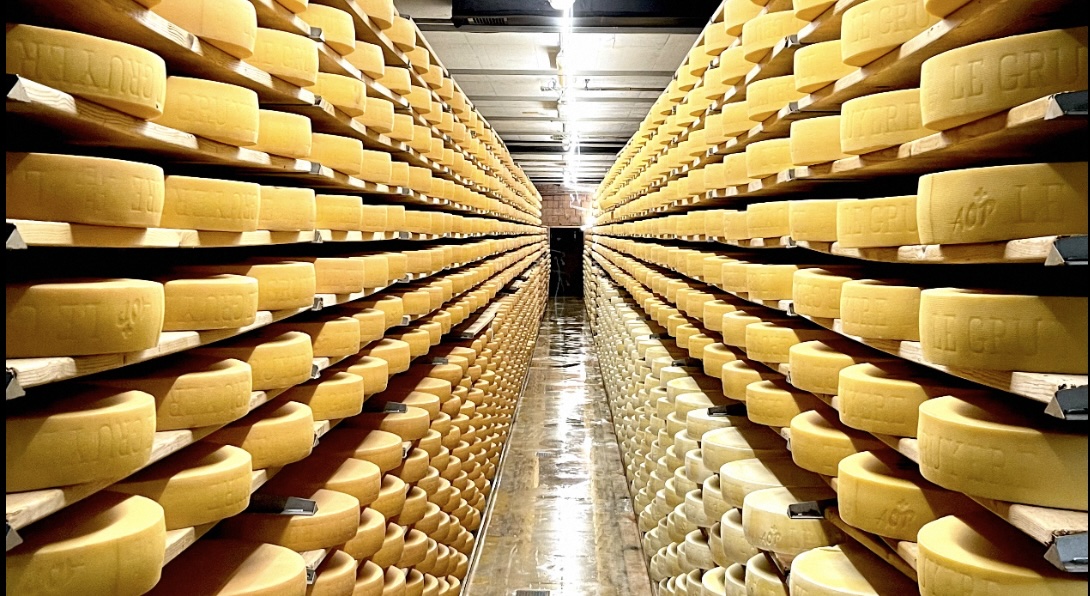
Gruyère must mature for at least five months before it can be sold. Many wheels are kept for much longer. About 400 litres of milk are needed to produce a single wheel weighing roughly 35 kilograms.
This creates a slow-moving supply chain.
When sales fall, producers cannot immediately stop cheese that is already sitting in cellars. New wheels continue to mature while older ones wait for buyers. A production decision made in July may still be affecting the amount of cheese available around Christmas.
Producers could lower prices to clear the excess stock. The danger is that heavy discounting reduces income across the industry and encourages customers to expect cheaper prices in the future.
Making less cheese early can prevent that surplus from developing. The Gruyère producers’ association said an earlier 5% reduction helped bring stocks under control after sales to the United States fell by 17% in 2025.
The decision still causes pain throughout the supply chain.
More than 1,800 dairy farmers provide milk for Gruyère AOP, while more than 160 dairies turn that milk into cheese. Specialist businesses then care for the wheels during the months-long maturing process. When production falls, less milk is needed and fewer wheels pass through each stage. Gruyère
Replacing the American market will take time. More than 4,300 tonnes of Gruyère have been sold in the United States in recent years, accounting for about 30% of the cheese’s exports. The industry is now investing in sales and marketing across 17 countries to reduce its dependence on one market. Stronger sales within Switzerland have already offset some of the US decline.
Moving production to the United States is not a practical way around the tariff.
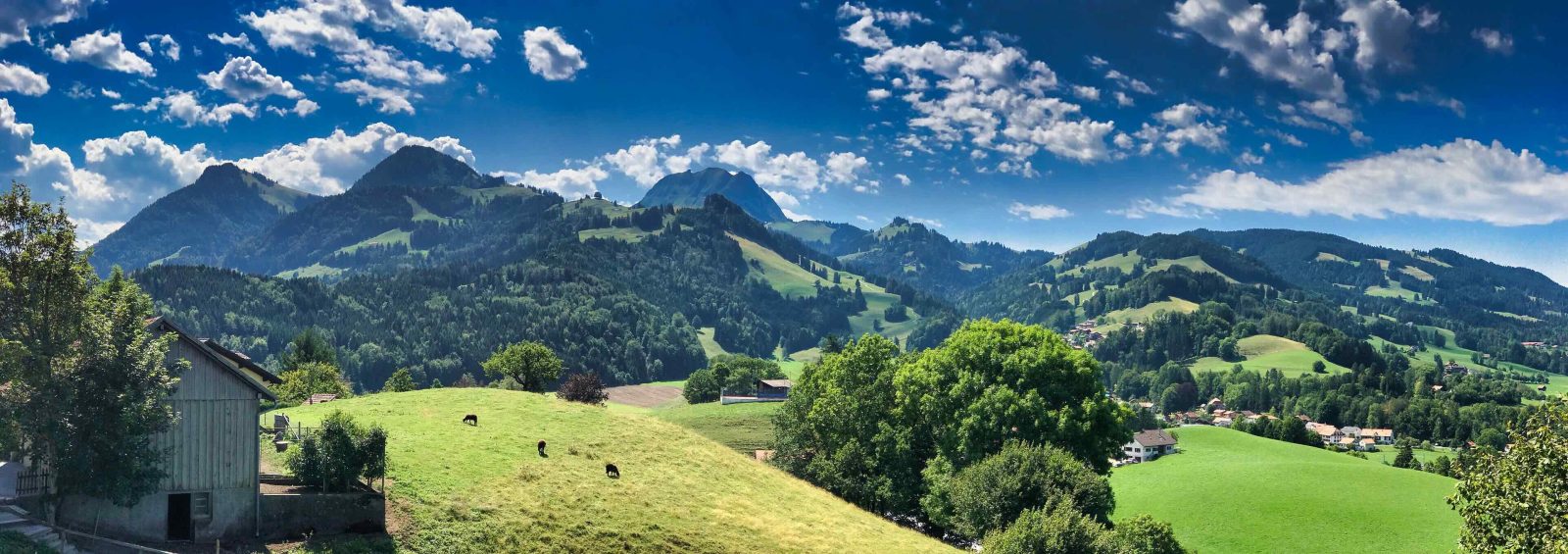
Authentic Le Gruyère AOP must be made using approved methods inside a defined area of Switzerland. That area includes Fribourg, Vaud, Neuchâtel, Jura and certain parts of Bern. The protected status is tied to the product’s location as well as its recipe and production process.
The tariff is collected when the cheese enters the United States. Its effects travel back through Swiss shops, cellars, dairies and farms.
For a product that takes months to prepare and cannot be made elsewhere, producing less now may be safer than accepting much lower prices later.
